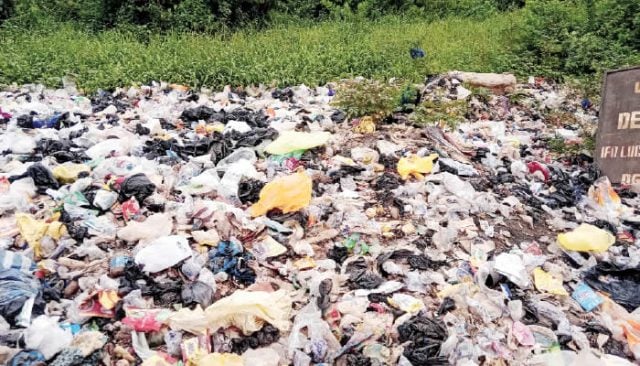
Growing Concerns Over Refuse Accumulation in Lagos
Residents across Lagos have voiced growing concerns over the increasing accumulation of refuse on major roads, raising fears of a potential disease outbreak. From Iyana-Ipaja to Abule Egba, Oshodi, and Iyana-Iba, piles of waste have become a common sight. The issue is not limited to these areas; similar scenes have been observed along the Isheri-Jakande road in Agege and parts of Lagos Island.
The presence of heaps of refuse has left many residents worried about the health implications of such conditions. During separate interviews, several individuals expressed their frustrations with what they perceive as government neglect. A resident in the Igando area, Kunle Ayeni, mentioned that the situation has persisted for over three months without any visible intervention from waste management authorities.
The refuse has taken over parts of the road and become a major source of discomfort for residents and commuters. “The smell is terrible, especially when it rains. The stench from the refuse spreads across the street and into our houses. Sometimes, we can’t even open our windows. Flies have taken over everywhere,” Ayeni said.
Another resident, Deola Davies, who lives along the Isheri-Jakande Road, echoed similar sentiments. She noted that the issue of refuse littering the roads is no longer new to them. “It has now become a serious issue, and it looks like we don’t have a government in the state anymore. People dump refuse on the median, and the PSP operators leave it there. And what is left for us is to start inhaling the odour.”
Funmi Adagba, another resident, highlighted the duration for which refuse remains uncollected. “The refuse is being left on the road for close to two weeks, and sometimes, it becomes excessive and starts to spill on the road. Please, we need the government’s attention on this.”
Some residents also blamed the inefficiency of waste management operators. Esther Owobayi, a resident in the Ojo area, explained that the operators now come to collect refuse once a month. “The refuse collectors usually come weekly, but that is no longer the case. They now come sometimes, once a month, or even skip months. But this does not stop them from collecting LAWMA dues from us. If you don’t pay, they’ll seal your house.”
Funmilayo Ojo criticized the lack of enforcement and monitoring. “PSP acts like they’re untouchable. When we complain, nothing happens even though we pay regularly. Maybe because there’s no proper monitoring and strict law enforcement. Sometimes, for weeks or months, they won’t come at all.”
At Oshodi Market, traders are forced to sell beside heaps of refuse, enduring foul odours as they go about their daily business. Kudirat Bose, a trader, said, “We endure the smell because there’s no other space to sell. Oshodi market is big, but the waste trucks are not enough to carry the daily refuse.”
In the nearby Ajao Estate area, heaps of refuse were observed on the roads and house corners. Lawal Ishola, a resident, lamented that the refuse in front of his house had not been picked up for over three weeks. “The PSP operators in our estate appear to be on holiday because they have not come to collect the refuse on the house corners even after we pay our monthly fees. This is most disheartening.”
At Ekoro Road in Abule Egba, a hill of garbage made up of plastic bottles, vegetable remains, and nylon waste buzzed with flies. Traders, however, noted that the heaps return within some days after being cleared. Shade Opeyemi, a roadside trader, said, “They cleared it last week, but before you know it, the dirt comes back again. It’s like nobody cares.”
Tosin Akintunde blamed high waste collection charges for the indiscriminate dumping. “Although the PSP operators come to collect refuse, their bills are expensive. That’s why many people dump their waste on the streets.”
On Friday, a large heap of refuse was seen defacing the popular roundabout leading directly to Tafawa Balewa Square on Lagos Island. When revisited, the waste had spread further onto a section of the road. Nearby, street traders continued their business beside the growing dump.
The Lagos State Ministry of Environment and Water Resources attributed the persistent dumping to residents’ unwillingness to pay for waste disposal services. Kunle Adeshina, the ministry’s spokesperson, stated that the main problem is that some Lagos residents don’t want to pay for the refuse they generate. He added that many households owed PSP operators up to six months in arrears, making it difficult for them to sustain operations.
In efforts to address the growing menace of roadside dumping, Adeshina mentioned that the ministry had intensified enforcement through its community waste policing system. “We have a community waste policing system, and that’s why several offenders have been arrested. Unfortunately, this has not deterred many. But we will continue. If we find a heap of refuse in front of a shop or building, the owner will be held accountable,” he warned.
Environmental health experts have warned that the accumulation of refuse could expose residents to outbreaks of diseases such as cholera and dysentery if urgent action is not taken.


