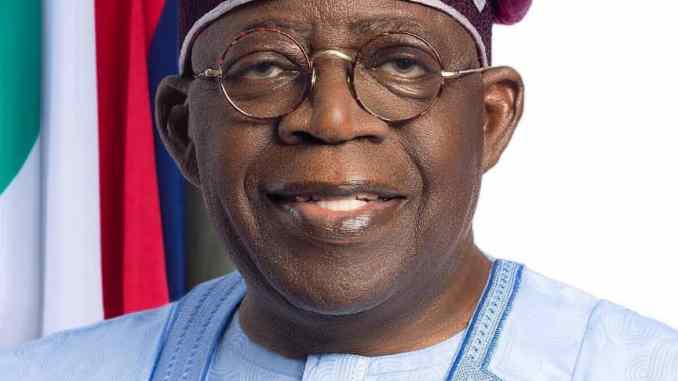
President Bola Tinubu Focuses on Accelerating Siemens Energy Deal
President Bola Tinubu has taken significant steps to speed up the highly anticipated Siemens energy deal, reaffirming his administration’s dedication to improving Nigeria’s electricity supply and enhancing the quality of life for its citizens. This commitment was made during a meeting with a delegation from the German energy company at State House, Abuja, led by Dietmar Siersdorfer, Managing Director for Middle East and Africa at Siemens.
Tinubu emphasized that the power sector plays a crucial role in stimulating economic growth, particularly in industrial, educational, and healthcare sectors. He highlighted the importance of power as a fundamental driver of development, stating, “There is no industrial growth or economic development without power.”
The power project, officially known as the Presidential Power Initiative (PPI), was launched in 2019 by the Muhammadu Buhari administration. The initiative aimed to overhaul Nigeria’s electricity supply, focusing on the transmission and distribution components of the power system. Despite having generating plants capable of producing more power than currently received, much of the electricity is lost due to a weak grid.
The project is planned in three phases. The first phase aims to increase the amount of power reaching consumers from about 5,000 megawatts to roughly 7,000 megawatts. The second phase targets around 11,000 megawatts, while the third phase envisions reaching approximately 25,000 megawatts.
Although the Siemens program focused on upgrading infrastructure, including old substations, replacing overloaded transformers, and installing modern control systems, the project faced several delays. However, some progress was made under the “Phase Zero” stage, where Siemens supplied and installed mobile power substations and large transformers in key areas. These additions improved the grid’s ability to carry more power and enhanced reliability in some locations.
During the meeting, Tinubu stressed that completing the phased power project would position Nigeria as a leader on the continent by harnessing its human and material resources. The meeting included Vice President Kashim Shettima; Minister of Finance and Coordinating Minister of the Economy, Wale Edun; Minister of Power, Adebayo Adelabu; and Special Adviser on Energy, Olu Verheijen.
Tinubu expressed appreciation for the partnership and the support of the German government and Siemens, stating, “The investment you are making and your commitment align with the future of this country.” He also directed the expansion of major transformer substations, from two to three phases, to boost the country’s power supply.
Nigeria’s power supply problem stems from a mismatch between what is generated and what actually reaches consumers. While the country has the capacity to generate over 13,000 megawatts, only about 5,000 megawatts are consistently delivered. The main issue lies in the weak transmission and distribution network, which struggles to carry the power produced.
Distribution companies face challenges in collecting revenue efficiently, with many consumers not metered and relying on estimated billing. Poor revenue collection weakens the financial stability of the sector, making it difficult to invest in repairs or expansion. Gas supply to power plants is another bottleneck, with pipeline disruptions and pricing disputes affecting power generation.
Minister of Power, Adebayo Adelabu, noted that the power sector had achieved critical milestones, including decentralisation and liberalisation. He revealed that the president signed the Electricity Act 2023, and a National Integrated Electricity Policy was developed after 24 years, attracting over $2 billion in fresh investments. The policy activated 15 state electricity markets.
Adelabu reported notable milestones since the signing of the Accelerated Agreement at COP28 in Dubai in December 2023. Under the Pilot phase (Phase Zero), significant infrastructure upgrades and capacity enhancements have impacted grid stability and reliability nationwide. Siemens Energy has successfully delivered and commissioned 10 units of 132/33kV mobile substations, three units of 75/100MVA transformers, and seven units of 60/66MVA transformers across key load centers, adding 984mv of transmission capacity to the grid.
In December 2024, the Federal Executive Council approved the commencement of the Engineering, Procurement, and Construction (EPC) contract for Phase One, Batch One of the PPI. The scope includes the upgrade, installation, and inauguration of five key substations located in Abeokuta, Offa, Ayede-Ibadan, Sokoto, and Onitsha.
Minister of Finance and Coordinating Minister of the Economy, Wale Edun, stated that the completion of the PPI will enhance Nigeria’s ease of doing business, create jobs for the youth, and reduce poverty. Leader of the Siemens delegation, Siersdorfer, mentioned that two out of the five substations under construction were expected to be completed by December 2026. A training center is being built to ensure the training of local talents in electrical engineering, creating jobs and transferring technology.
Siersdorfer emphasized that the PPI is a platform for long-term development and prosperity, aiming to transform Nigeria into a regional power hub. Nigerian professionals will be directly engaged in the five project sites, with thousands of jobs created in local communities through purchased services, accommodation, and transportation.
The representative of the German Ambassador to Nigeria, Johannes Lehne, assured Tinubu of further support and collaboration with the German government.


