The Risk of Triple Infections This Winter
Scientists have raised concerns that Britons may face a significant health challenge this winter, with fears of the country experiencing its “worst flu season on record.” Leading virologists warn that a severe flu outbreak could leave individuals vulnerable to multiple seasonal illnesses simultaneously, including norovirus and respiratory syncytial virus (RSV). Additionally, the ongoing circulation of Covid-19 adds to the complexity of the situation.
A particularly concerning mutant strain of the flu is believed to be responsible for an early spike in flu cases. Experts suggest that genetic mutations in the H3N2 strain have made it more virulent, increasing the risk of severe infections. This has led to heightened concerns about the potential for a “quad-demic” — the simultaneous spread of four winter illnesses: flu, Covid, norovirus, and RSV. Such a scenario could place immense pressure on an already strained healthcare system.
Understanding the Threats
Dr. Simon Clarke, an infectious disease expert at the University of Reading, emphasized that there is strong evidence suggesting that flu and Covid can infect individuals at the same time. He noted that symptoms from these viruses can be similar, making it challenging to distinguish between them without proper testing. Furthermore, he pointed out that it’s possible for someone infected with a respiratory virus like flu, RSV, or Covid to also be co-infected with norovirus.
However, Dr. Clarke also mentioned that evidence suggests a flu infection might offer some protection against RSV for a few months. Despite this, people could still contract both RSV and flu simultaneously, leading to more severe symptoms.
A 2024 study published by German researchers in the journal Nature found that a flu or RSV infection could provide between 40 to 100 percent protection against the other virus for one to five months. Professor Paul Hunter, an infectious diseases expert from the University of East Anglia, echoed these concerns, stating that co-infections are common and often difficult to differentiate clinically due to overlapping symptoms.
Rising Flu Cases and Hospital Admissions
Health officials have sounded the alarm over a surge in flu cases, which appear to be spreading more rapidly than usual. Experts believe this may be due to the H3N2 strain mutating seven times over the summer, making it more severe, especially for older individuals. Recent data from the UK Health Security Agency (UKHSA) shows that the majority of influenza viruses subtyped were H3N2. Hospital admissions for flu in England reached 3.8 per 100,000 people last week, up from 2.4 the previous week. This level of admissions is typically not seen until December, according to the UKHSA.
Flu rates remain over three times higher than normal for this time of year, with the highest rates observed in children and young people. Prof Nicola Lewis, director of the World Influenza Centre at the Francis Crick Institute in London, described H3N2 as a “hotter” and “nastier” virus, emphasizing that it has a greater impact on the population. She expressed concern about the unusual dynamics of this flu season.
Symptoms and Concerns
Anecdotal reports suggest that the H3N2 strain can cause more severe body aches, longer-lasting fatigue, and symptoms that appear more suddenly. Last year marked one of the worst flu seasons in a decade, with the outbreak having a greater impact due to lower population immunity.
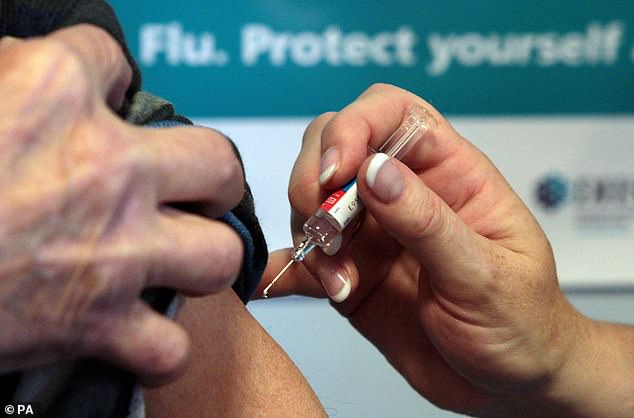
Since September, health officials have urged millions eligible for their flu and Covid jabs to get vaccinated to reduce the risk of severe illness and hospitalization. They also recommended turning to pharmacies and local urgent treatment centers when necessary. Those invited for top-up doses include the over-65s, care home residents, frontline health and social care workers, and pregnant women.
The design of the UK’s vaccine was decided in February to ensure sufficient time for production. However, given that the mutant variant emerged in June, the vaccine is not expected to provide full protection against the strain. Despite this, experts emphasize that the vaccine remains vital, as it can help reduce the severity of symptoms.
Professor Adam Finn, a professor of pediatrics at the University of Bristol, highlighted that the early start of this year’s flu epidemic is a cause for concern. He noted that many people have not yet had the opportunity to get vaccinated, as the children’s program began in September and the adult program in October. Usually, November is a key month for vaccination before the spread of infections in December and January.
Even though the new H3N2 strain differs from the one in this year’s vaccines, they should still offer some degree of protection against this strain and other flu strains that may emerge during the winter. The bottom line, according to Professor Finn, is that it is possible we may face a very bad flu season this year, and the best course of action is to get vaccinated.
Managing Other Viruses
Latest UKHSA data shows that Covid levels are currently low and within expected ranges. Among all tested samples from GP surgeries, just 3.5% were positive for Covid, while hospital admissions stood at around 2.22 per 100,000 patients. Although infection rates have risen, they are nowhere near the levels seen earlier in the pandemic.
Norovirus, on the other hand, presents similar symptoms to Covid, including chills, fever, and headaches, but also causes explosive vomiting and diarrhea. The stomach bug usually resolves within two to three days, but those suffering from it are advised to stay at home until 48 hours after symptoms have ceased. In severe cases, hospitalization may be necessary, particularly for the elderly and children.
Norovirus spreads through close contact with infected individuals, touching contaminated surfaces, and consuming food handled by someone with the virus. As the winter season approaches, the combined threat of flu, Covid, norovirus, and RSV raises serious concerns about the capacity of the NHS and the overall health of the population.


