A Journey Through the Himalayas: The Human History of a Region
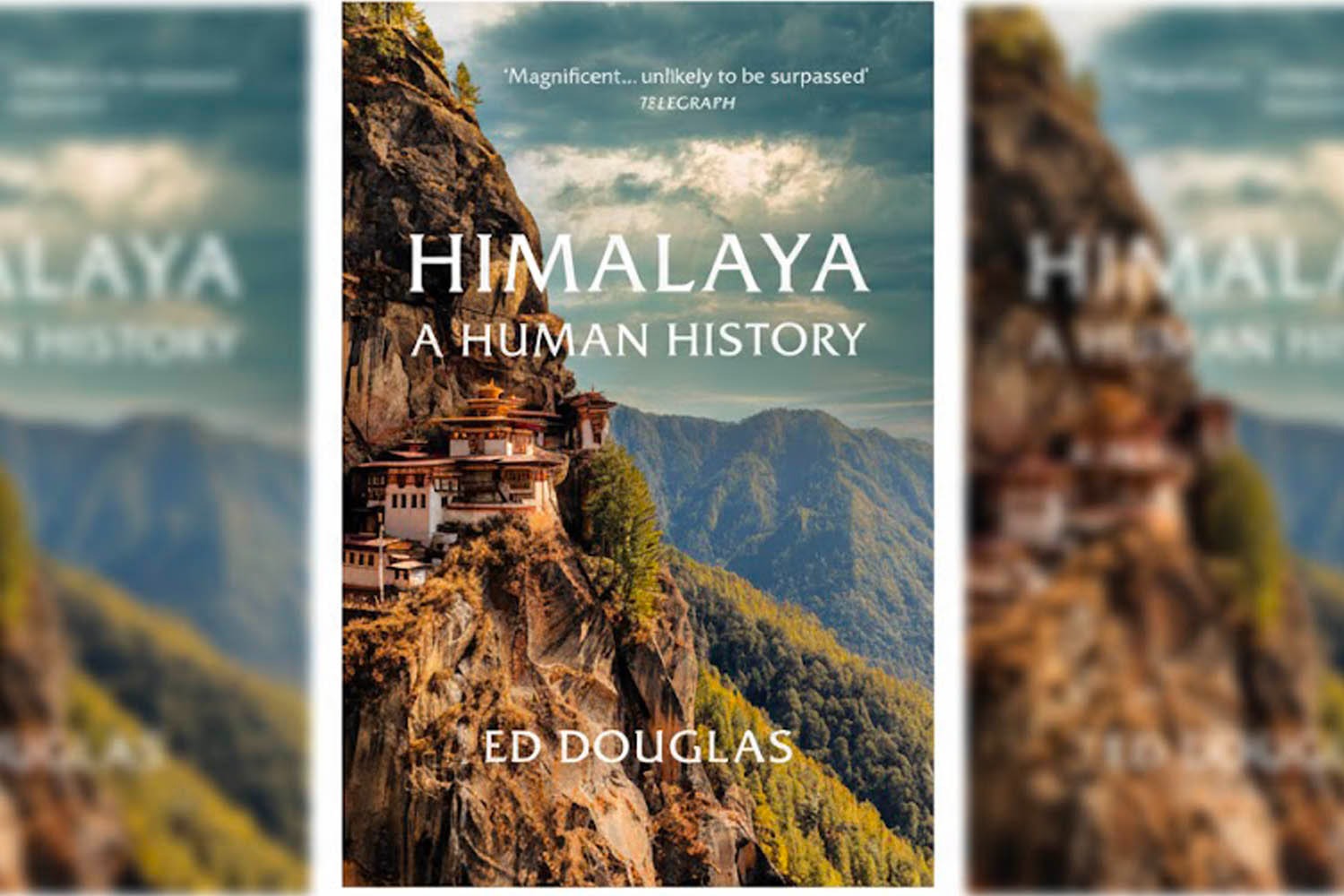
Nepal, November 15 — The Himalayas have long been more than just a geographical feature; they are a living testament to the complex interplay of cultures, politics, and human ambition. One of the most compelling narratives of this region is captured in Ed Douglas’s book Himalaya: A Human History, which offers a sweeping account of the region’s past, present, and the forces that have shaped it.
The story begins with the arrival of Han Suyin, a Chinese-born Eurasian writer, in Nepal in 1956. Her visit coincided with King Mahendra’s coronation, an event that inspired her to write The Mountain is Young. This work not only documented the vibrant social scene of Kathmandu but also highlighted the influence of figures like Boris Lissanevitch, who played a key role in opening Nepal to the world. This period marked a significant shift for Nepal, as it emerged from centuries of isolation into the global spotlight.
In 1953, Edmund Hillary and Tenzing Norgay made history by conquering Mount Everest, placing Nepal on the international map. This was a time when the country was beginning to engage with the modern world after a tumultuous past. It also marked the dawn of the modern mountaineering era, drawing attention to the Himalayas and their mysteries.
To the north, another seismic shift was underway. In 1950, Mao’s Communist Party established the People’s Republic of China and occupied Tibet. However, this was not the first invasion of Tibet. In 1903-04, a British expedition led by Francis Younghusband decimated Tibet’s army, forcing the 13th Dalai Lama to flee to Mongolia. These events set the stage for a long and complex relationship between the Himalayan region and its neighbors.
Douglas’s book delves into the origins of the Himalayas, explaining that Everest was once beneath the sea. He describes the mountains as “being made and unmade constantly,” a metaphor that captures both the region’s geological activity and the ever-changing nature of its cultures. From there, he explores the history of the people who call the Himalayas home, arguing that the region’s geography has profoundly influenced its history, culture, and ideals.
One of the most fascinating aspects of the book is its analysis of how local religions merged with imported ideas. Before Buddhism, Tibet was dominated by deities such as the warrior god Pehar and the Bon religion. When Vajrayana Buddhism arrived, it did not erase these beliefs but instead fused with them, creating a unique tradition. Douglas emphasizes that cultures do not simply accumulate like geological layers—they evolve under pressure to adapt to the changing world around them.
The book also reexamines Nepal’s transformation through a fresh lens. Douglas traces the origins of the Gorkha dynasty to men from the plains who saw themselves as rulers of nature and looked down on the shamanism-practising Khas parbatiya. He explains how the Khas people later absorbed hierarchical Hinduism, leading to the rise of the Chhetri caste. His portrayal of Prithivi Narayan Shah combines admiration and critique, highlighting his strategic brilliance and diplomatic skills.
Stories like Prithivi’s men going incognito as farmers to attack Nuwakot or cutting the noses of men in Kirtipur reveal a Machiavellian approach to statecraft. Even familiar events, such as the defeat of Captain Kinlock by the Gurkhas, are retold with surprising twists. Douglas clarifies that Kinlock never reached Kathmandu at all, as his troops perished in the malaria-ridden Tarai forest. These details remind us how history, when retold, can reshape national myths.
The book serves as a lesson in statecraft and political diplomacy, dissecting the delicate power plays between Nepal, Tibet, and other Himalayan nations. Douglas examines how diplomacy played a role in the downfall of the Panchen Lama and the survival of Junga Bahadur Rana, whom he calls a master of diplomacy. The narrative often feels like a record of cold, strategic power politics unfolding in the high Himalayas.
Douglas also weaves in vivid portraits of European travelers and explorers who ventured into the Himalayan countries. He suggests that Herge, the Belgian comic artist, may have drawn inspiration from his friend Han Suyin’s travels for the comic strip Tintin in Tibet. The account of Sir Francis Younghusband, architect of the first Everest expedition in 1921, is particularly engaging.
Capturing the absurdity and romance of mountaineering, George Mallory wrote, “I sometimes think of this expedition as a fraud from beginning to end.” Douglas celebrates the scientific curiosity of the colonial age, including Captain Charles, part of the British trade mission to Kathmandu, who created the first map of the valley and was among the first to suggest that Nepal’s mountains were the world’s tallest.
The book brims with stories of cartographers, philologists, surveyors, mathematicians, scientists, and geographers who sought to measure and decode the Himalayas. While the richness of the narratives makes the book a fascinating read, it is also heavy and exhausting. The non-linear storytelling, jumping across different timelines, can leave readers restless. It is a book that must be savored, one layer at a time.
Despite its depth, some aspects of the book raise questions. Douglas’s claim that he could see Everest from Ratna Park seems implausible given the city’s skyline. Such lapses briefly dent the credibility of an otherwise remarkable work. While we may not agree with all of Douglas’s interpretations, one cannot help but admire the scope of his research and meticulous storytelling.
As a Nepali reader, the book was enlightening and provocative. It made me reflect on how external powers have long shaped the region’s destiny. From Bhimsen Thapa’s rise and fall to Junga Bahadur’s diplomacy, from Mathbar Singh’s murder to Matrika Koirala’s premiership, Nepal’s political fate has often depended on the goodwill of our neighbor—whether it be the British Raj or later independent India.
Other smaller Himalayan kingdoms and nations like Tibet, Sikkim, Ladakh, and Bhutan were exposed to similar regional diplomacy and geopolitical maneuvering. That influence persists even today; the levers may have changed, but not the hands that pull them. Douglas’s Himalayan history, viewed from this lens, feels eerily contemporary.
The delicate political landscape and fragile borders that once allowed China to annex Tibet and enabled India to incorporate Sikkim after a referendum could easily set the stage for similar shifts today. If history is cyclical, further territorial reconfiguration in the Himalayas cannot be ruled out—and if it occurs, it will reflect our failure to learn from the past.


