The Urgent Need for Environmental Stewardship in Ghana
Across the globe, discussions surrounding environmental conservation are becoming increasingly significant due to the escalating effects of climate change. Issues such as deforestation, pollution, and other ecological threats are posing serious challenges to our planet’s health. In response, awareness campaigns are being launched worldwide to promote the preservation and restoration of natural ecosystems.
However, in Ghana, the situation is quite different. While many countries are taking measures to protect their natural resources, Ghana seems to be moving in the opposite direction. Contractors often begin their projects by clearing land of every tree and vegetation, only to plant new seedlings afterward. This practice is not only short-sighted but also harmful to the environment.
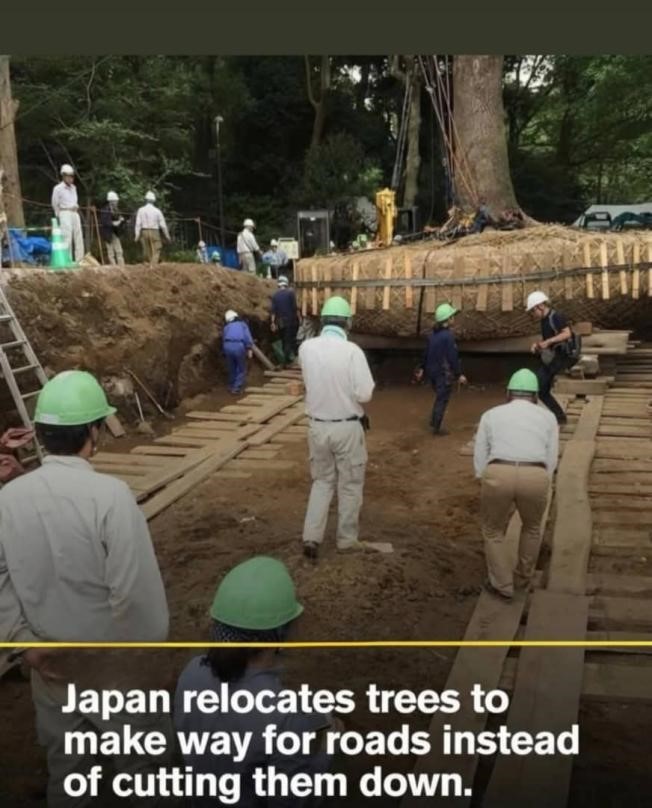
In contrast, developed countries demonstrate a more thoughtful approach to tree preservation. When felling is necessary, mature trees are carefully uprooted and relocated to safe areas until construction is complete. They are then replanted, either at the original site or elsewhere. This method raises the question: why can’t Ghana adopt similar practices to save more trees?
The issue becomes even more concerning when considering the historical significance of some of the trees being cut down. Many large shade trees that line our streets were planted before independence by colonial masters. Some of these trees are over 60 years old, and several species are not native to Africa. These trees once gave our cities a unique charm and character, with areas like Accra’s “Avenue” named for their lush greenery. Today, many of these avenues are bare, victims of modernization.
An elderly man in his 80s expressed deep concern about the destruction of the ecosystem through indiscriminate tree cutting. He questioned why, in an age of technological advancement, Ghana cannot uproot and preserve trees during construction, only to replant them later. “Some of these trees are over 60 years old. Instead of saving them, we cut them down and replace them with new ones after the project is complete. It doesn’t make sense to me,” he said.
Osei, another resident, shared fond memories of growing up in what he described as a truly “green Ghana.” He recalled that areas like Asylum Down, Ridge, and Cantonments were shaded with tall trees, making walking enjoyable and refreshing. Most houses had trees around them, contributing to the beauty of entire neighborhoods. Unfortunately, rapid development has destroyed most of these trees.
Kwame, a nature enthusiast, observed that Accra has lost hundreds of trees to highways, estates, and high-rise buildings. He questioned the role of the Environmental Protection Agency (EPA), asking whether it is working silently or needs to become more visible in its actions. “If we are truly serious about sustainable development as a country,” he said, “then urban planning should integrate trees—not eliminate them.”
The Environmental Protection Agency Act (Act 490) empowers the EPA to require Environmental Impact Assessments (EIA) for projects that may harm the environment and to enforce compliance with penalties for violations. Furthermore, the Environmental Assessment Regulations (L.I. 1652) mandate environmental permits for certain activities, including tree cutting, depending on the potential impact.
In 2025, Ghana passed a new consolidated law—the Environmental Protection Act, 2025 (Act 1124)—repealing the 1994 EPA Act. This law reconstructed the EPA as the Environmental Protection Authority, granting it expanded powers to oversee environmental protection, climate response, and enforcement. Although the Act does not explicitly spell out tree-cutting procedures, it strengthens the authority’s mandate to regulate and permit activities such as tree felling.
Legally, every tree in Ghana is vested in the President and held in trust by the EPA. This means that whether on public or private land, no tree can be felled or pruned without the EPA’s authorization. A permit is required for any such activity. Once the EPA grants permission to cut down a tree, it is mandatory to plant another elsewhere to replace the one removed. This is the law—but is it being enforced? Are people truly replanting trees after felling them, or is this regulation being ignored?
I have witnessed not just one but many people cutting down trees without any permit. When I confronted them, their explanation was simple: the leaves of trees made a lot of rubbish, so they decided to cut it down. Just like that!
Recently, while traveling outside Accra, we passed through a road under construction. To my surprise, all the trees along the stretch had been cleared. I couldn’t believe it because I remember how serene that road used to be. Travelling there was always a delight—the fresh breeze felt so healing, and I truly enjoyed the experience.
I was having a discussion with a friend who lives abroad, and he shared how, during a construction project, a tree had to be relocated from its original spot to another area. An environmental activist took the matter to court, arguing that the tree should not be moved and actually won the case. The court ruled that the government must find an alternative approach to the construction without touching the tree. This shows how seriously tree protection is taken in other jurisdictions. So why can’t we apply the same standards here?
With the launch of the BIG PUSH and the many construction projects that will follow, I urge the EPA to work closely with engineers through binding agreements to ensure proper safeguards are in place to protect the trees.
The reality is that protecting the ecosystem is not the sole responsibility of the EPA—it is a collective duty. The public must also be educated on the importance of trees and why their preservation is vital to our survival. Trees provide shade, regulate temperatures, purify the air, and serve as habitats for countless species. They are also part of our cultural and historical identity. Destroying them carelessly is to erase not just nature but also our heritage.
We must all become guardians of the environment, ensuring that development does not come at the cost of our survival. Because when the last tree dies, the last man dies.


