The Anti-Corruption Probe into Energoatom: A Major Scandal in Ukraine
An extensive anti-corruption investigation has recently targeted the state nuclear power company Energoatom, shaking the foundations of Ukrainian politics. This probe is expected to be one of the most significant anti-corruption cases in the country and could trigger a major political scandal.
On Monday morning, the National Anti-Corruption Bureau of Ukraine (NABU) and the Specialised Anti-Corruption Prosecutor’s Office (SAPO) announced they had uncovered a large-scale corruption scheme within the energy sector. The operation was given the code name “Midas,” referencing King Midas from Greek mythology, who turned everything he touched into gold.
The investigation, which took 15 months to complete and involved 1,000 hours of audio recordings, revealed that several members of the Ukrainian government were involved in the scheme. According to NABU, the group collected bribes from Energoatom contractors, amounting to 10-15% of each contract’s value. Around $100 million in funds was reportedly laundered.
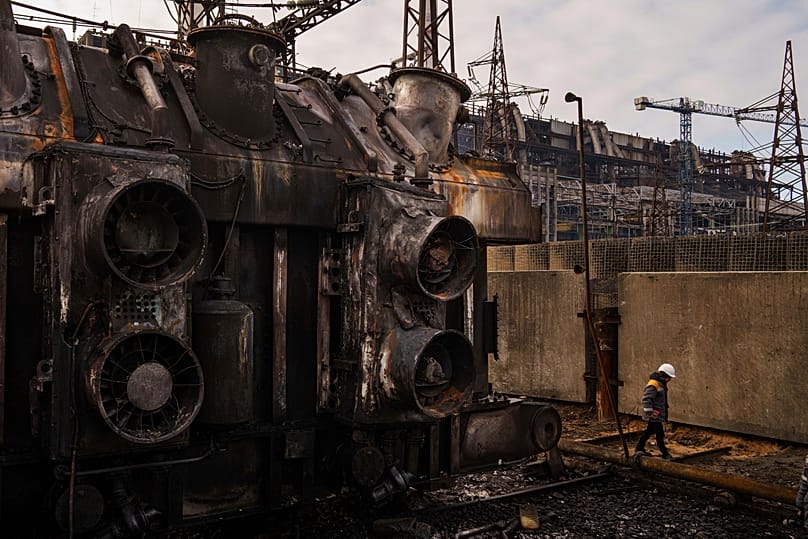
“In fact, the management of a strategic enterprise with an annual revenue of over €4 billion was carried out not by officials, but by outsiders who had no formal authority,” NABU stated in a release. The allegations suggest that these individuals received payments from contractors building fortifications against Russian attacks on energy infrastructure, while millions of Ukrainians face power outages and blackouts due to Russian attacks.
Key Figures Involved in the Investigation
Oleksandr Abakumov, who leads the investigation team, mentioned that around 70 searches were conducted among high-ranking officials on the morning of Monday. On Tuesday, the Anti-Corruption Bureau charged eight people with bribery, embezzlement, and illicit enrichment.
Among those implicated is Ihor Myroniuk, a former advisor to former Energy Minister Herman Halushchenko and deputy head of the State Property Fund. Myroniuk also worked as an aide to fugitive Ukrainian ex-lawmaker Andrii Deerkach, who now serves as a Russian senator since 2024.
Another individual involved is Dmytro Basov, a former prosecutor and ex-head of Energoatom’s physical security department. According to NABU, Myroniuk and Basov effectively “took control of all company purchases.” Another four people involved in money laundering were also implicated, including Ukrainian businessman Oleksandr Tsukerman.
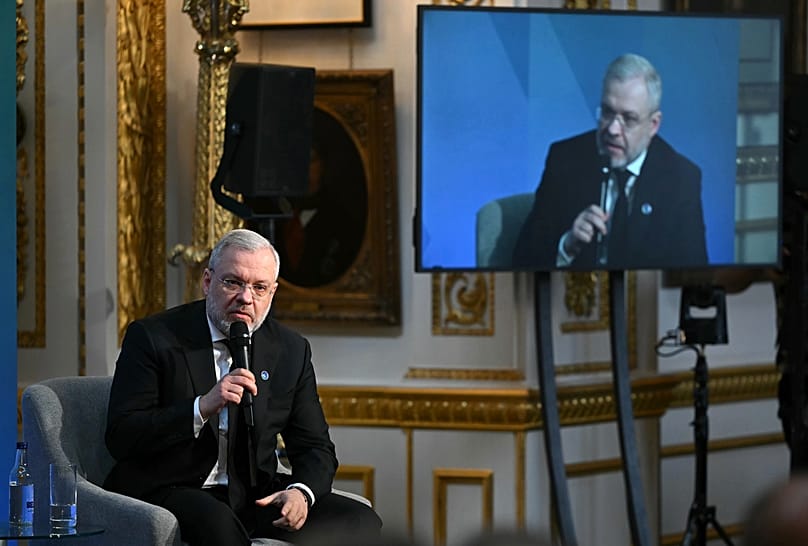
Halushchenko, Ukraine’s former energy minister from 2021 to July 2025, who later became the country’s justice minister until his resignation two days ago, has also been allegedly involved. The investigation suggests that the ringleader behind the corruption scheme is businessman Timur Mindich, a past business partner of Ukraine’s President Volodymyr Zelenskyy.
Who is Timur Mindich?
Mindich used to be one of Zelenskyy’s closest associates before he became president in 2019. He is the co-owner of Kvartal 95, a production company founded by Zelenskyy. After being elected in 2019, Zelenskyy transferred his stake in the company to other partners.
In 2021, the president reportedly celebrated his birthday in Mindich’s apartment, according to Ukrainian investigative journalists. Mindich, 46, is from the city of Dnipro in central Ukraine. He is a film producer with extensive business interests across various sectors.
On Thursday, Zelenskyy signed a decree imposing sanctions on Mindich and another businessman Oleksandr Tsukerman, also implicated in the corruption probe. According to the presidential decree announcing the sanctions, both Tsukerman and Mindich are Israeli citizens, allowing them to freely leave the country. The NABU has already searched several premises connected to Mindich, but he left Ukraine before the bureau revealed the investigation earlier this week.
Kyiv’s Response to the Probe
In response to the investigation, Ukraine launched a massive anti-corruption audit of all state-owned companies, Prime Minister Yulia Svyrydenko announced on Thursday. Kyiv is preparing a “comprehensive decision regarding all state-owned enterprises, including those in the energy sector,” Svyrydenko said.
“Audits are under way, and supervisory boards have been instructed to review operations, especially procurement practices.” Earlier this week, Energy Minister Svitlana Hrynchuk resigned amid the probe together with Halushchenko.
However, the alleged involvement of Zelenskyy’s former business partner and personal friend Mindich makes this investigation particularly sensitive for the Ukrainian leader and could turn into the biggest corruption scandal of his presidency. His entire 2019 presidential campaign had been built on promises to fight corruption.
“Everyone who created schemes must receive a clear procedural response. There must be verdicts. And government officials must work together with NABU, together with law enforcement agencies,” Zelenskyy said this week as the investigation was revealed.
Ukraine’s Anti-Corruption Watchdogs
The NABU and SAPO were created in 2015 as part of pro-Western reforms following Ukraine’s 2014 Revolution of Dignity, which ousted former pro-Russian Ukrainian President Viktor Yanukovych. NABU investigates top-level corruption, and its cases are overseen and prosecuted by SAPO. Ukraine’s High Anti-Corruption Court subsequently tries those cases.
The two institutions were established to independently investigate and prosecute leading Ukrainian officials suspected of graft, without being subject to political influence or interference. Corruption cases were supervised by the chief anti-corruption prosecutor, who was independent from Ukraine’s prosecutor general.
The creation of NABU and SAPO was one of the requirements set by the European Commission and International Monetary Fund for Ukraine’s visa liberalisation with the EU.
EU and Ukraine’s Fight Against Corruption
The European Commission said on Thursday that the ongoing investigation has proven that the country’s anti-graft bodies “work.” Brussels stressed that continuous efforts to fight corruption are a key requirement in the EU accession process.
“I think it’s really important to underline that these investigations which are taking place in Ukraine show that the anti-corruption (measures) work, and institutions are there to precisely fight against it,” EU chief spokesperson Paula Pinho said.
Visiting Brussels a few months ago, the heads of Ukraine’s anti-corruption institutions told the European Commission that opening accession negotiations would protect them from further attempts to weaken their independence.