The Importance of Nuclear Policy and International Cooperation
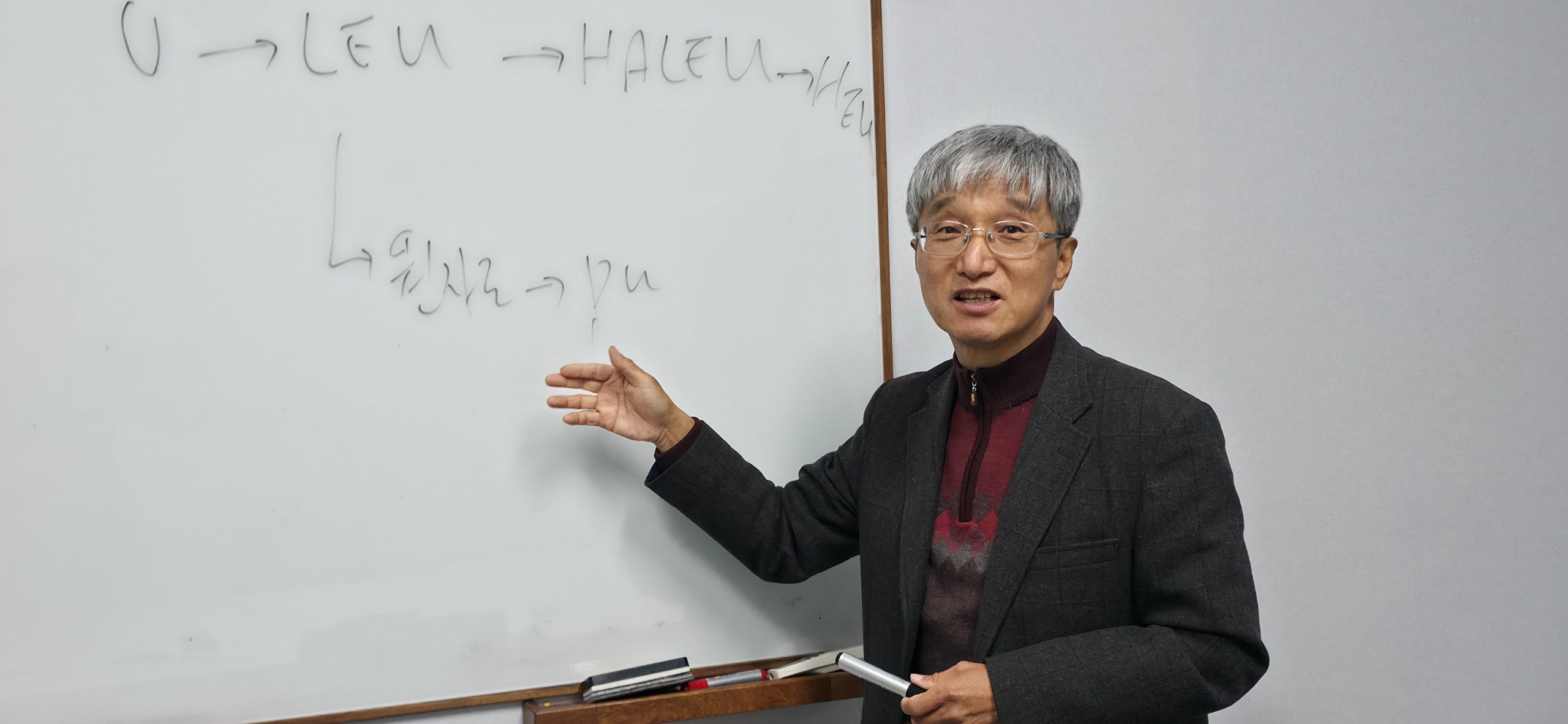
On the 14th, five hours after President Lee Jae-myung announced the South Korea-U.S. security and trade ‘fact sheet,’ the face of Lee Chun-geun, chairman of the Defense Ministry’s Arms Control and Verification Advisory Group, appeared grave when met at Osong Station in Chungcheongbuk-do. Having long been involved in nuclear policy as a senior researcher at the Science and Technology Policy Institute (STEPI), he emphasized multiple times, “What we give to the U.S. is explicit, but what we receive from the U.S. is not. Follow-up negotiations are crucial.” He also predicted that policy coordination with the newly established Ministry of Climate, Energy and Environment—which now holds authority over nuclear policy—could become a variable in future negotiations with the U.S.
He stated that to achieve results in future negotiations, South Korea should focus on the enriched uranium sector and that a presidential advisory body directly under the president, capable of coordinating and overseeing the five departments—Ministry of Foreign Affairs, Defense Ministry, Ministry of Trade, Industry and Energy, Ministry of Science and ICT, and Ministry of Climate, Energy and Environment—is essential. Also serving as a visiting expert at the Korea Institute of Science & Technology Evaluation and Planning, he gained attention last month by presenting a plan to secure South Korea’s enrichment and reprocessing capabilities at a national strategy seminar hosted by the Near Foundation, themed “South Korea’s Self-Strengthening Strategy in the Complex Transition Period (自强之計).”
Interest in Nuclear Issues at the Army Chemical, Biological, and Radiological School
-
Your career as a science and technology expert is unique.
“I became interested in nuclear issues while serving in the military during my undergraduate studies at Seoul National University’s College of Engineering, when I was assigned to the Army Chemical School. Later, while researching socialist science and technology systems in China and North Korea, I became involved in South Korea’s nuclear agreements and non-proliferation policies. Although I was hired as a China expert at STEPI, after the June 15th summit in 2000, I took on North Korea-related tasks and began conducting full-scale research on nuclear and non-proliferation policies. I stayed in China for 10 years and visited North Korea 15 times.” -
The ‘fact sheet’ includes the phrase, ‘The U.S. has approved South Korea’s construction of attack-type nuclear submarines.’ It also states, ‘The U.S. supports South Korea’s pursuit of civilian uranium enrichment and spent nuclear fuel reprocessing.’ How do you interpret this?
“It is notable that South Korea’s pursuit of enrichment and reprocessing is explicitly labeled as ‘civilian.’ Currently, there is no substantial progress beyond the 2015 revision of the South Korea-U.S. nuclear cooperation agreement. At that time, it was agreed to form a working group to discuss enrichment up to 20%, but the U.S. did not respond proactively, so the revision’s significance did not fully materialize. Ultimately, how negotiations are led will be key.” -
Some point out that even if President Trump intends to help, U.S. officials will oppose it.
“U.S. Department of Energy officials hold very strong non-proliferation positions. Their mission is to supply nuclear fuel while imposing restrictions. If they ignore regulations or procedures and supply enriched uranium, they could face legal liability and criticism from Congress. U.S. officials never take responsibility for such actions. Moreover, isn’t South Korea currently designated as a ‘sensitive country’ in the nuclear field?” -
You have consistently emphasized that uranium enrichment is more important than reprocessing.
“In the current situation, uranium enrichment is the area where we can strengthen our practical potential for peaceful purposes. We should accumulate technology through small-scale enrichment in fields like SMRs, which have fewer regulations and where we have research capabilities. We should also take advantage of international circumstances.”
Early Securing of Centrifuges Is Critical
-
What international circumstances are you referring to?
“Russia’s invasion of Ukraine has caused problems in the supply of Russian low-enriched uranium (LEU). There is a movement among major free-world countries to reorganize technology development, production, and supply systems. If we join this, we can create new opportunities.” -
If negotiations with the U.S. proceed smoothly, what is the outlook for securing enrichment technology?
“Even if we could enrich up to 20% tomorrow as we wish, it would take at least several years. Enrichment requires centrifuges, which we do not have even one of. The key is how to introduce centrifuges and processes suitable for our circumstances. We should also consider bringing in foreign centrifuges and processes through a turnkey approach.” -
Approximately 20,000 tons of spent nuclear fuel has accumulated domestically. Why do you believe reprocessing should be approached cautiously?
“Some nuclear armament advocates claim, ‘If we reprocess 20,000 tons of spent nuclear fuel, we can instantly create nuclear weapons.’ However, reprocessing facilities face significant safety and environmental challenges, starting from site selection. Wasn’t it difficult to build the Gyeongju low- and intermediate-level radioactive waste repository? Can we say we have overcome the 2003 Buan Incident, where residents strongly opposed President Roh Moo-hyun’s announcement to host a radioactive waste disposal facility, leading to violent clashes and large-scale protests? The legal framework is also not yet properly established.” -
Then, how do you view alternatives like pyroprocessing?
“Pyroprocessing, which the Korea Atomic Energy Research Institute is jointly researching with the U.S. Idaho National Laboratory, is an electrochemical dry process with low potential for nuclear weapons proliferation, so U.S. authorities view it relatively positively. However, it is still at the small-scale laboratory stage, and large-scale demonstration would require a long time and massive investment. While it has merit, its industrialization prospects are unclear, so it does not immediately help resolve the saturation of spent nuclear fuel or secure nuclear armament potential.”
Nuclear Submarines Require Ground-Based Prototype Reactors for Testing
-
What is important for building a nuclear-powered submarine?
“It is crucial to build a ground-based prototype reactor and conduct sufficient experiments before constructing the first submarine. It is common to test submarine reactors on land before installation. The nuclear fuel for this prototype reactor can be supplied by the U.S., and then it can be mounted on the submarine. The first nuclear submarine should use U.S. fuel, but subsequent ones should transition to using domestic fuel.” -
The government decided to use the term ‘nuclear submarine’ instead of ‘nuclear-powered submarine.’
“The term ‘nuclear’ already includes the character for ‘power’ (力). Just as we refer to nuclear power plants as ‘nuclear power plants’ without saying ‘nuclear-powered power plants,’ the term ‘nuclear submarine’ is correct in civilian contexts. However, militarily, could this be a consideration of China and North Korea? China abbreviates ‘nuclear-powered submarine’ to ‘nuclear submarine’ (核潛艇), and North Korea also uses the term ‘nuclear-powered submarine.’”
Regret Over the Disposal of Experimental Laser Enrichment Equipment
-
What is the current state of South Korea’s nuclear capabilities?
“Some scholars claim, ‘We can produce 20 kg of highly enriched uranium (HEU) in 3.5 days using laser enrichment technology’ or ‘We can create an atomic bomb within a year if we decide to.’ However, this is realistically impossible. After a 0.2-gram enrichment uranium experiment in 2000, the equipment was disposed of and the research team disbanded amid controversy, which was a significant loss.” -
I heard many scientists opposed this at the time.
“The experiment was an initial study worth conducting from our perspective. We only conducted a few trials using the atomic vapor laser isotope separation (AVLIS) method and did not conduct long-term process research. Now, we have neither the facilities nor the personnel. Even to produce LEU, it would take considerable time to build the facilities.” -
There are many calls to revise the South Korea-U.S. nuclear cooperation agreement to the level of Japan’s.
“Foreign Minister Cho Hyun mentioned the need to reach a level ‘equal to Japan’s,’ but this is not possible in the short term. Japan began enrichment research in the 1950s and by the 1970s had already achieved reprocessing. There are significant differences in policy direction, core sectors, key facilities, and experience. In a way, the U.S. had no choice but to de facto approve Japan. While maintaining the ‘Three Non-Nuclear Principles,’ Japan has quietly continued core technology research and large-scale long-term projects.” -
Should we learn Japan’s strategy of quietly securing nuclear potential?
“Japan is a country that has completed the nuclear fuel cycle and has high nuclear potential. However, they rarely even use the term ‘nuclear potential.’ It should be remembered that Japan is the country that has secured the highest nuclear potential without a single nuclear armament controversy in the international community.”
Extending the Wolseong Heavy Water Reactor for the Future
-
You have consistently argued for the importance of the Wolseong Heavy Water Reactor.
“Considering not only atomic bombs but also hydrogen bombs, heavy water reactors are very useful. They use large amounts of heavy water as a coolant and produce tritium during operation. If economic feasibility is ignored, they facilitate the production of weapons-grade plutonium in a short time. While Wolseong Unit 1 is being decommissioned, Units 3 are still operational. The U.S. extends the operation of heavy water reactors by 20 years; we should also continue using them after safety verification.” -
You oppose early nuclear armament theories.
“Early nuclear armament theories overestimate our capabilities and underestimate international sanctions. Dual-use civilian-military facilities can only import limited quantities for stated purposes, and sanctions would indefinitely increase time and costs. This could damage the entire industry and end in failure. It would never help us ultimately achieve nuclear armament.” -
Are domestic interagency cooperation and legal systems adequate regarding nuclear cooperation agreements?
“Completing the nuclear fuel cycle requires mid- to long-term consistency and close interagency cooperation, but the domestic reality is not conducive. Organizations and management are dispersed, and policies change with each administration. The newly established Ministry of Climate, Energy and Environment this year has overlapped with the existing roles of the Ministry of Science and ICT and the Ministry of Trade, Industry and Energy, dispersing responsibilities. In particular, the Ministry of Climate, Energy and Environment is passive toward nuclear power policies, which could act as a variable in completing the nuclear fuel cycle. A presidential advisory body to coordinate these issues is essential.” -
Finally, what would you like to emphasize?
“The political sphere has significantly weakened South Korea’s nuclear industry. The human resource development system has collapsed. In a reality where no students come to undergraduate and graduate programs, a future nuclear strategy is impossible. The government must expand the foundation of the nuclear industry through national will and consistent promotion policies. Even if the South Korea-U.S. nuclear cooperation agreement is revised as we wish, it will be very difficult under current circumstances.”
About Lee Chun-geun
After earning a bachelor’s, master’s, and doctoral degree from Seoul National University’s College of Engineering and a Ph.D. in education from Beijing Normal University, he conducted research at the Chinese Academy of Sciences, Peking University, and Stanford University. After completing the Army Chemical School (now the Army Chemical, Biological, and Radiological School) in 1980, he researched North Korea and China’s science and defense technologies for decades and advised on the South Korea-U.S. nuclear cooperation agreement. He served as vice president of Yanbian University of Science and Technology and a senior research fellow at the Science and Technology Policy Institute (STEPI).
Nuclear Fuel Cycle
Natural uranium becomes reactor fuel through refining and enrichment, and after use, it is managed through storage, reprocessing, and disposal. This series of flows—from mining to fuel production, power generation, and reprocessing of spent nuclear fuel—is called the nuclear fuel cycle. Countries that complete this cycle are de facto assessed as having nuclear potential.


