Rising Concerns Over a New Flu Variant
The United States is preparing for what could be another record-breaking flu season, as a new variant of the influenza virus spreads globally and raises concerns among health experts. This year’s respiratory virus season is expected to match or surpass last year’s numbers, which saw between 47 to 82 million illnesses and 27,000 to 130,000 deaths. Last year was one of the most severe in nearly a decade, marked by high hospitalization rates, outpatient visits, and pediatric deaths.
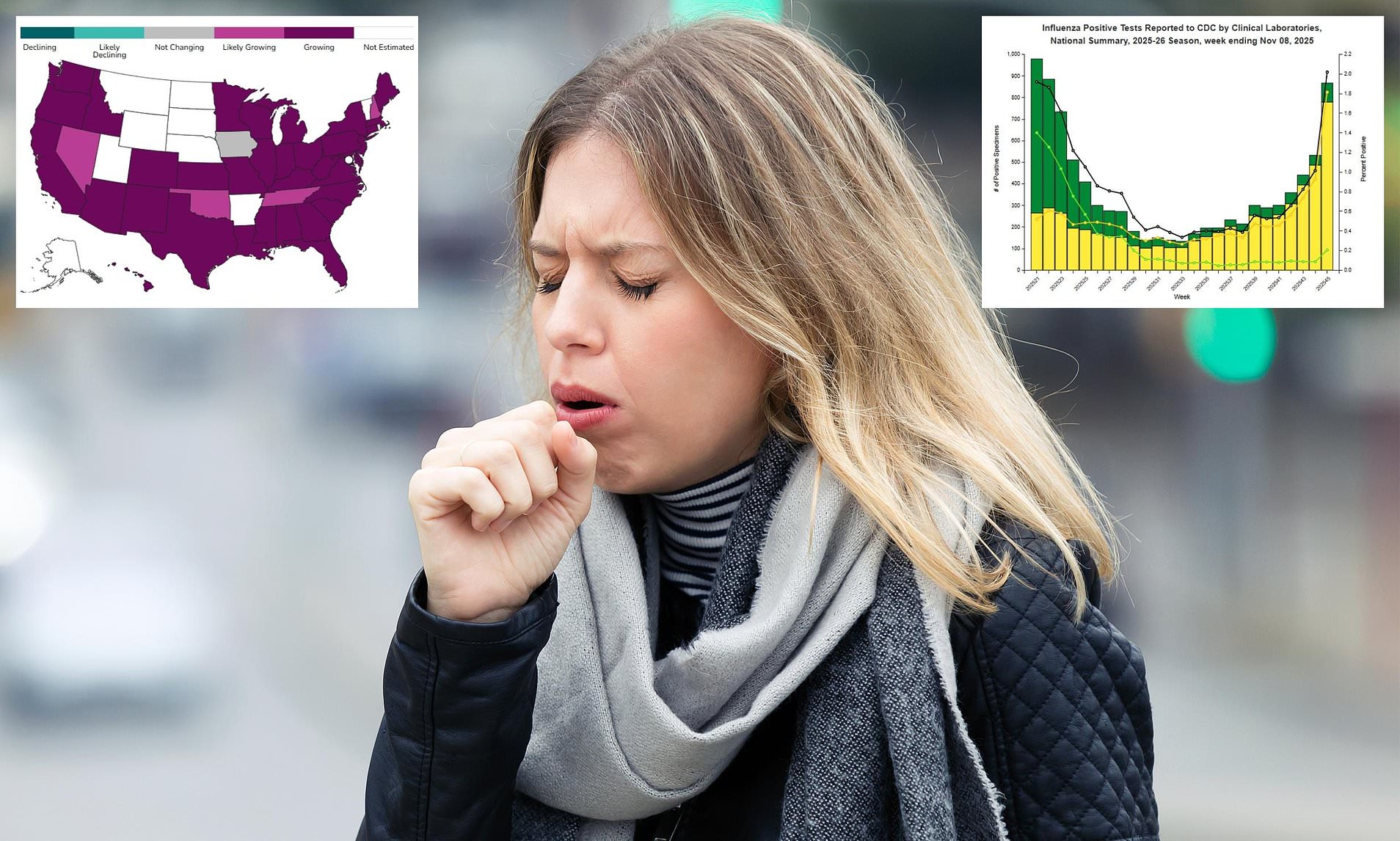
A map tracking epidemic trends across the U.S. shows that flu cases are either growing or currently increasing in all states that report data. Influenza now accounts for two percent of positive lab tests for all respiratory specimens. Additionally, doctor visits for influenza-like illness have risen slightly this week to 2.1 percent of all visits, signaling early signs of increased flu activity. Children and younger adults appear to be driving much of this increase.
The New Flu Variant: Subclade K
The new variant, known as ‘Subclade K,’ is a mutation of the existing H3N2 influenza A virus. It has raised alarms due to its ability to partially evade the immune system and the seasonal vaccine. This strain has spread rapidly in several countries, including Japan, the UK, and Canada, and is expected to reach the U.S. in the coming weeks.
Seasonal flu vaccines are designed to protect against three main groups of flu Type A and B viruses. However, the current U.S. flu vaccine does not offer protection against Subclade K. It is only designed to block the H1N1 and H3N2 strains of influenza A and the Victoria strain of influenza B.
Declining Vaccination Rates
Flu vaccination coverage in the U.S. has been declining since the start of the COVID-19 pandemic, according to recent CDC data. During the 2023–24 season, only 55.4 percent of children (ages six months to 17 years) received a flu shot, down from previous years and significantly below pre-pandemic levels. Similarly, only 44.9 percent of adults were vaccinated, also showing a decline compared to earlier seasons.
Subclade K is believed to have emerged at the end of the Southern Hemisphere’s flu season and has already been detected in North America. However, the exact proportion of samples it accounts for remains unclear.
Due to a recent government shutdown and internal staffing changes, up-to-date national flu activity information from the CDC was temporarily unavailable. The CDC resumed updating its flu surveillance reports after the shutdown ended on November 12, 2025.
From November 3 to 9, the CDC reported 1,665 influenza-associated hospitalizations, marking a five percent increase from the previous week. The hospitalization rate is currently one per 100,000 people, although it peaked at 13.5 per 100,000 during last year’s flu season.
Symptoms and Risks
Subclade K symptoms are similar to those of other flu strains, including high fever, severe body aches, and fatigue. However, the main concern is its rapid spread and ability to bypass some immunity, which means vaccinations may not offer adequate protection. Anecdotal reports suggest that in Australia, this strain caused more severe body aches, longer-lasting tiredness, and symptoms that appeared more suddenly.
Inflammation from the flu can impair the lungs’ ability to transfer oxygen, increasing the risk of deadly complications such as pneumonia, sepsis, and inflammation of the heart, brain, and muscles. It can also worsen existing chronic conditions like heart disease and asthma, often requiring hospitalization.
Public Health Recommendations
Experts emphasize that immunizations remain the best way to prevent serious illness from all flu strains. Everyone aged six months and older is advised to get the flu vaccine annually. However, vaccination rates have dropped significantly, especially among children and pregnant women.
Older residents in nursing homes are particularly vulnerable due to weakened immune systems. During the 2021–2022 flu season, the death rate for individuals aged 65 and older was around 7.4 per 100,000, compared to 0.1 per 100,000 among those aged 18 to 49 years.
The decline in vaccination rates has been linked to a surge in life-threatening complications among children. With flu vaccination rates plummeting, unprotected kids may face unprecedented risks this season.


