Strategic Reforms and New Partnerships for Nigeria’s Refineries
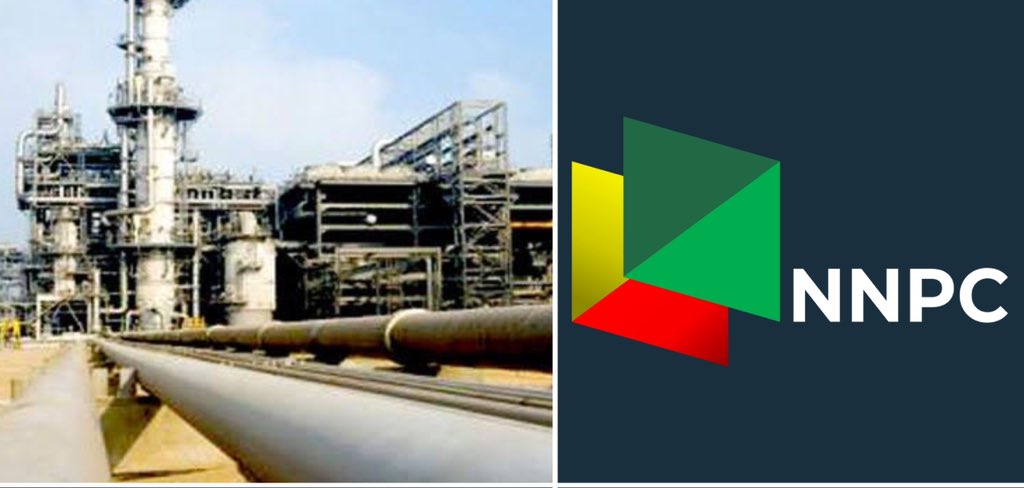
The Nigerian National Petroleum Company Limited (NNPCL) has set a new target of June 2026 to finalize the selection of technical partners for the country’s state-owned refineries. This comes after years of failed rehabilitation efforts and a significant decline in refining expertise. The company is now seeking competent private entities with proven refinery management experience to support the revival of its aging facilities.
During a press briefing in Abuja, the Group Chief Executive Officer (GCEO), Bayo Ojulari, announced that NNPCL achieved a Profit After Tax of N5.4tn for the 2024 financial year, marking the strongest performance in its corporate history. He emphasized that the Port Harcourt, Warri, and Kaduna refineries remain well below international standards, making their products commercially uncompetitive compared to the privately owned Dangote Refinery.
Ojulari explained that the current strategy involves partnering only with private entities that already operate functioning refineries. These partnerships would be based on verifiable track records and structured as commercial arrangements rather than state-driven initiatives. He highlighted the importance of technical capacity, noting that many experts running such facilities are foreign due to Nigeria’s loss of capability over time.
A Shift in Approach
The NNPCL boss pointed out that years of underinvestment, weak governance, and collapsing technical capacity have left Nigeria unable to operate its refineries to global standards. He stressed the need for partnerships with private entities that have existing refineries and a proven track record. The goal is to create a commercial arrangement where these partners bring in technical resources, while NNPCL complements with its capabilities.
Ojulari also mentioned that the company may redesign its refineries into hybrid plants to meet global product specifications and compete internationally. However, firm completion dates will only be announced after the redesign and hybridisation plans are finalized. He expects a clearer timetable by mid-2026.
He warned that if the original rehabilitation plan is followed, the output would still fall “two steps below current international specifications.” Ojulari said that the timeline for the refineries’ completion will be clearer by mid-2026, with agreements and contracts expected to be in place by then.
Challenges and Opportunities
The three state-owned refineries—Port Harcourt, Warri, and Kaduna—have been largely moribund for over a decade despite billions spent on rehabilitation projects. The Port Harcourt plant is undergoing a $1.5bn rehabilitation, Warri is being revamped under a joint programme with Daewoo Engineering, while Kaduna requires an extensive overhaul.
The emergence of Dangote Refinery, now producing Euro-V standard fuels, has further exposed the outdated configuration and technological gap of the state-owned plants. Beyond refining, Ojulari said NNPCL is working with partners to lift Nigeria’s crude oil output to 1.7 million barrels per day by year’s end, supported by improved security, better Joint Ventures financing, and new upstream investments.
He revealed that Nigeria’s oil production is on a gradual upward trajectory, with output last year around 1.5 million barrels per day. This year, the target is to reach about 1.7 million barrels per day, with expectations to hit 1.8 million barrels next year. The government remains confident of achieving its ambitious goal of two million barrels per day by 2027.
Financial Performance and Governance
Ojulari emphasized that NNPCL now operates as a limited liability company under the Companies and Allied Matters Act, with greater commercial freedom under the Petroleum Industry Act. He corrected a misconception that NNPC is still a government parastatal, stating that it is now largely a private company with government oversight and national accountability.
The GCEO highlighted that NNPCL’s long-term strategy hinges on improving partnerships and boosting investor confidence. He praised the over 6,000 direct and 6,000 indirect staff for driving the company’s turnaround, emphasizing that the organization is investing heavily in new technical skills to keep pace with fast-changing energy technologies.
Future Outlook
Ojulari reiterated that the company’s strong financial outlook, including the N5.4tn profit declared for 2025, reflects improved operational fundamentals. He noted that 2025 will outperform 2024 on the basis of fundamental performance, excluding foreign exchange gains and price effects.
With ongoing investments in the sector, NNPCL aims to become one of the most competitive companies on the continent. Governance reforms, transparency initiatives, and staff development will remain central to this ambition. Ojulari concluded by stating that the people of NNPCL are the driving force behind the company’s success, and the organization is unleashing their full potential through training, tools, and autonomy.