The EAC Summit: A Missed Opportunity for Regional Unity
The East African Community (EAC) was set to host its Ordinary Summit in Nairobi this week, marking a significant event for the regional bloc. However, due to various challenges, the summit has been postponed multiple times, leaving many key issues unresolved and raising concerns about the future of the EAC.
Initially, the summit was scheduled to take place in Nairobi, but Tanzania, which was expected to take over leadership from Kenya, requested an extension due to the country’s recent elections and the establishment of a new administration. This led to the summit being rescheduled for December 6. However, even this date has been pushed back, with no official announcement of a new date as of press time.
The Heads of State Summit is the highest decision-making body of the EAC, responsible for setting the overall policy direction. Without the Summit’s approval, decisions made by other bodies such as the Council of Ministers or the East African Legislative Assembly (EALA) are not binding. This year, the summit was expected to address critical issues, including a severe cash crunch that has left the Secretariat incapacitated, with employees walking out and EALA suspending its sittings.
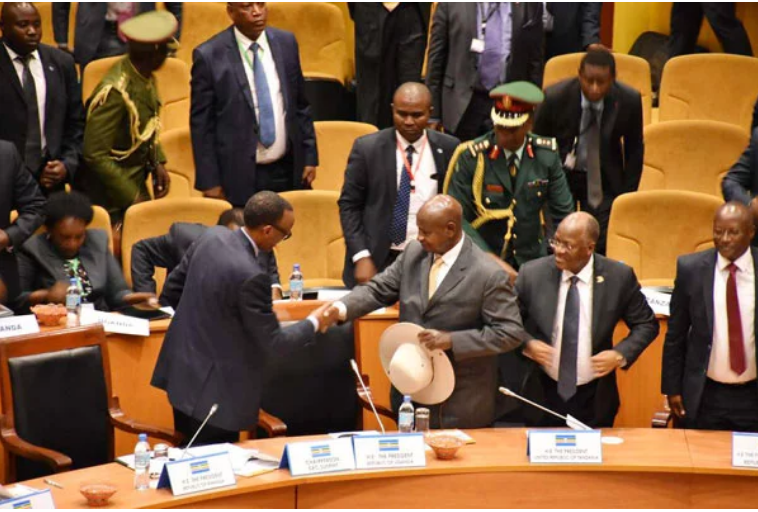
President Ruto, who is currently chairing the summit, was also expected to hand over the leadership mantle to Tanzania, following the bloc’s rotational leadership custom. However, without a timely rescheduling, experts warn that the bloc’s unity could be jeopardized, and hard-earned integration milestones may be reversed.
This is the first time in over a decade that the EAC leaders will not hold their annual ordinary summit, and the latest failure has put many regional programs in limbo. The EAC Treaty requires the presidents to meet at least once a year to ratify and approve programs and decisions. This year’s summit was crucial for discussing and passing decisions that would unlock staffing and funding for the community’s affairs.
The Secretariat and its organs have been critically underfunded and understaffed, especially after the sacking of dozens of personnel due to lack of valid contracts at the end of their terms. Others who were on secondment have left for their “mother” ministries. Even before their exit, the secretariat was struggling with paying salaries, thanks to continued default by half the membership on the annual budget support.
In September, temporary workers—comprising 44% of the secretariat’s human resources—had their contracts abruptly terminated after the Council of Ministers failed to reach a decision on whether to extend their tenure. Kenya, currently chairing the Council, had walked out of the 35th Meeting of the Sectoral Council of Ministers Responsible for EAC Affairs and Planning and the 58th Extraordinary Meeting of the EAC Council of Ministers in Arusha, effectively scuttling any tangible decision on staff recruitment.
Staff recruitment and replacement remain uncertain due to a cash crunch caused by the failure of the eight EAC partner states to remit their annual contributions of $7 million each—totaling $56 million—before the end of June 2025. Only Kenya, Tanzania, Uganda, and Rwanda had remitted their full budgetary contributions to the EAC for the 2024/25 financial year as of June 2025.
Now, uncertainty surrounds the event, with insiders suggesting the earliest it can happen is February 2026 after the Ugandan General Election, slated for January 15, 2026. Some say it could go to April 2026, to coincide with the end of Secretary-General Veronica Nduva’s tenure.
Yet this is not the first time the bloc was thrown into this kind of crisis. In 2014, the leaders skipped the summit on Tanzania’s request because then-president Jakaya Kikwete was in the US receiving treatment for cancer, and quorum could not be achieved in his absence. But this year’s flop stems not only from a lack of quorum but deeper divisions among the region’s leaders.
Sources say more than half of the eight presidents had planned to skip the meeting, a scenario that would have failed the quorum test and embarrassed President William Ruto— the host—who has positioned himself as a pan-African integration champion and a stabilizing force in an increasingly volatile region.
Kenya last hosted the ordinary summit ten years ago. It would be embarrassing if the next one it hosts sees all the Heads of State sending representatives. They have decided to postpone it rather than have that, said an insider familiar with the matter, who requested anonymity because they are not allowed to speak to the media.
The EAC Treaty requires all heads of state to be present at the annual ordinary summit. Absence of any of them is grounds for postponement, and if a meeting cannot be moved, the Treaty allows a president to appoint a Cabinet member to represent them, with the consent of the other leaders.
According to our sources, who are part of the coordinating team planning the summit, only Somalia and Burundi had confirmed attendance; the rest were planning to send representatives or skip the meeting altogether.
Tanzania’s President Samia Suluhu Hassan, who recently blamed certain “foreigners” for unrest during the October 29 elections and the immediate post-election period, was not expected in Nairobi, as the two nations continue to walk a diplomatic tightrope over the alleged role of Kenyans in the ongoing political crisis, and the demand for answers by Nairobi on the whereabouts of some of its citizens in that country.
While officials have not publicly admitted it, Kenya’s relations with Tanzania are currently on ice, largely stemming from unrest in Dar es Salaam.
Kenyans in Tanzania were reportedly targeted by security officers on suspicion of involvement in the protests; some were killed, and Dodoma has not been forthcoming in providing information on the fate of those shot or arrested in the chaos.
Some relatives of those who were confirmed dead have been unable to find the bodies of their kin. For this, officials in Nairobi continue to face domestic pressure to act.
Yet Tanzania has never missed the Summit. As a founding member, alongside Kenya and Uganda, and host of its major institutions—the Secretariat, the East African Legislative Assembly, and the East African Court of Justice—its absence would be both conspicuous and detrimental to the bloc’s unity and stability.
Besides, some of the major decisions don’t carry weight unless passed by the Big Three.
Rwanda’s Paul Kagame and the Democratic Republic of Congo’s Félix Tshisekedi were also expected to skip the meeting. The two have not sat at a table in the region since their relations became frosty due to the war in eastern Congo, which Rwanda has been accused of fanning by supporting the rebel AFC/M23 group.
They last sat together in Doha on the invitation of the Qatar Emir Sheikh Tamim bin Hamad Al Thani in March.
The war has escalated in recent months, and the M23, who captured large swathes of territory in North and South Kivu, are now being accused of crimes against humanity and massacres.
At the height of the conflict in 2024, both leaders skipped the summit, and officials say even this year they had no intention of meeting, amid finger-pointing.
On Thursday, Kagame continued blaming Tshisekedi for the apparent slow pace of the peace Congo process.
“What is delaying I can assure you does not come from or relate to Rwanda, it comes from somewhere else. We have had so many meetings, our delegations have met in Washington; there’s also Doha. But they discuss, they are near agreeing on something or sometimes they agree something, but out of that place, the next day someone says I won’t do this unless… You’ve heard someone say I won’t sign this until Rwanda has removed forces from DRC. But these are things that have been discussed even before we went to Washington,” he said, blaming the Congo side for the hitches.
“They set different conditions other than what was done and agreed in Washington. This is what has delayed things,” Kagame told a media conference in Kigali.
Now, as several processes led by Qatar, the US, and the African Union attempt to create a lasting peace between Kigali and Kinshasa, the two leaders seem disinterested in meeting in any other context. But Kagame on Thursday said he was willing to go to Washington DC “in December” for the signing of the peace accord, but he hoped there would be no further shifting of goalposts.
“They are saying maybe beginning of December that we are going to meet in Washington, I am not sure. We will wait,” he said.
Not just a trip
“It’s not just about a trip to Washington, but about making steps towards an agreement that will start a process that will bring peace to our region and our countries.”
South Sudan’s Salva Kiir is unlikely to leave the country amid domestic crises, particularly with a constant threat of civil war and starvation. His presence in Juba is crucial, especially after recently sacking and demoting Gen Benjamin Bol Mel, the vice-president who was seen as his right-hand man and the power behind the throne.
Read: South Sudan President Salva Kiir sacks powerful VP Bol Mel seen as his successor
Kiir has lately been on a government reshuffling spree, changing officials every few weeks and sending a strong signal of instability in Juba. Just this week, he sacked Deng Lual Wol as the petroleum ministry’s undersecretary and replaced him with Chol Thon Abel, the fourth time he has transferred the post from one of the men to the other in less than two months.
Kiir has repeatedly sacked and then reinstated – and sometimes sacked again – senior officials without explanation. Analysts say the tactic is aimed at maintaining control and rewarding loyalists in the face of increasing armed conflict this year between government forces and various militia, and amid speculation about his eventual succession.
Officials were not sure that Uganda’s Yoweri Museveni would attend in person, as he continues to campaign for re-election in January.
A ministry official said there was a possibility of an extra-ordinary summit to deal with some of the issues.
State Department for EAC Affairs Principal Secretary Caroline Karugu did not respond to our request for comment. But her office indefinitely postponed a scheduled media conference scheduled for Wednesday on the upcoming Summit. Provided by SyndiGate Media Inc. (Syndigate.info).