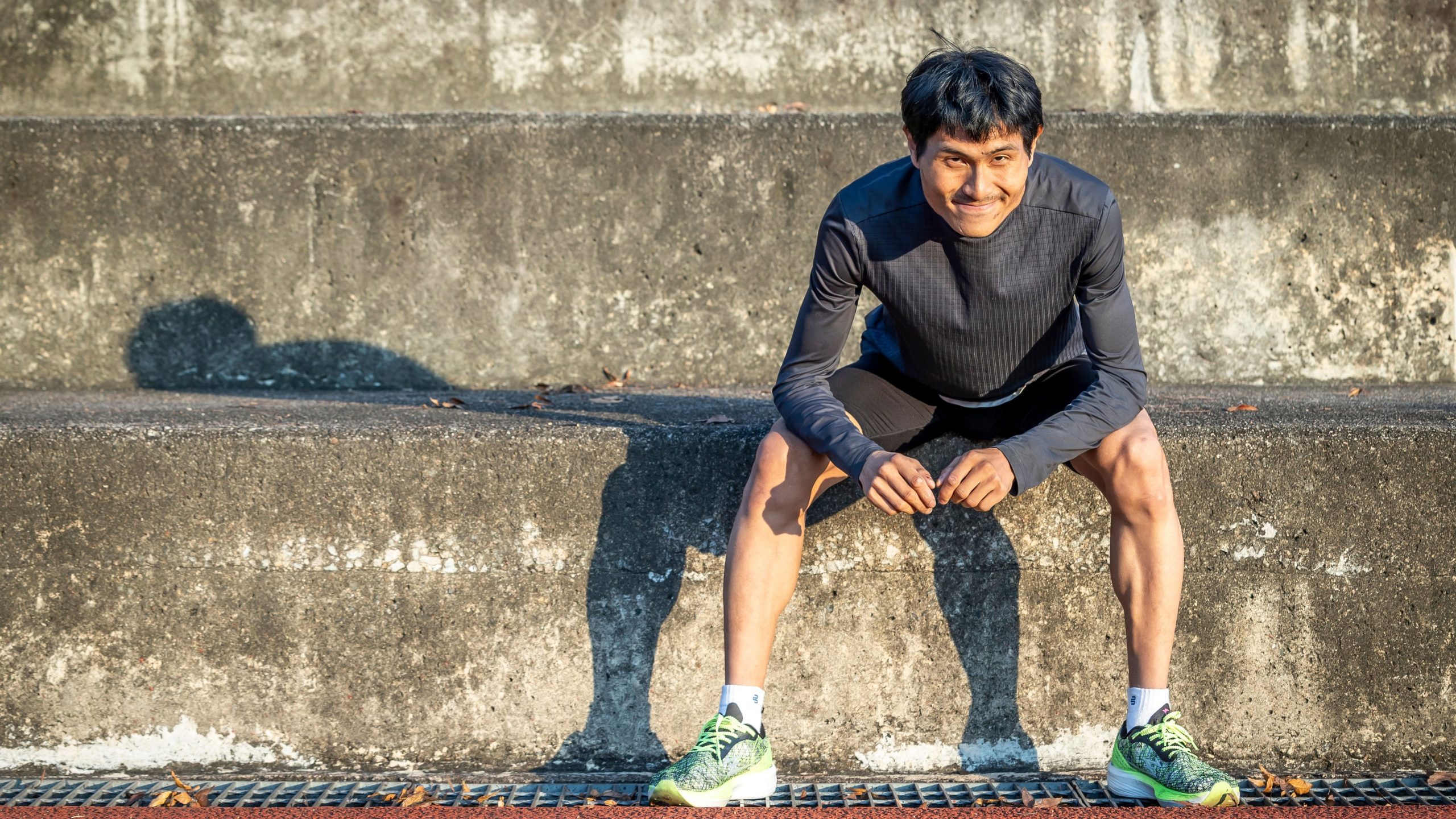
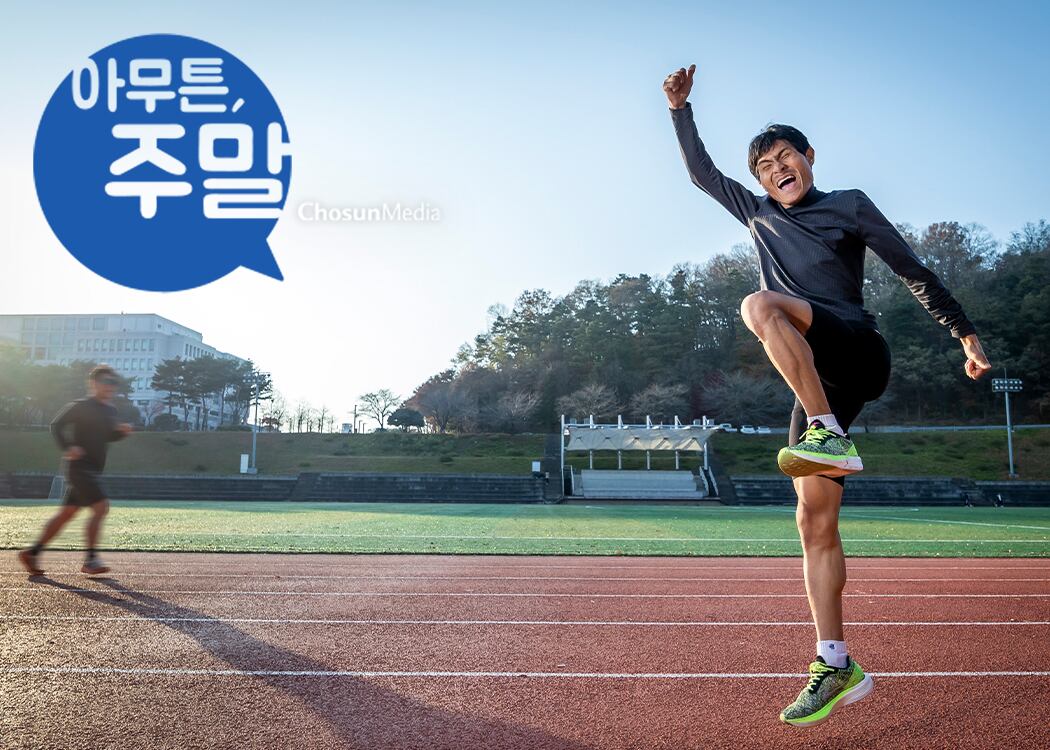
The number of runners in South Korea has surpassed 10 million, and around 500 marathon events are held each year. This is the golden age of running in the country’s history. However, elite athletics has been in a slump for 25 years since Hwang Young-jo and Lee Bong-ju, and among amateurs, types like ‘fashion runners’ and ‘nuisance crews, running groups that cause inconvenience to others’ sometimes raise eyebrows.
Then, a meteor appeared in the sluggish athletics scene: 29-year-old scaffolder Sim Jin-seok. He installs and dismantles scaffolding—temporary structures that support workers at construction sites to work at heights. After placing third in the March 1st Independence Movement Day Marathon, his first competition this year, he went on to win 32 out of 42 small and large marathons. This means he tied his running shoes every weekend. He even ran 42.195 km on two consecutive weekends.
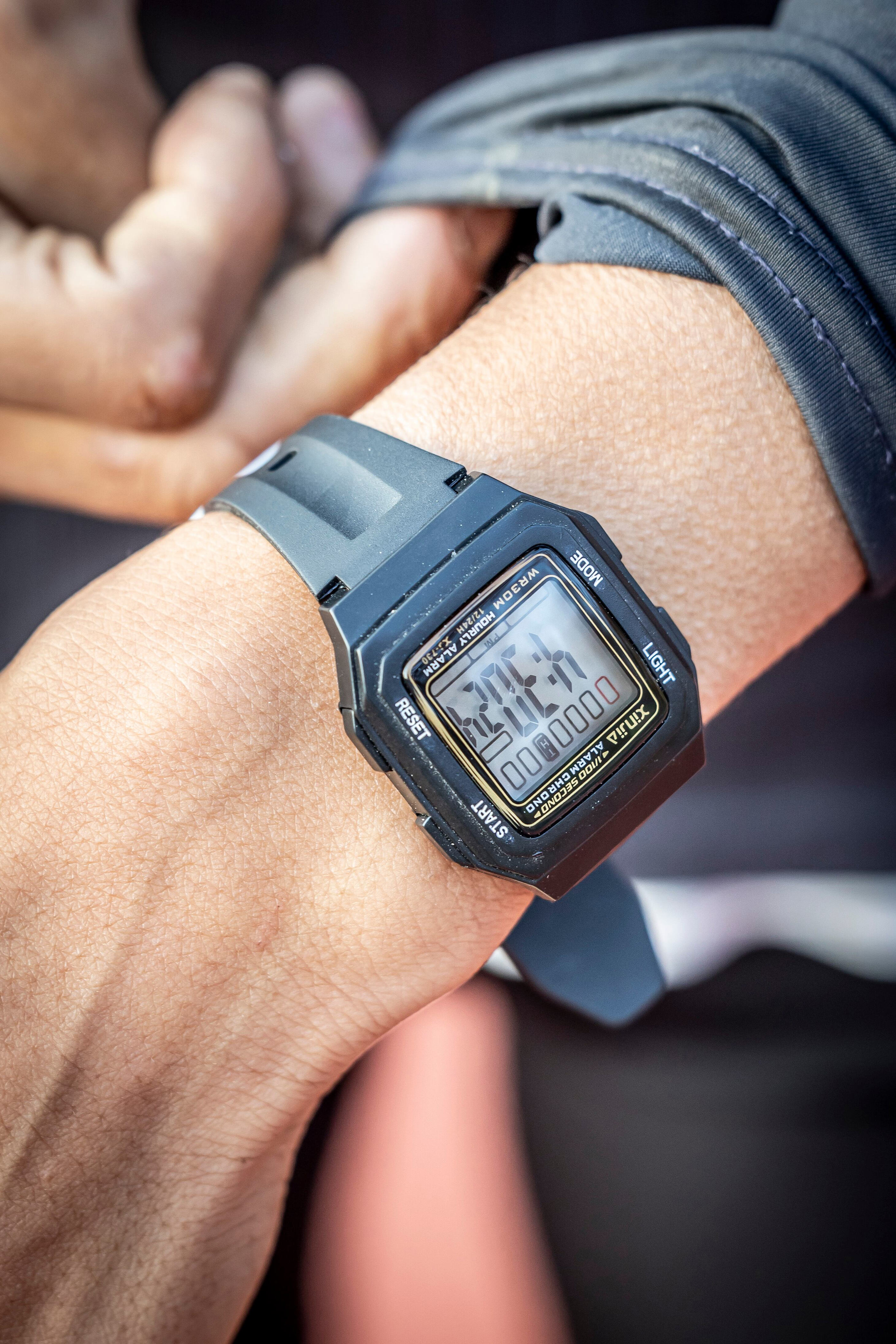
If it were just about his results, people might have merely marveled, saying, “A monster runner has emerged.” But Sim is making millions of runners reflect. His day begins and ends with an 8 km run in heavy safety boots on his way to and from work. Instead of a sports watch costing over 1 million won, which even beginners buy, he wears a 10,000 won electronic watch. He has no fancy functional running gear. He simply says, “I enjoy shortening my record through my own effort,” and grins. He is gaining fame as the ‘romantic runner.’
His narrow eyes sometimes shift anxiously, and his speech is slightly clumsy. Yet, with his unique ‘Sim Jin-seok style’ running, he struck a blow to the lax athletics community. At the same time, he has been a reliable breadwinner in the construction field. We met him in Daejeon as he wraps up his brilliant 2025 season.
Marathoner in Safety Boots
Sim is currently assisting the National Marathon Association (Jeonma Association) in Daejeon and training for next year. This became possible after his construction site contract ended. Scaffolding contracts are typically 10 months long. His shoe rack at the Jeonma Association’s dormitory in Daejeon still holds his safety boots.
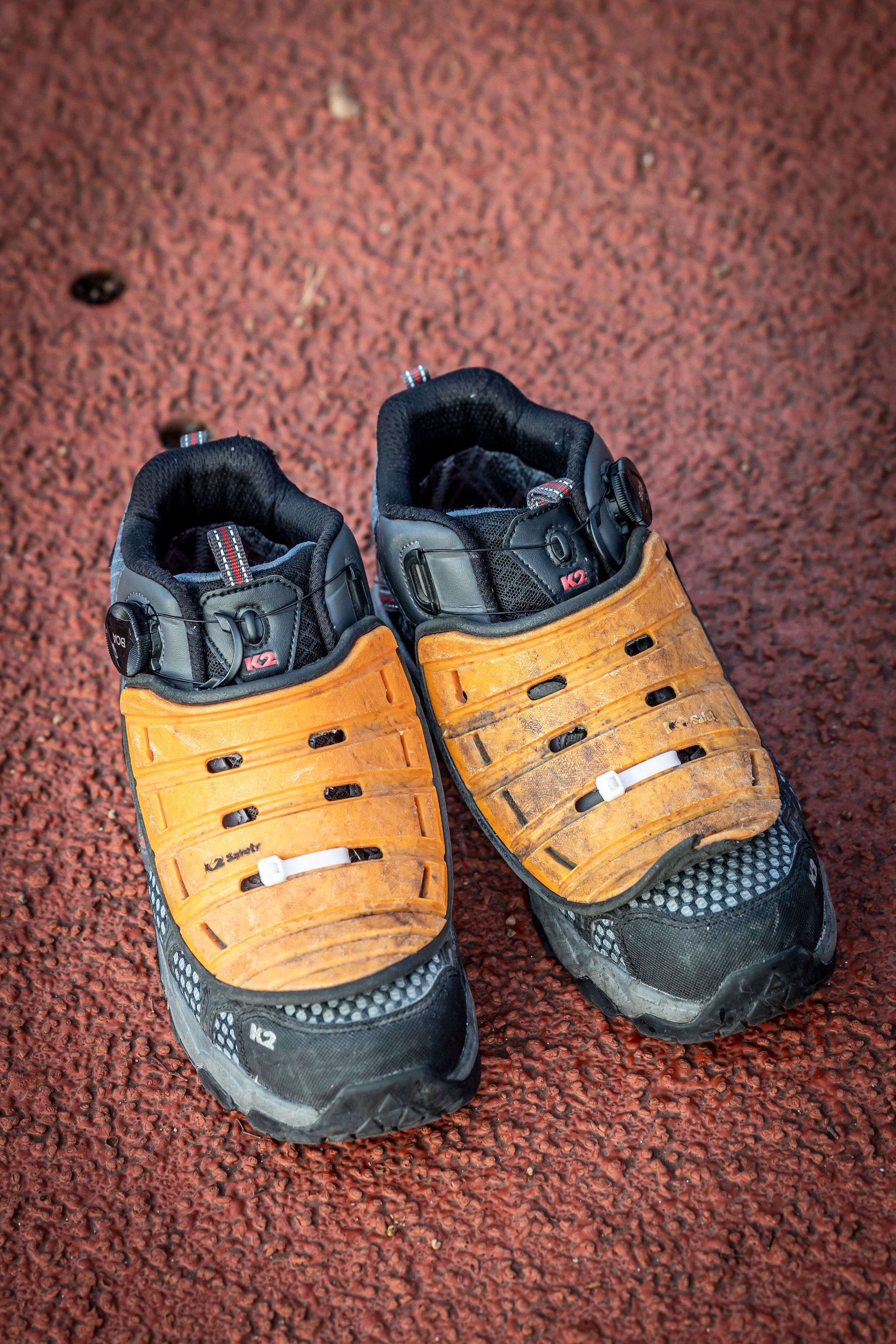
– Are safety boots a symbol of you?
“I brought them here on purpose. I train by running around 20 km daily, and I wear safety boots twice a week. I think this training helps.”
– Doctors say, ‘Never do that.’
“Yes. Only I can do it. Old athletes used to train by tying sandbags to their ankles or dragging tires. It had a similar effect.”
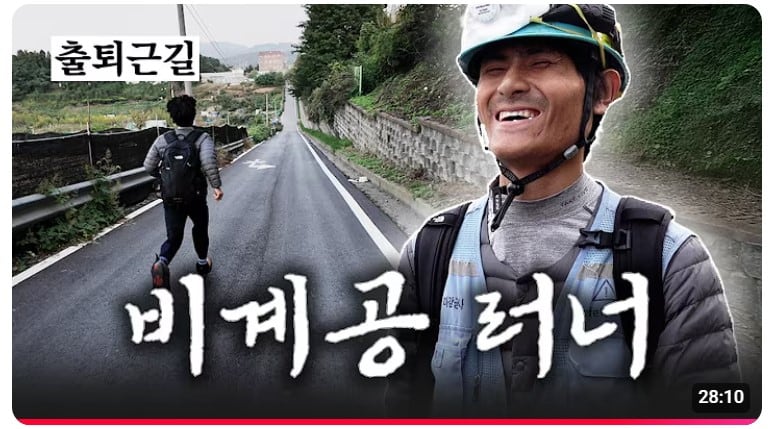
Safety boots are over twice as heavy as regular running shoes. His safety boots felt completely different from lightweight, flexible running shoes—stiff and heavy with hard plastic reinforcements on the instep for foot protection. Chairman Jang Young-gi of the Jeonma Association, who briefly joined the interview, said, “Only Sim Jin-seok can do this. The tough scaffolding work ultimately became training that enhanced his skills. Running in safety boots developed his leg muscles, and the physical labor of carrying heavy loads up and down stairs became exercise.”
– Did you do any other exercises or training besides running?
“Marathon is the sport that suits me, so I focused only on this. Plus, I have the physical strength from my construction work. They say marathon is the most primitive sport.”
– How much do you run in a month?
“Around 700 km. During the season when I participate in many competitions, it’s about 800 km. (Even running 200 km a month is challenging for amateurs.)”
– You worked and ran.
“After work, I do my own uphill training. If I have a full-course race on the weekend, I run around 50 km on Wednesday or Thursday of that week (training for distances longer than a full course is usually done 2–3 weeks before a competition). If I run less, I feel sluggish in the latter half of the race. You have to run more than the distance you’re challenging.”
– Isn’t equipment like a smartwatch necessary for efficient running?
“Well, even a 10,000 won electronic watch has a stopwatch. During marathons, there are distance markers every 1 km, so I can check my pace. Additional gear feels heavy and cumbersome.”
– I heard you don’t wear socks during races.
“It might hurt my feet, but I need to shorten my record.”
A Man Who Defies Taboos and Conventions
Above all, Sim is the emperor of ‘overpacing,’ the absolute taboo for marathoners. He bursts out like a bullet at the starting gun, sprinting for 1–2 km. The conventional wisdom is to manage your pace slowly at the beginning, conserve energy until the end, and push through the final stretch. Marathon gurus around him, including Director Hwang Young-jo and Chairman Jang Young-gi, all advise, “You must correct your early overpacing.” But Sim draws a line: “It doesn’t make much difference for me whether I overpace or not. The existing formulas are just formulas. My way works for me.”
Without a coach, sponsor, or systematic training, he has so far ‘performed well without injury’ as he envisioned. His personal best is 2 hours, 31 minutes, and 15 seconds (May 3rd Boseong Marathon). This year alone, he has produced remarkable records. Thus, his stubbornness as the ‘safety boot runner’ is hard to break.
– What race was most memorable?
“I won the Haenam Land’s End Marathon on November 8th with a time of 2 hours, 31 minutes, and 20 seconds, and the next day, I won the Buyeo Marathon with 2 hours, 36 minutes, and 53 seconds. Two consecutive days!”
This is grueling even for elite athletes. The day after a full marathon, it’s normal to be bedridden from muscle pain and exhaustion. But Sim said, “I did feel sluggish in the latter half of the Buyeo Marathon,” yet added, “I didn’t give up and crossed the finish line first,” speaking as calmly as ever.
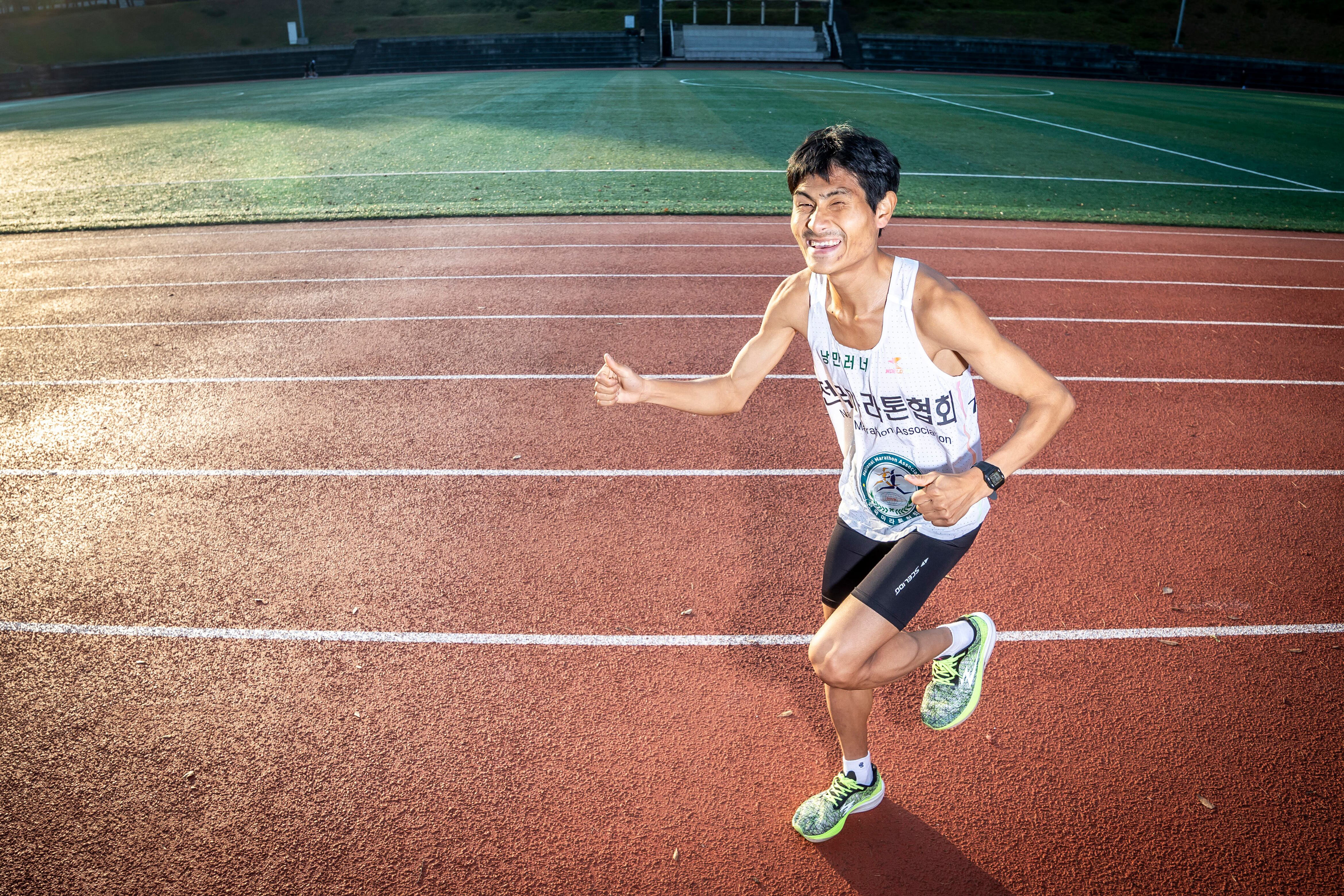
He has a record of completing five consecutive full marathons from May 4th to 8th, 2016, when he was 20: 2:32:00, 2:32:00, 2:35:00, 2:36:00, 2:39:00. “They gave a patch for completing five consecutive full marathons, so I just challenged it—and it worked. Maybe because I was 20. Hahaha.”
Athletics insiders say, “It’s unthinkable for an amateur, not a professional, to run five consecutive full marathons in the 2:30 range.”
Born into a Weak Family…
Though he nearly reached his ‘career high’ at 20, he had a long hiatus. His ‘running history’ spans about 10 years, but this year he produced explosive winning results.
– Why did you take a break from marathons?
“Because I’m the breadwinner. Our family’s situation worsened around when I was 20. Taking care of my family comes first. I enlisted in the Marine Corps in January 2017 and mainly worked after discharge.”
– I heard your parents have mobility issues.
“My father underwent dialysis for about seven years, and my married sister recently donated a kidney to him. My mother had cancer when she was young and can’t work due to a herniated disc. My brother works in building management but often collapses due to epilepsy.”
– So you became a scaffolder?
“Yes. I had to support my family, and it’s only natural as a son. Construction sites pay well, and scaffolding work offers better wages. I earned around 5 million Korean won per month. I gave 90% of my salary to my parents for living expenses. If that wasn’t enough, I did part-time work at a logistics center after work.”
– Didn’t you miss marathons?
“Marathons were canceled for a long time due to COVID-19. During that period, I earned money through construction work and trained consistently. That’s probably why I achieved good results this year.”
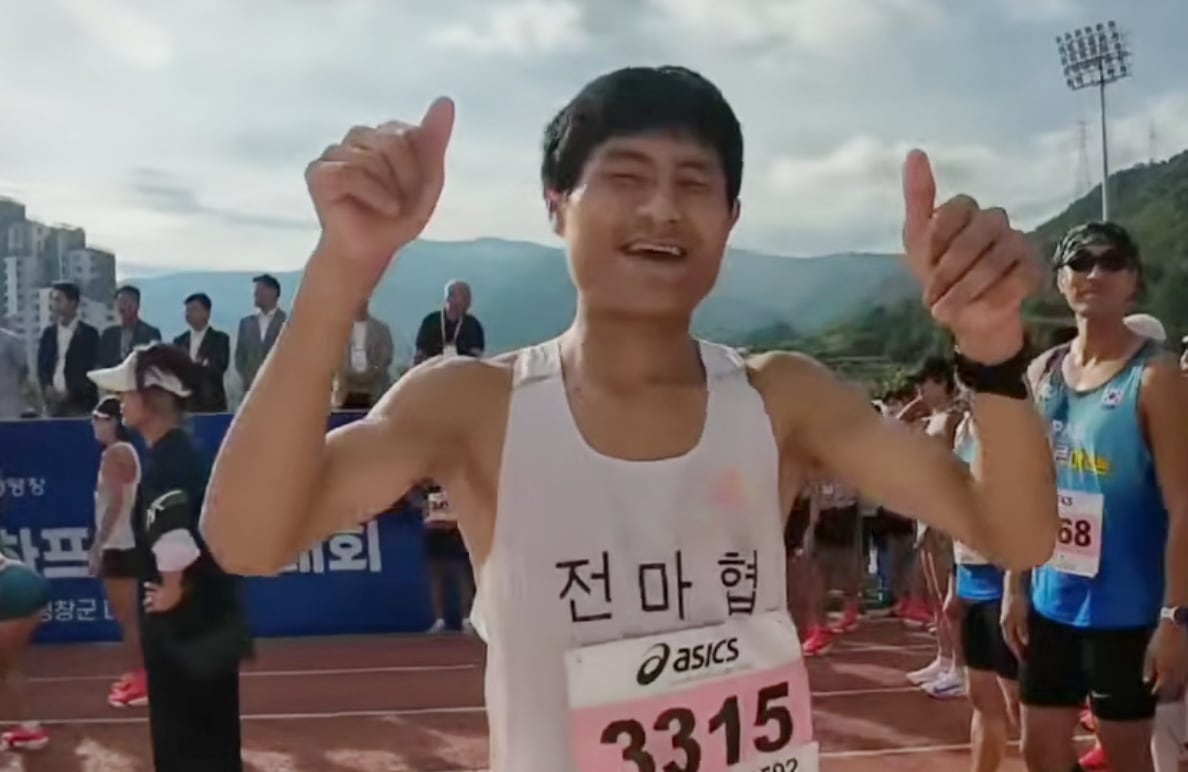
Though his family members all have chronic illnesses, Sim alone has the physique and stamina of a ‘born marathoner’—168 cm tall, 55 kg. This is considered ideal for long-distance running. He has a similar build to Director Hwang Young-jo. Sim said, “I don’t know how worried I was about my father, mother, and brother. Not being able to run marathons for a few years wasn’t a concern. I just did what was given to me. It’s regretful and grateful that I was born healthy while everyone else in my family is weak. So I tried to stay healthier.”
Sim aimed to become a jockey while in high school. He attended a specialized high school in Namwon, Jeollabuk-do, but changed paths after a fall from a horse in his senior year. Though he wasn’t seriously injured, he developed trauma and never rode again. “I always came first in morning physical training—running—during my three years in high school. That’s when friends suggested I try a marathon.”
– Was your first competition in high school?
“After graduation, in June 2015, I entered a 5 km race and won. From there, I gradually increased my goals: 10 km, half, and full course. My first full-course record in November that year was 3:12:00.”
– You achieved five consecutive full-course wins within a year of your first race.
“I just kept running around local tracks and mountain paths as usual, and my record kept improving. From 3:12:00, it went to 3:04:00, then to 2:53:00—‘sub-3’ in no time. Hahaha.”
Finishing a full marathon in under three hours—a ‘sub-3’—is every amateur runner’s goal. He achieved this in just a few months. The immediate reward in his record for his efforts might have made him addicted.
– Could your early overpacing be a habit from your jockey days?
“I’m not sure. Maybe I have that instinct. When riding, I’d dash out at the starting gun.”
Rather Turn Back Than Quit
Sim’s presence gradually spread among marathon enthusiasts. From March this year, he almost participated every weekend. His frequent appearances, placings, and unique running style started rumors. A production company recently launched a YouTube channel, ‘Romantic Runner Sim Jin-seok,’ featuring him. The first video, uploaded three weeks ago, has 2.66 million views. A ‘mukbang’ video of him eating a rice bowl four to five times larger than usual at a construction site cafeteria has 5.86 million views. With increasing support and sponsorship, he plans to focus on training for now.
– How do you spend winter?
“I have races until the 21st. After that, as a Jeonma Association athlete, I’ll train in Kenya. It’s hard to run in Korea during winter. Kenya is a highland area with temperatures around 15°C. It’s my first overseas experience, and I’m excited to train with elite foreign runners who are better than me.”
– Next year’s performance is anticipated.
“My goal is to run in the 2:29 range at the five major marathons. That’s two minutes faster than my best. If I do well, maybe even the 2:25 range.”
– Is it possible for a non-beginner to shorten their time by several minutes at once?
“It depends on how much effort you put in and what you make of it.”
– Do you have a final goal in marathon?
“To keep running to the finish line without injury or accidents, without my pace collapsing.”
His answers were consistently simple and blunt. Running itself was his goal; records and wins naturally followed. Chairman Jang added, “Sim doesn’t articulate it clearly, but I think his ultimate goal is to run in the 2:19 range and become the top amateur runner in the country. He has the strongest endurance, mental strength, and recovery ability of any athlete I’ve seen. With systematic training, the 2:19 range is definitely possible.”
Director Hwang Young-jo once offered him a position as a marathon athlete with the Korea Sports Promotion Foundation. Chairman Jang said, “If his talent had been discovered earlier, he might have been South Korea’s third Olympic medalist.”
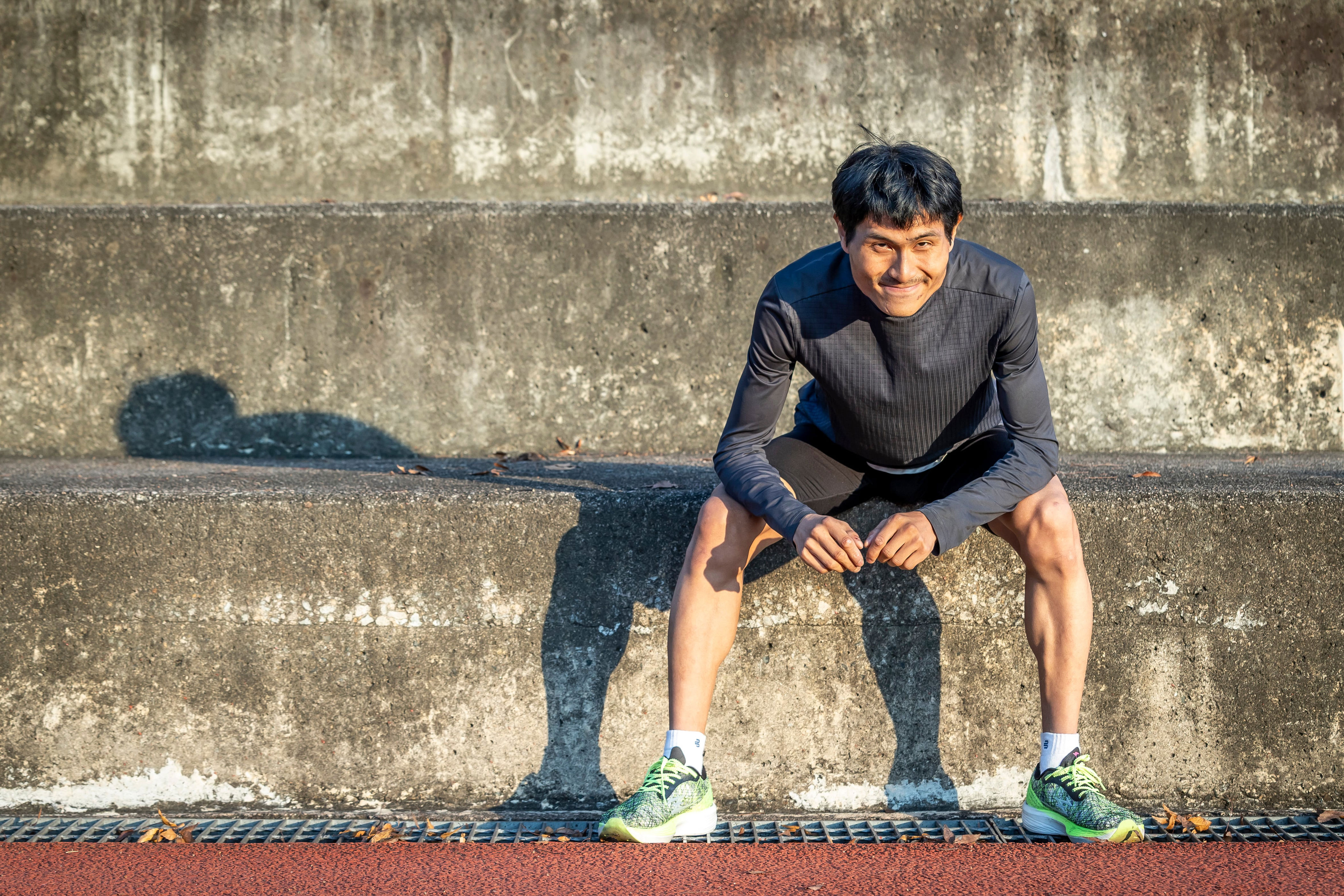
– What do you think while running?
“No surrender for me. Just run. Endure and persevere until the end. If you quit midway, you have to return to the start. Isn’t it better to finish than turn back?”
– Can’t you quit if it’s too hard?
“You’d waste the time, entry fee, and transportation cost you spent to get here. It’s a huge loss.”
– Do you feel a ‘runner’s high’ after running so much?
“Well, downhill sections let me speed up, so I feel good then. Maybe because I sprint at maximum speed from the start…. I don’t know the ‘runner’s high’ amateur runners talk about.”
His fandom is unique: reflection and concern. Comments like, “What excuse did I make today?” “I reflect at the cellular level. It motivated me.” “I cried for the first time seeing someone eat.” Many reflect on themselves while watching him focus purely on running within his circumstances. Another thread is concern and warnings: “Please don’t get scammed and live happily,” “Don’t take advantage of this gentle, pure person,” “Heaven will punish those who play tricks on Sim Jin-seok.”
The philosophy of the romantic runner who just runs. Life is like that. Just do it. Thanks to this 29-year-old, many people’s daily attitudes are changing.