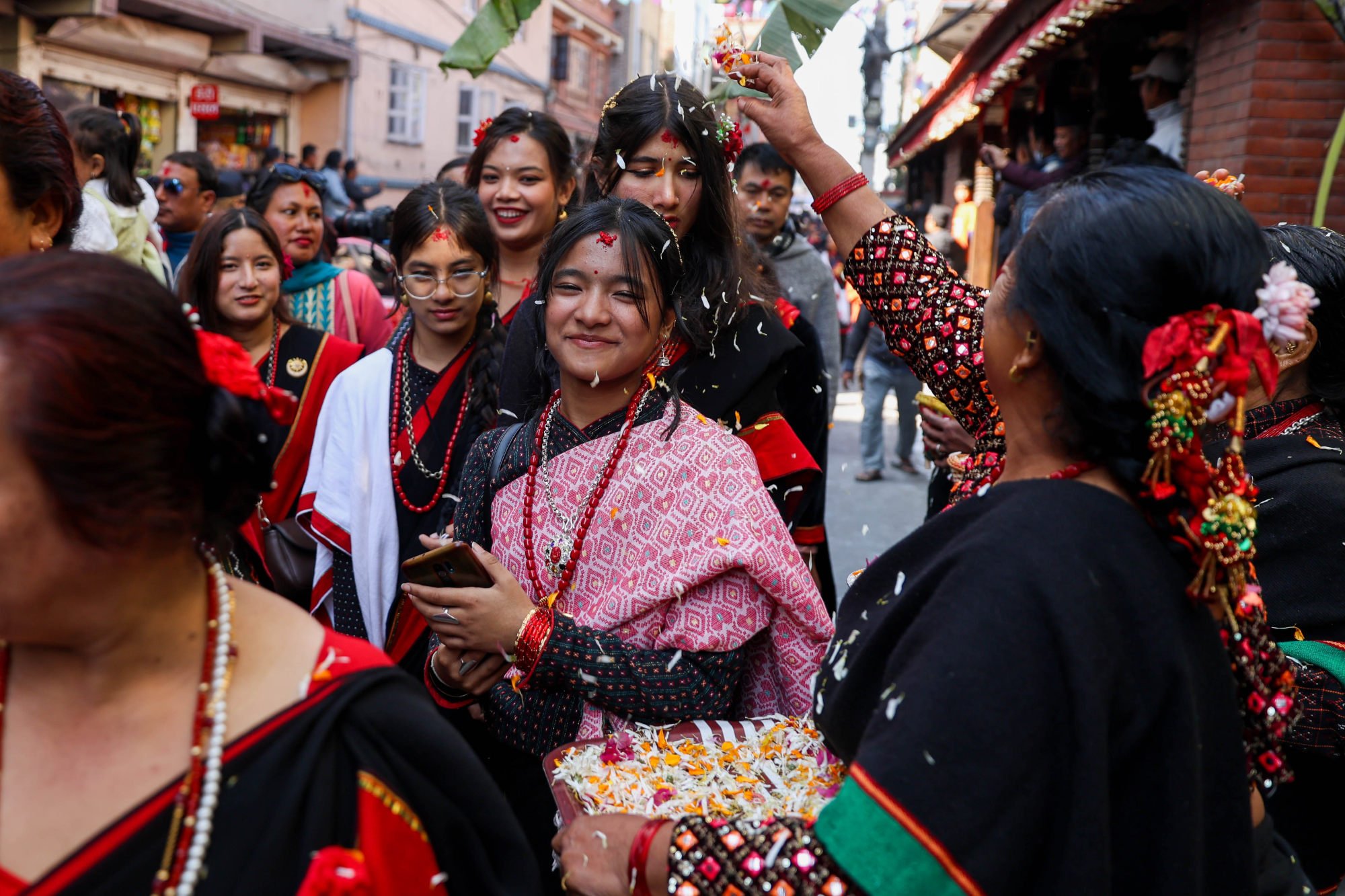
China’s bachelor crisis meets Nepal’s poverty in a trade that blurs the lines between arranged marriage and coercion
Late one night in southern Nepal last month, whispers spread of an unusual wedding taking place. Inside a modest home, an 18-year-old girl was about to be wed to a Chinese national nearly twice her age.
The match was illegal. Nepal’s minimum age for marriage is 20, and the bride’s youth alarmed onlookers. Police were called and the ceremony in Bara district was swiftly brought to a halt.
But the episode shone a spotlight on the trafficking of young Nepali women into marriage with Chinese nationals, often arranged by a web of local brokers and online middlemen promising families a route out of poverty.
“The family was told they could go to China after their daughter was married and they would no longer need to struggle,” Kanchan Koirala, a child protection officer familiar with the case, told This Week in Asia.
A new frontier
Nepali women have long been trafficked to India for sex work. But with the rise of cheap smartphones and expanded migration routes, the trade has evolved from brothels to cross-border marriages that span the Middle East, Africa and increasingly China.
“Bride-buying” is not unique to Nepal, either. For years, women and girls from Vietnam, Myanmar and Laos have been trafficked to China and sold as wives.
China’s government has recognised the problem, launching a nationwide crackdown on cross-border sham and forced marriages in 2019, and expanding anti-trafficking campaigns last year after a series of high-profile abuse cases stirred public outrage.
But South Asia has now emerged as a new frontier for cross-border marriages, researchers say.
“South Asia is currently experiencing some of the fastest population growth in the world,” said Zhong Xiaoxin, an associate professor of ethnology and sociology at Yunnan University who studies cross-border unions.
This “demographic reality” might explain “why Chinese men and commercial matchmaking agencies have begun to shift their attention” towards the region, he said.
Zhong’s fieldwork suggests that not all such marriages are coercive. Easier online communication, job migration and social media all “make it easier for South Asian women to marry into China”, he said.
But poverty and unequal bargaining power often blur the line between choice and coercion.
China’s unbalanced sex ratio, a product of the decades-long one-child policy and a cultural preference for sons, underpins the demand.
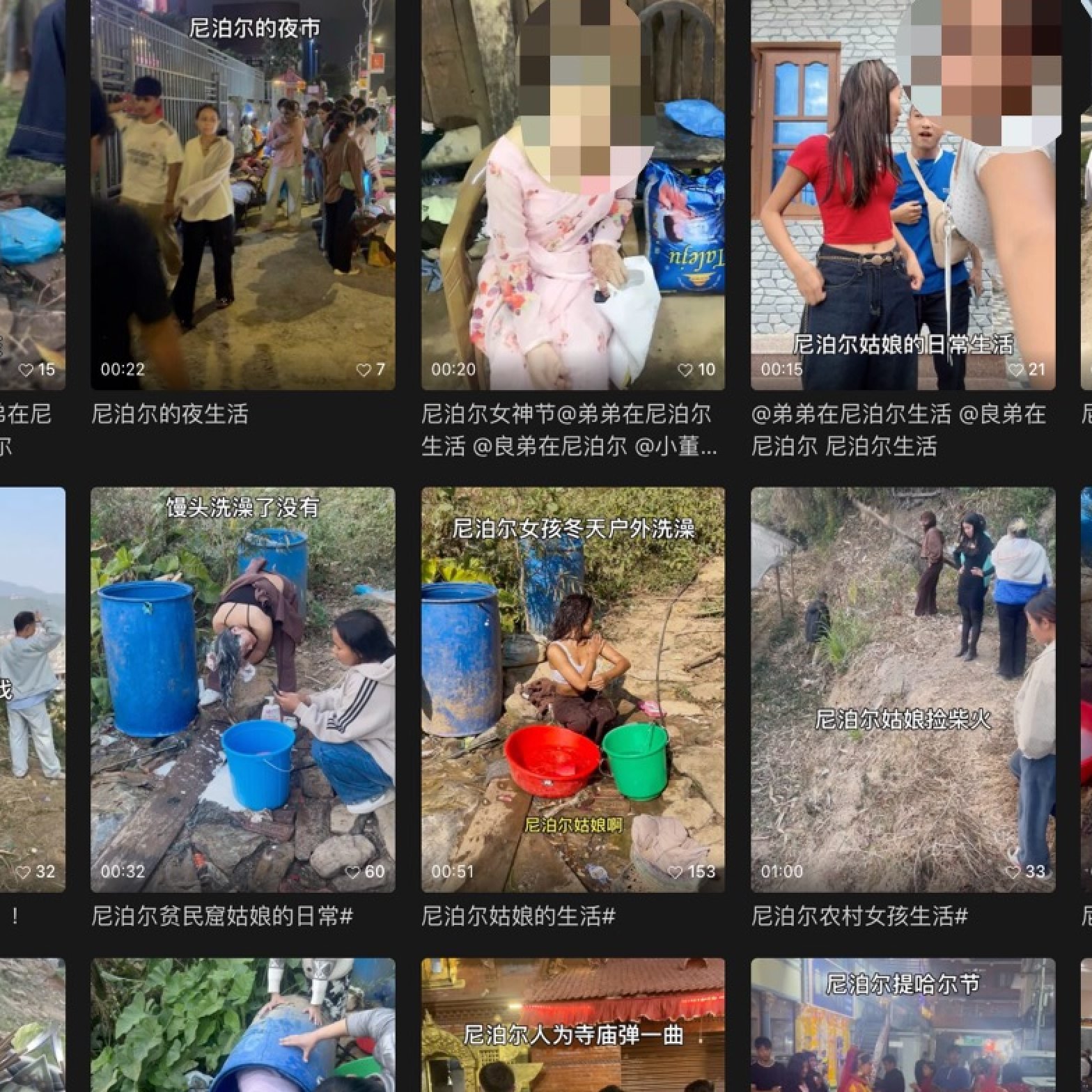
Last year, there were 104 men for every 100 women in China, official figures show, leaving millions of bachelors struggling to find partners. Some turn to paid matchmaking schemes for help.
Major Chinese platforms such as WeChat, Weibo and RedNote now host a growing ecosystem of accounts promoting marriages with Nepali women.
In one live stream, a male moderator using the handle “Younger Brother Lives in Nepal” introduces young Nepali women to his nearly 7,000 viewers. “If you want to marry her and take her home, support our girl first,” he says, as viewers comment with bids – one offering 200,000 yuan (US$28,300) for “the one in red”.
‘Treated as commodities’
Aneka Rajbhandari, co-founder of The Araniko Project in Beijing, said she had seen Chinese social media users treat Nepali women as if they were commodities.
“I have seen men openly inquire about finding partners in Nepal as if it were a market,” she said. “No woman, Nepali or otherwise, should ever be objectified or exploited in this way.”
Misleading portrayals circulate widely. Posts claim Nepal is a land of polyandry – a rare and illegal practice in which woman have more than one husband – while Bangladesh is depicted as a hub of child marriage and prostitution. Activists warn that such stereotypes portray entire societies as sources of cheap, compliant brides.
“Watching Nepali girls being treated as commodities is deeply distressing,” Rajbhandari said.

The Chinese embassy in Bangladesh has publicly denounced the “misguided notion” of “buying a foreign wife”, warning citizens in May about a surge of online scams disguised as matchmaking services. But misinformation continues to spread, feeding demand and fuelling online recruitment.
On Chinese social media, influencers and small agencies promote foreign marriages. In one viral Weibo post this month, a Chinese traveller strolling through Kathmandu’s Thamel neighbourhood talks of meeting a compatriot live-streaming his search for a Nepali wife “because the income here is very low”.
“They say a university graduate only earns around 1,000 yuan,” the tourist said. “So there are people who yearn for the life in China.”

For activists, such depictions gloss over the power imbalances at play.
“Trafficking rackets and networks target the economically vulnerable,” said Mona Sherpa, Nepal country director for the international NGO Care.
She said recruiters increasingly used the language and aesthetics of influencer culture, offering young women with limited digital literacy the promise of easy money or a glamorous foreign marriage.
“These rackets use other girls to influence the girls online,” she said. “It supports peer influence and grooming.”
Behind closed doors
Court records and local media investigations suggest that many cross-border marriages operate through informal networks of brokers, some working with Chinese partners.
Two years ago, a Nepali woman married to a Chinese national was charged with human trafficking after allegedly luring several girls into similar unions. In a separate 2019 case, four Chinese nationals and six Nepalis were arrested for running a bride-trafficking ring, with two of the men detained at Kathmandu airport attempting to leave with their newlywed Nepali wives.
While some marriages are legally registered, many bypass official channels. Women are flown to China on tourist visas, making verification difficult. Nepal Police’s Anti-Human Trafficking Bureau has charged 14 people – including four Chinese nationals – with bride trafficking over the past six years. Activists say the true scale is far higher.
Last month, police raided several flats in Kathmandu’s Mhepi neighbourhood and found five young Nepali women living with four Chinese nationals. The rooms were filled with cigarette smoke and alcohol. On the men’s phones, investigators discovered videos and photos of the women.
“They told us that the videos were to promote Nepali arts and culture,” said Teekaram Dhakal, director of Nepal’s immigration department. “They acknowledged that they sent the videos to their friends in China, though they didn’t explicitly say for what purpose.”
The men held business visas but could not justify their activities. The women were reluctant to file formal complaints. Without evidence of coercion, authorities charged the men only with visa misuse and deported them.
Human trafficking in Nepal carries prison terms of up to 20 years and fines of 200,000 rupees (US$1,380). Dhakal said his department had asked the Chinese embassy in Kathmandu to investigate further.
This Week in Asia has contacted the embassy for comment.
More Articles from SCMP
Hong Kong property tycoons turn heads at poll, urge voters to fulfil civic duty
Hong Kong hospital fee rises a necessary step towards sustainability
With one small step for AI, Chinese scientists make giant leap for humanity
China’s Politburo says ‘more proactive’ fiscal policy to come in 2026
This article originally appeared on the South China Morning Post (www.scmp.com), the leading news media reporting on China and Asia.
Copyright (c) 2025. South China Morning Post Publishers Ltd. All rights reserved.