If you’re getting bored of ordering the same old fish at your local chippy, experts claim to have the answer.
Saithe, also known as coley, is a member of the pollock family found around the North Atlantic Ocean with grey–ish coloured flesh.
When cooked, saithe is said to boast a much stronger and more intensely ‘fishy’ flavour than traditional options like cod and haddock.
Bjørn–Erik Stabell, the Norwegian Seafood Council’s UK director, has called saithe the ‘fish lovers’ fish’ and ‘an excellent choice’.
‘It’s a favourite of mine and offers a lot of great taste for the money,’ he told the Daily Mail.
‘However, saithe has not been a fish species that has been consumed a lot in the UK.’
Saithe is hard to find in Britain, although some English chip shops have served it including Harrison’s in Oxford, Linford’s in Peterborough and The Scrap Box in York.
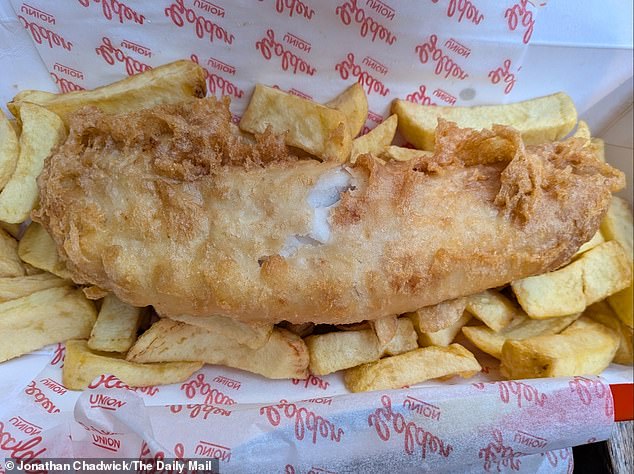
To find out if it’s worth replacing our chip shop favourites, I try battered saithe at my nearest fryer – and I won’t be forgetting it in a hurry.
From my intensive research, I only find one London fish and chip restaurant selling coley – Golden Union on Poland Street in Soho.
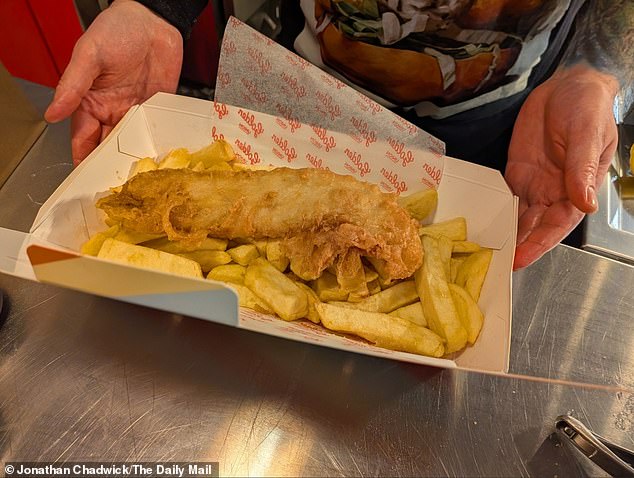
This retro–looking chippy is selling a battered coley fillet for £11 – slightly cheaper than cod and haddock (both £11.50) as well as pollock and plaice (both £12.50).
So naturally it should be the fillet of choice for any visitor on a budget!
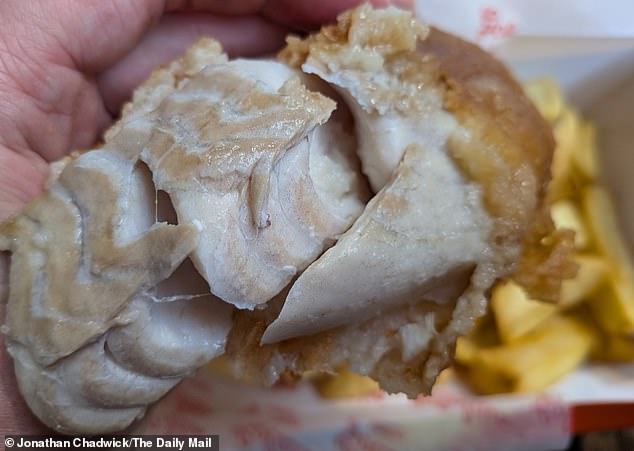
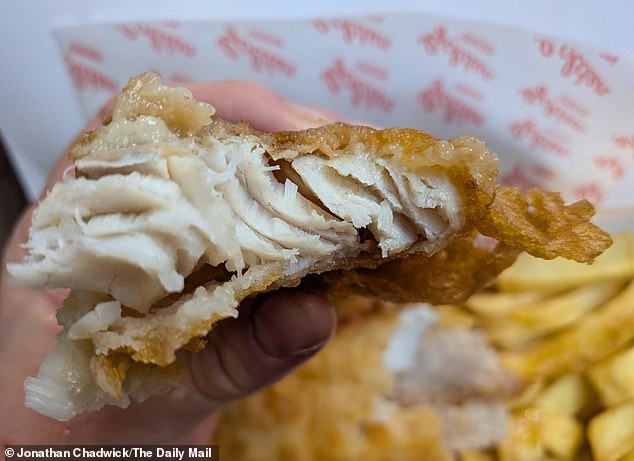
As I break apart my coley fillet, the flesh is quite different to what I’m used to – instead of pearly white like cod it has a duller colour, slightly grey.
Apparently this puts a lot of diners off, which is a crying shame, because coley is a total delight.
The flavour is a lot milder than I was expecting – delicate and not at all odorous unlike some other fish dishes I’ve tried.
What I especially loved was the flesh’s firm, meaty consistency and large, generous flakes.
From now on, I’m opting for coley at the chip shop every time.
Until now, all I knew about coley is that my dad used to cook it for our cats in the microwave, stinking out the kitchen in the process.
Probably because of this – and the fact I never saw it on supermarket shelves or fish bar menus – I subconsciously assumed at the time that it wasn’t meant for humans.
Obviously I was quite wrong – there’s nothing wrong with coley and I see no good reason why we don’t eat more of it.
Unlike cod and haddock, coley is a sustainable fish, meaning it can currently be caught in ways that allow the long–term future and viability of the species.
British demand for cod and haddock vastly exceeds supply, even when accounting for imports, while demand for coley here stays relatively low.
According to Mr Stabell at the Norwegian Seafood Council, coley is nutritionally similar to cod and haddock but significantly cheaper, so it would make a smart option for chip shop owners seeking cheaper alternatives.
It is also supposed to be great for everyday meals such as fish pies, fishcakes, croquettes, rice dishes like jambalaya, or simply topped with a herby crumb served with seasonal veg.
Mr Stabell doesn’t want to stop people eating cod and haddock, but rather to ‘raise awareness’ of this underused fish species.

‘Given that cod is the biggest fish category in the UK, there has been considerable industry attention on the reduced quotas for cod, which have resulted in increased prices,’ he told the Daily Mail.
‘This has particularly raised concerns in the fish and chips industry.’
A spokesperson for Golden Union told the Daily Mail: ‘We’ve been serving coley as a sustainable choice for many years.
‘In the beginning it was a more affordable alternative to cod and haddock, but as fish prices have risen, we prefer to offer our customers a wider variety instead of relying on just one or two options.
‘For us, it’s all about giving each person the choice that suits them best.’
Read more
- As Britain’s fish and chip industry faces a cod crisis, is this tasty alternative becoming the new crowd favorite?
- Could Britain’s youngest chippy boss at just 19 have really revealed the nation’s ultimate fish choice with cod over haddock?
- Are Britain’s beloved fish and chip shops teetering on the brink of survival amidst skyrocketing cod prices and crushing fishing quotas?
- Could eating cod heads become the next big sustainable dining trend sweeping across Britain?
- Stunned by the soaring cost of fish and chips? Discover why your beloved chippy treat now costs nearly £10!