- Click here to visit the Scotland home page for the latest news and sport
Barring some wild twist between now and May, the SNP is on course to win the 2026 Holyrood elections.
Whether they can secure an overall majority remains an open question, though on current polling it seems more likely that John Swinney’s party will once again be the largest group in the Scottish parliament. That could mean a continuation of minority government or another stab at coalition with the Greens.
Depressing, isn’t it? Almost 19 years of deceit, division and decline and the electorate appears poised to order five more years of the same. Democracy is a grand idea until the voters get involved.
The SNP deserves an electoral reckoning for its record of failure, ineptitude and secrecy but if it does escape the consequences of its actions yet again it will have been aided immeasurably by the Scottish Labour Party. Events weren’t supposed to play out like this.
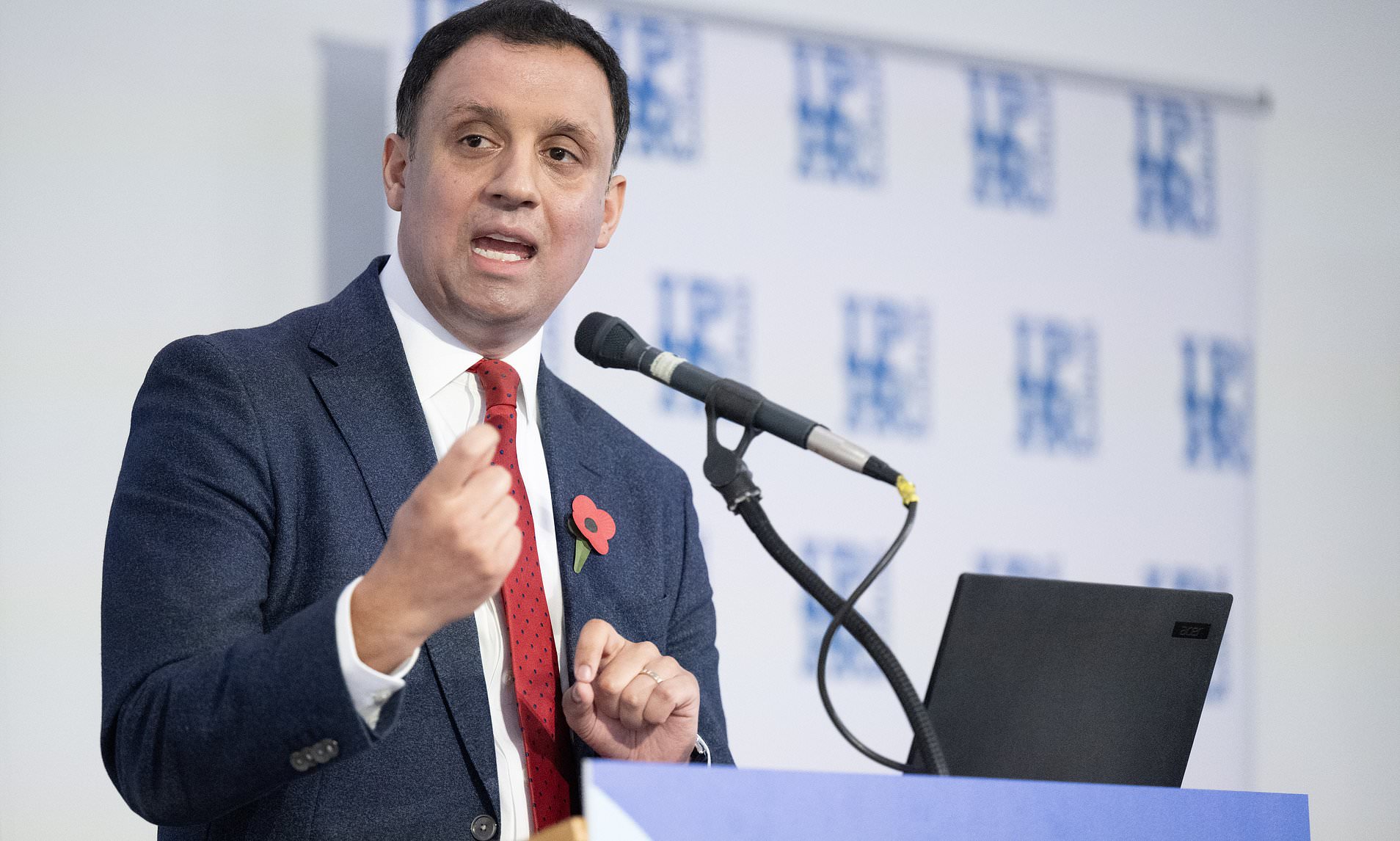
The resignation of Nicola Sturgeon, her replacement by Humza Yousaf, and Labour’s recovery of most of its former Scottish seats at the 2024 general election were to be the opening notes of a new mood music in devolved politics, an arrangement that would crescendo with the toppling of the SNP and the entry into Bute House of Anas Sarwar.
Where did it all go wrong?
Scottish Labour lost power in 2007 after ten years of an increasingly unpopular Labour government at Westminster, one headed by the lightning rod figure of Tony Blair and mired in the Iraq war into which he had taken the country despite his party’s misgivings.
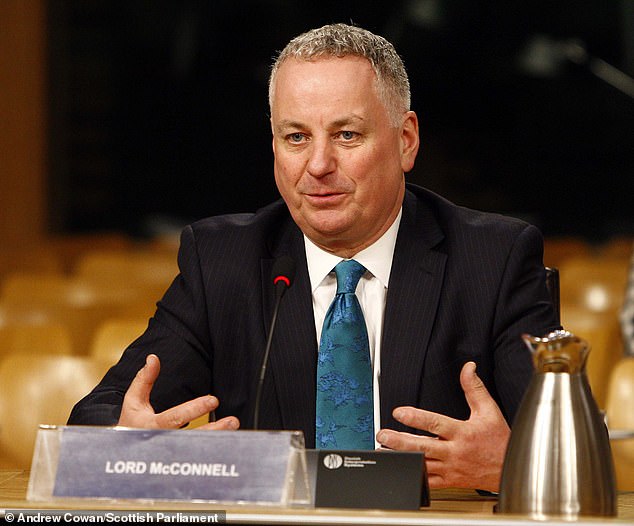
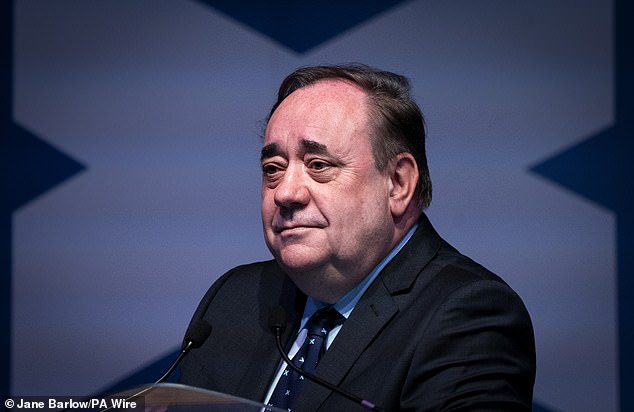
Against the slick populism of Alex Salmond’s campaign, the well-intentioned but unexciting Jack McConnell stood no chance. When it sold devolution to the voters, Labour promised ‘the Union will be strengthened and the threat of separatism removed’, and yet just eight years into the experiment the parliament was in the hands of the separatists, and in their hands it has remained.
Since then, Labour has tried and failed three times to recapture Holyrood. The first occasion was in 2011, but just 12 months after Gordon Brown handily claimed two-thirds of Scottish seats at Westminster, Scottish Labour lost even more ground to the SNP, which triumphed with a historic majority.
Next, in 2016, and with Salmond replaced by Nicola Sturgeon, Labour crashed into third place amid a Ruth Davidson-engineered surge for the Conservatives. Five years later, Labour failed again, stuck in third place.
If Blair and Iraq are to be blamed for Labour’s defeat in 2007, where does the responsibility lie for its inability to regain government? The issue cannot be factional or ideological.
Recent Holyrood leaders have spanned the internal party spectrum, from Brownite (Wendy Alexander) to Blairite (Jim Murphy), Wilsonite (Johann Lamont) to Corbynite (Richard Leonard), taking in the various shades of Left represented by Iain Gray, Kezia Dugdale and Sarwar himself.
Earnest student Lefties often opine that ‘real socialism has never been tried’. Scottish Labour has tried every variety of socialism: real, unreal and, under Jeremy Corbyn, surreal.
Should Sarwar fail to buck this trend next May, three hypotheses will present themselves: 1) Labour loses power at Holyrood when there is an unpopular Labour government at Westminster, 2) Labour cannot regain power at Holyrood despite an unpopular Conservative government at Westminster, and 3) Labour cannot regain power at Holyrood when there is an unpopular Labour government at Westminster.
If these suppositions are true, the party’s problems go far beyond Sarwar or Starmer to something more fundamental. Something, perhaps, existential.
Maybe Scottish Labour has outstayed its usefulness as a political party. Maybe it is no longer capable of winning a Holyrood election.
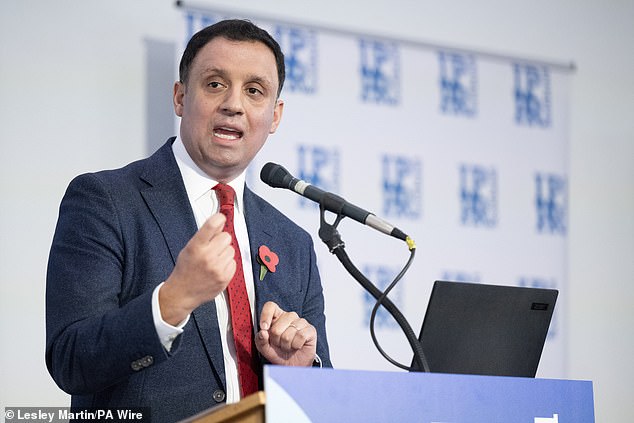
The real danger the SNP posed to Labour was never anything to do with the constitution. It was the threat that, as a party combining nationalism with broadly progressive sentiments, the Nationalists would simply replace Labour as the main centre-Left force.
Scotland didn’t need to become independent to realign its politics. The country could have the best of both worlds by staying in the UK – just and no more – while returning the SNP in one Holyrood election after another to safeguard Scotland’s distinctiveness and browbeat Westminster into giving the Scots the most favourable constitutional and financial terms for remaining in the Union. Vote No to keep the pound, then vote SNP to keep the pounds pouring in from the Treasury.
The SNP’s long wobble from the final days of Sturgeon through the brief Yousaf era presented Labour with an opportunity to reassert dominance. Starmer parlayed an anti-Tory national mood into a revival of Labour’s fortunes north of the Border but his inadequacies and his government’s missteps over sleaze and the winter fuel payment made a Scottish recovery short-lived.
It doesn’t help Sarwar that Downing Street decided to shackle him to Rachel Reeves’s ill-conceived and ill-received Budget by crediting him with the Chancellor’s allocation of extra cash to Holyrood. It was a sleekit tactic which Sarwar ought to have seen coming, but now that he’s accepted the kudos for the Budget he has no choice but to accept the criticisms too.
Starmer became prime minister on the shallowest of landslides but nowhere so shallow as in Scotland, because in Scotland there is a viable alternative to Labour in the form of the SNP. The days when the two main parties could disregard their heartland voters, confident that the disaffected had nowhere else to go, are long gone.
Which is why it is futile to point out to voters that the SNP has performed abominably in government. They already know. What they want to hear is how the parties vying for their votes plan to make things better.
NHS waiting times are out of control. What would Labour do to bring them under control? The attainment gap keeps widening. What is Labour’s plan for closing it? Energy jobs disappearing before our eyes. How would Labour hold onto them?
On these questions, Labour has no answers. It has no answers on any of the big questions. In almost two decades it has not given Scotland a single reason to put it back into government.
The atmosphere inside Scottish Labour is glum. The momentum has deserted them and they have no idea how to get it back. No matter what they say, no matter how forcefully they prosecute the case against the SNP’s record, the voters are not listening. They gave Labour the benefit of the doubt last July and look how that turned out.
Should the Holyrood elections go the way the polls suggest, the fallout will see talk of leadership changes, policy shifts and organisational tinkering, but what if Scottish Labour’s problems are bigger than that?
What if the party that once exercised an iron electoral grip over Scotland can no longer get that grip back? What if Labour is doomed to lose one election after another to the SNP, holding onto enough seats to maintain the illusion of political viability but never truly posing a challenge to the dominant party?
The answers might make Scottish Labour politicians uncomfortable, so they refuse even to contemplate the questions. Denial is an addictive drug but its effects wear off. As they head for their fifth defeat in a row, they will soon have no option but to confront a painful truth: that for Scottish Labour the party might well be over.
Read more
- With SNP’s dominance looming, does Scottish Labour need to topple Sir Keir Starmer to boost election prospects?
- Can Sarwar rejuvenate Scottish Labour amid SNP’s independence push and lingering voter frustration?
- What ominous signs lie ahead for Labour in Scotland despite the SNP’s recognized vulnerabilities?
- Will grim economic forecasts and broken promises spell disaster for Labour’s future in Scotland?
- Could Labour’s centrist policies signal their downfall? With disillusioned voters and plummeting polls, is Starmer losing his grip on power?