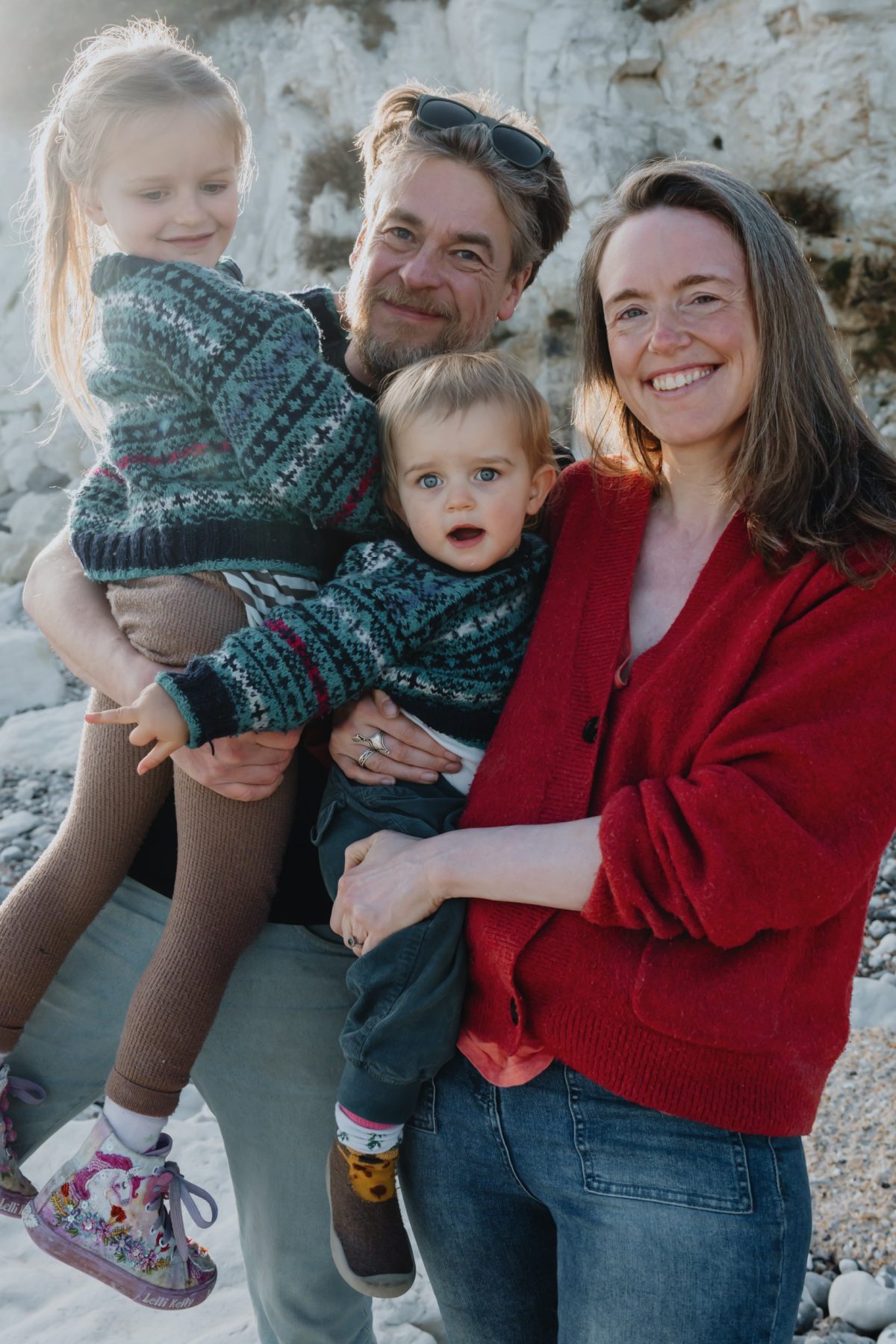
Every Friday morning, Charlotte McLaughlin’s six-year-old daughter Ember can be found in pyjamas while the rest of her classmates are starting their day in a school classroom.
“Fridays are much slower – generally breakfast in PJs, reading books, writing at the kitchen table, and doing free play,” says Charlotte, 43, a psychotherapist, who lives in Sussex with her husband and their two children, aged six and two.
Ember is one of a small but growing number of children who “work from home” on Fridays, in an arrangement with the school. The concept, known as flexischooling, is becoming more popular with parents who work flexibly or part time and want their child to be educated at home one day a week.
Charlotte read about flexischooling when she began looking for a school place for her child. Although she had considered home education, she felt Ember would enjoy the school environment, and also wanted to continue working. It sounded like the perfect balance.
“I didn’t want Ember in school five days a week at the age of five,” she says, adding that she felt five days a week in an academic system wasn’t appropriate for a young child. “There had to be another way.”
She made a case to the headteacher of her preferred primary, Danehill School, which already had a reputation for its warm, “enlivened learning” approach and a focus on outdoor play.
“There were a few other families, one of which was a friend of mine, contemplating the same. I said I really believed it would be of value for our daughter, and asked if they would trial it with us.” She argued that flexischooling meant parents could contribute to their children’s learning and not just be bystanders.
The headteacher, Katie Jones, suggested a trial – it has proved successful so far and remains an option available to all parents in reception and year 1. At present, Ember and one other child in Year 1 are flexischooling, with another two families requesting it for when their child starts school.
“Both my husband and I are self-employed so we have flexibility in our work schedule,” says Charlotte, explaining that they share the home education of their daughter on Fridays.
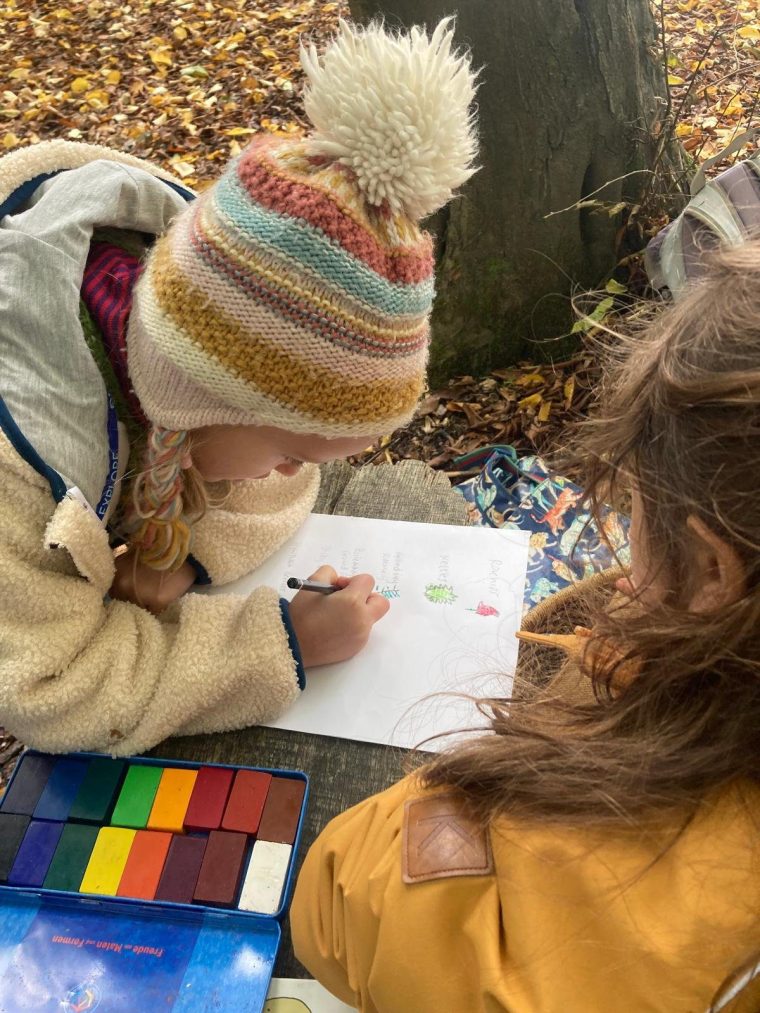
Each week, Ember’s teacher informs all families in the class of learning covered for that week. Parents home-educating on the Friday then build on this learning at home. Teachers may ask parents to cover a specific learning outcomes on a Friday, but they do not plan Friday’s learning for flexischooled children – that’s the parent’s responsibility.
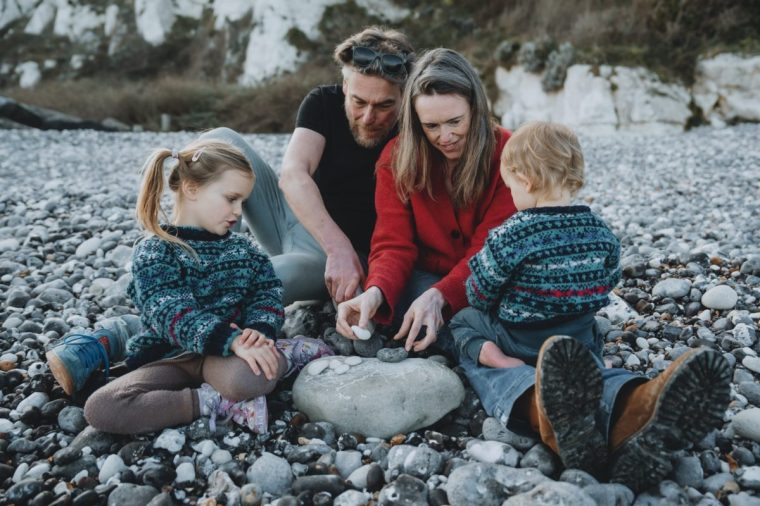
After four terms, Charlotte feels the arrangement has been beneficial for everyone. The family has spent Fridays at the beach, National Trust sites, in cafes, and in galleries and museums intentionally building on what Ember has been learning at school.
Recently, Ember’s class were learning about the theme of explorers, so they planned a trip to the London Transport Museum.
“We might use conkers to practice number bonds, bake so she is counting and writing numbers, or do some writing in a café,” McLaughlin said. “She’s getting one-to-one input. As parents, we are so much more engaged in our child’s learning because we’re taking responsibility for her education. I know what’s happening in school – I’m taking more of an interest – because I want to build on that at home.”
Headteacher Katie Jones had previously heard of flexischooling, but was apprehensive when parents first enquired about it.
“We worried they [children] would miss out on teaching. And as teachers are accountable for a child’s progress, whether they are here or not, they felt nervous because they’d rather be in control of what was being taught.”
However, she says the experiment is continuing, with children in reception and year 1, with ongoing checks on evidencing the work done on Fridays.
“The Early Years Foundation Stage trial was successful, so we are happy to continue this on a family by family basis,” Jones said. “It is too soon to tell the outcomes from the year 1 trial.”
Although flexischooling still involves a “relatively small proportion of students”, it is on the rise in the UK, according to Euan MacLean, principal of an international British online school who collaborates with schools on new practices and cultural changes.
“As more adults now work from home, part-time or on flexible schedules, some families are better placed to manage part-time schooling arrangements,” he said. “Society has embraced flexible working for adults, yet we still expect children to return to a rigid school schedule that may not suit all learners.”
The trend took off in the aftermath of the pandemic, he adds.
“Families who experienced periods of remote or hybrid learning during the pandemic saw, for the first time, that learning did not always require six hours in a classroom. Many noticed that their children did well with a shorter block of direct teaching, followed by independent work and then time for music, sport or simply being with family.”
The Office of National Statistics estimates that 1.1 per cent of the UK population have engaged in home education at least part of the time and 2 per cent did so on a full-time basis. A 2024 Teacher Tapp survey found that 28 per cent of teachers reported having one or more pupils on a flexi-schooling timetable, which was up from 17 per cent in 2019.

A Facebook group for families to discuss flexischooling has 31,000 members. There are currently no official national statistics on how many families in the UK are flexischooling, as children and are marked as “authorised absence” on days they learn at home.
While flexischooling isn’t confined to younger children – it’s legally permitted at any stage of compulsory education – Maclean says it is far more common in primary schools than it is in secondary settings. He adds that it is often small, rural primary schools that offer flexischooling to “sustain or grow their roll”, but as long as the headteacher agrees to it, flexischooling can be an option in any school.
It’s not the only example of flexible working being seen in Britain’s schools: many teachers, and even some headteachers, now work from home one day a week – a trend that has proved controversial, given that they’re often covered by less qualified educators. Last week, a group campaigning for a four-day working week urged the education secretary to allow schools more freedom to pilot shorter weeks for teachers, to reduce burnout and improve productivity.
It is proving particularly appealing to children who aren’t coping in the classroom five days a week and find the environment exhausting.
“For children, the clearest benefit reported in the research is improved wellbeing,” he says. “Parents of flexischoolers frequently describe reduced anxiety, calmer behaviour and better coping on the days their children do attend school, because they are no longer running on empty. Flexi days at home can allow for sensory breaks, slower mornings, time to decompress after social overload, and the chance to pursue extra- or co-curricular interests in depth.”
Even for children who love and thrive in the classroom, flexischooling can lead to academic benefits and strengthened parent/school relationships, he says.
Charlotte says Ember is “excelling in school. She’s happy, confident, and curious”. Their home schooling day allows Ember to work at her own pace. “We love the slower mornings, and she’ll often be writing at 8pm in the night, when she comes alive and gets creative. We follow that rhythm, which she can’t do in school.
“On Fridays, she gets us being completely present with her because it is what the day is about. It allows our family to have more connections together.”
Last year, their reception teacher had been “wary” of flexischooling, but at a recent parent’s evening, Ember’s current teacher “actually thanked me for the work I did with her at home..she could see the outcomes, and how happy and engaged Ember was in school”.
She says flexischooling can only work with trust and communication between the family and school.
“Parents have to be really engaged,” she said. “I could see how it could be an issue if you had families not taking it seriously.”
Headteacher Katie Jones adds: “Whilst it’s been really positive – more positive than I thought – I can still foresee challenges arising in the future,” Jones said. “At some point, I think we may have someone ask about flexischooling, and we don’t feel it’s right for the child.”
When a child isn’t in the classroom on a Friday, it’s listed as an authorised absence. While the local authority is aware of why the school’s attendance is lower than the national average, Jones says they are nervous about it.
“It’s quite new and they don’t really understand it,” Jones said. “But we show that we’ve got processes in place to track the progress of children and make sure we are in control of it. I wouldn’t say they are happy, but it is legally allowed.”
With the trial still in its early stages, she is considering how flexischooling is perceived by the other children and families in the school.
“It’s quite privileged that parents are able to give their children that time,” Jones said. “Not everybody can do that, financially or work wise, even if they wanted to. It’s a concern.”
However, she acknowledges that disparities exist regardless of flexischooling. Even for children in school five days a week, some will have families who work with them in the evenings on reading and take them out for learning experiences on the weekends, and others don’t. “As a school, we try and provide as many extracurricular and enriching experiences to build the cultural capital for all our children within school time.”
MacLean says there is “a real risk of a two-tier system developing if flexischooling expands without a strong equity lens”.
“Without careful design, flexischooling runs the risk of becoming something that is de facto reserved for families with higher incomes, more flexible work patterns and greater social capital, while others are left with fewer options when full-time school is not working.”
Another concern is how children keep pace with curriculum, particularly beyond Reception when more formal teaching in phonics, reading, writing and maths begins.
“The arrangement only works if the education is properly coordinated, with home and school following the same learning objectives. When properly supported, flexischooling does not appear to harm academic outcomes. In fact, some children thrive. School leaders with experience of flexischooling report that pupils can achieve as well as, or even better than, their full-time peers. Reviews of school performance have found no evidence of lower test results in schools with a significant number of flexischooling pupils.”
Charlotte isn’t sure how long the trial will last, or if they’ll be able to continue flexischooling as Ember gets older, but for now considers it “a real privilege” to be able to do it.
“We will just take it term by term, but I would like to carry on doing it. At the moment, everyone is benefitting.”