Tarek Hassan fell in love with Hong Kong culture as a teen. Now his Gongfu Cafe & Bao in Ottawa, Canada, serves authentic tastes of the city
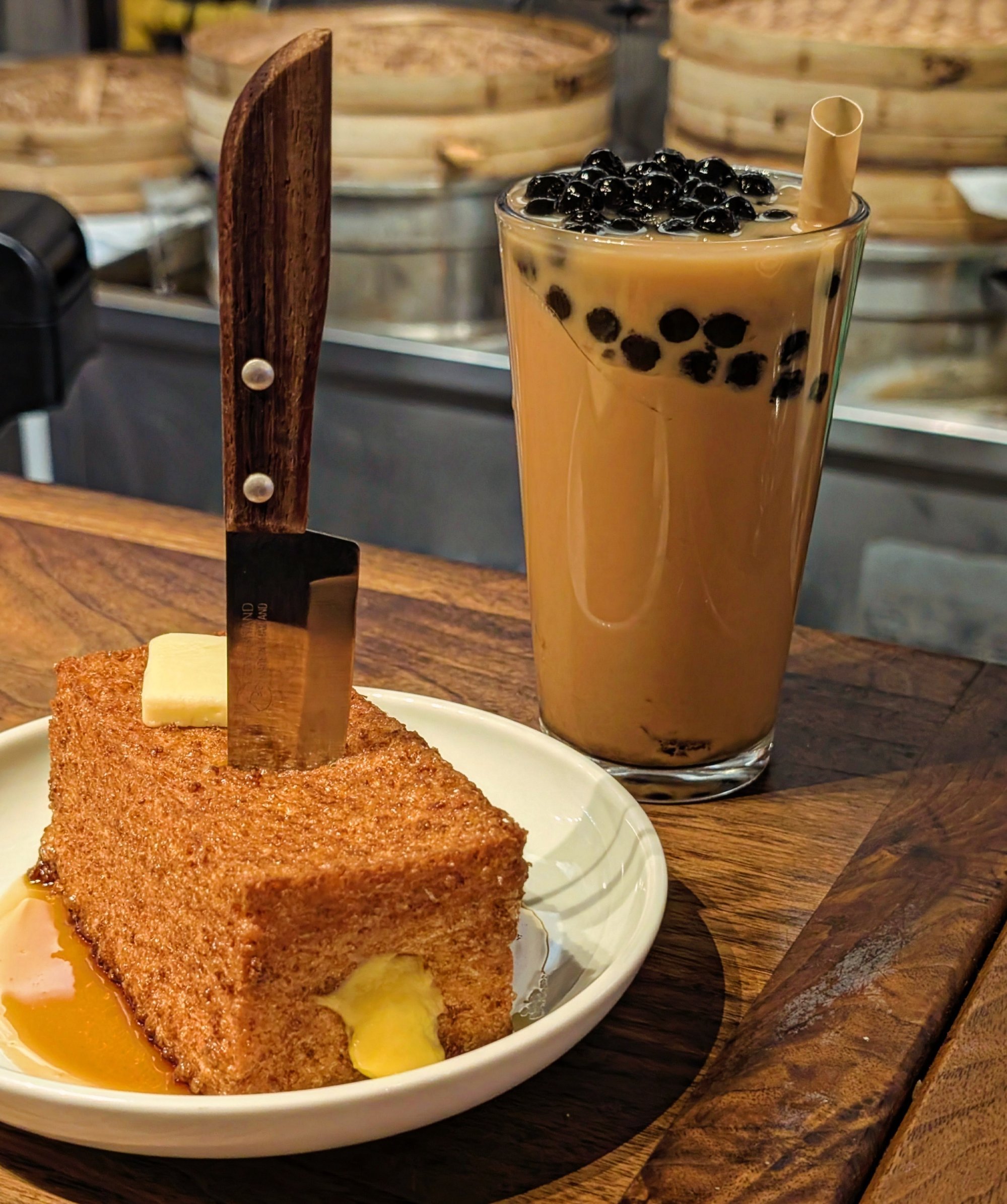
Gongfu Cafe & Bao in Ottawa, Canada, is a cosy diner with a menu featuring twists on Hong Kong-style snacks – such as French toast with rhubarb puree – along with hand-pulled milk tea and pineapple buns.
The space is inspired by the no-frills, open kitchens of Hong Kong’s traditional cha chaan teng cafes.
But the chef and owner is not from Hong Kong. He is not even Chinese.
Do you have questions about the biggest topics and trends from around the world? Get the answers with SCMP Knowledge, our new platform of curated content with explainers, FAQs, analyses and infographics brought to you by our award-winning team.
Tarek Hassan is a 46-year-old Egyptian-Canadian who has only visited Hong Kong once, but fell in love with Cantonese food and culture after watching John Woo’s 1989 hit The Killer in his early teens.
“In many ways, [the film] is a love letter to Hong Kong, exploring different settings and locations and the scenes of Hong Kong,” Hassan says. “It really made me fall in love with the place.”
His passion for Cantonese food and, in particular, cha chaan tengs helped land his cafe on the Chinese Restaurant Awards’ Elite 30 Canada 2025 Top 50 Honorees list, which was unveiled in late October.
“I’m floored. It feels like both a weight and an honour, because I feel like a lot of people will feel like it should be Chinese-owned businesses on that list,” Hassan says. “[But] I feel [the recognition] has to do with the care and energy that went into the cafe.”
Hassan is originally from Alexandria, a Mediterranean port city in Egypt. When he was 11 years old, his family moved to London for his father’s job, and that was when he was introduced to Woo’s action-packed movie.
Soon after, he tried Cantonese food for the first time at Lee Ho Fook, which, in the 1970s, became London’s first Chinese restaurant to be awarded a Michelin star.
“I was just blown away,” he says. “Imagine: someone who’d never had Chinese food in their early teens, and they’re starting to get passionate and excited about food, and then they experience those flavours and textures and wok hei [the flavour of a perfect stir-fried dish]. It was just overwhelmingly compelling.”
Five years later, his family crossed the Atlantic to settle in Toronto, and Hassan went to Canada’s capital city, Ottawa, to study computer systems engineering.
As a parting gift, his mum gave him a carbon steel wok and made him promise to call her each time he used it. “It was kind of emblematic of my obsession with the cuisine,” he says.
When he was not studying, Hassan volunteered to cook meals for students and worked in restaurants during summer breaks. By the time he graduated, he realised he was not keen on engineering, so he focused on the psychological aspect of people’s relationship with technology.
“The design philosophy and design thinking helped me come up with a brand, understand the user experience, and that all kind of factored into my engagement with the culinary world,” he says.

Realising he wanted to be in the kitchen rather than in front of a computer, Hassan decided to go to culinary school. During his programme, he apprenticed at a quirky Thai-Caribbean place, where diners could get dishes such as pad Thai as well as jerk chicken. He was keen to work there because it had a wok station.
“My chef, who also was my mentor, said that when I worked the wok, he saw me as an old street-food wok person in my previous life, that I was at home using a wok,” he says.
While working in restaurants, he also learned to bake.
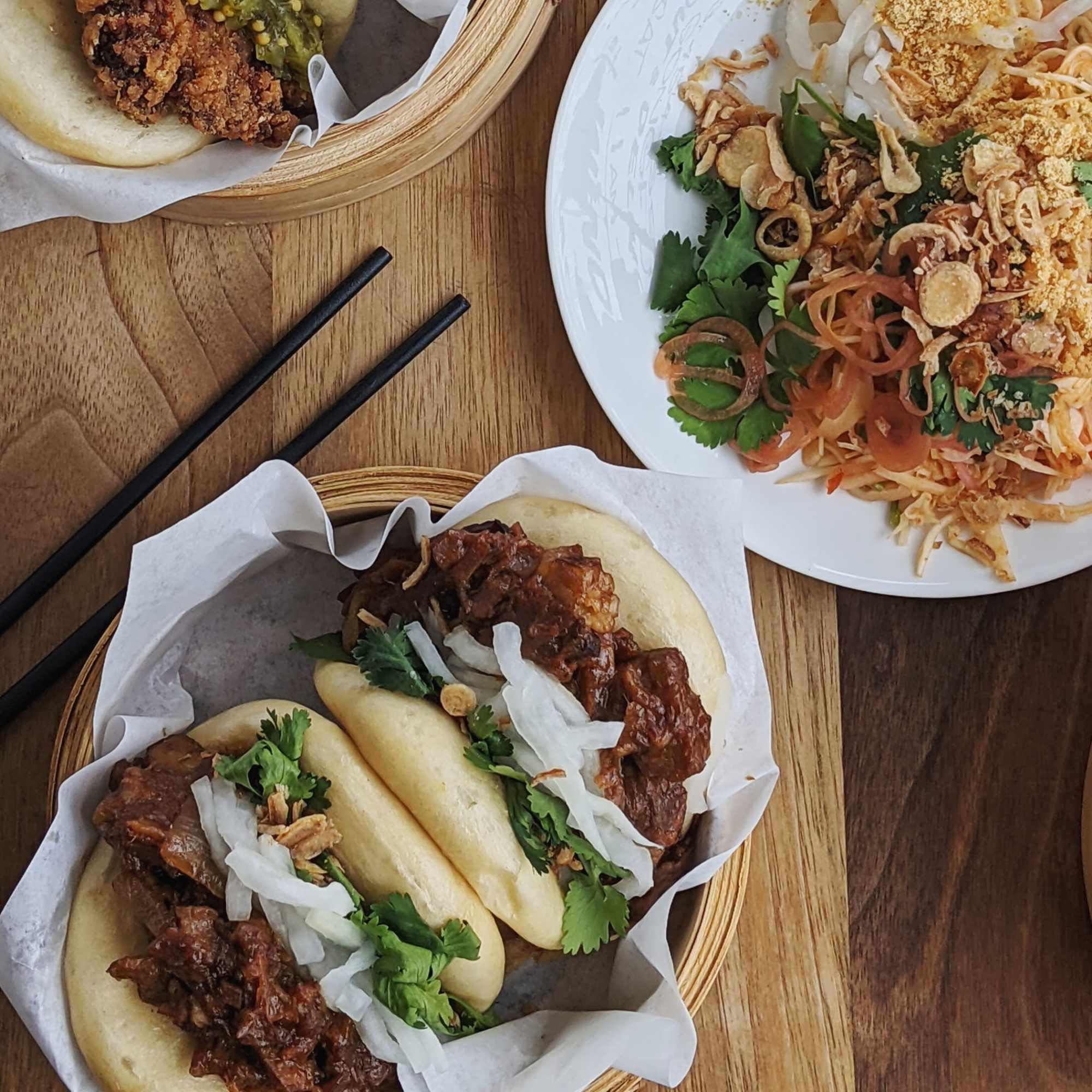
He caught people’s attention in 2012 when he cooked baos (steamed buns) at a fundraising event. They were filled with a terrine made with corned beef and beef heart, a combination many attendees had never seen before, let alone eaten. They were also fascinated by the texture of the baos.
“I feel like a lot of people, by default, are tentative around ‘ethnic foods’, but steamed buns have a really broad appeal. It’s fluffy bread without any crust … so there are a lot of people who are surprised by how accessible they find it,” he says.
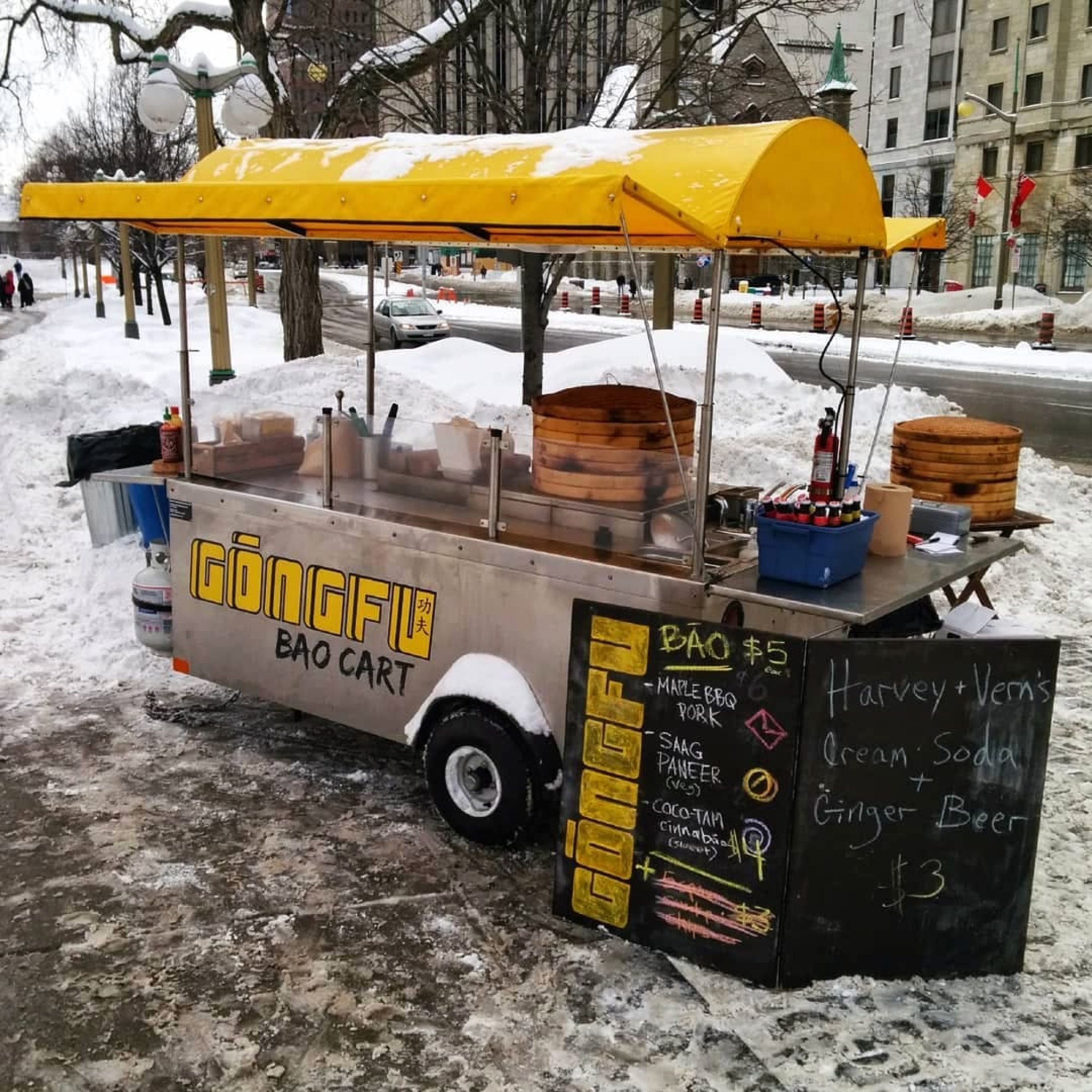
A few months later, the City of Ottawa put out a call for applications for street food vending permits. Thinking he would use this as a learning experience, Hassan went through the process, drawing up a business plan for a food cart selling steamed bao.
He was surprised that his application was approved, and he quickly moved to raise capital for the cart through crowdfunding. The initial CA$12,000 (US$8,700) helped him buy a food cart fitted with bamboo steamers and get the business started in 2013.
In the beginning, he had to educate customers about steamed buns and what he was doing. Fillings ranged from home-made char siu barbecued pork with a maple syrup and Shaoxing wine glaze to wackier ones such as Hawaiian pizza and vegetarian Panang curry.
The steamed baos caught on and, five years later, he felt it was time to open a physical shop. He and his friend, architect Ian Ho Kin-yuen, flew to Hong Kong in 2017 to eat and see as much as they could, absorbing the city’s flavours and vibe to bring back to Gongfu Cafe & Bao’s menu and space.
Hassan says visiting Hong Kong for the first time was a full-circle moment. “It reminded me of how obsessed I was with the city [and how] that kind of sparked this whole interest in Chinese food and Chinese culture.”
The duo went to many now closed places, including Hoi On Cafe – at the time Hong Kong’s oldest bing sutt cafe – and Saam Hui Yaat. They also ate dim sum at Lin Heung. They visited Lau Sum Kee for bamboo noodles, Lan Fong Yuen for Hong Kong-style milk tea, and even tried the bao at May Chow’s Little Bao.
During his visit, Hassan observed how Hong Kong’s cuisine had been influenced by the city’s British colonial history.
“There’s this shared DNA for places whose cuisine has been touched by British colonialism, and then adopted into something that’s more aligned or more at home within that specific culture,” he says.
He also found surprising parallels with his own culture, noting that corned beef in Hong Kong – used in egg and corned beef sandwiches – was referred to as bully beef by the British. “[It’s] the same name in Egypt, which is what I grew up eating as a breakfast food,” he says.
As a result, Hassan finds it fun to play with elements of familiarity, with details that will resonate differently with each guest. It is why the design of Gongfu Cafe & Bao is not overtly “Chinese” in the traditional sense, with no Chinese characters or dragon and phoenix emblems.
Instead, the cafe looks more like a diner with classic cha chaan teng elements, such as booth seating and green and white tiles.
“For most people, they will think, ‘Oh, that’s a weird, cool tile pattern,’ but someone who’s been to a cha chaan teng will immediately be like, ‘I get this,’” Hassan says.
“But also, someone else might come in and have a feeling of comfort or familiarity with this tile, because their grandmother’s bathroom had this kind of tile,” he says. “And so this different spectrum of familiarity and comfort is something we were pursuing from the get-go with a brick and mortar. It’s the same with our cuisine too.
“That felt like our approach to acknowledging and having sort of this Easter egg for someone whose cuisine or culture it is, without being extractive.”
More Articles from SCMP
WTT Finals: Hong Kong’s Wong, Doo in group of death with Wang Chuqin, Sun Yingsha
Investment body adds to coffers and clarity on Hong Kong’s long-term future
German foreign minister calls for end to ‘uncertainty’ on Chinese rare earths, chips
China warns internet platforms not to shift tax burden onto gig workers
This article originally appeared on the South China Morning Post (www.scmp.com), the leading news media reporting on China and Asia.
Copyright (c) 2025. South China Morning Post Publishers Ltd. All rights reserved.