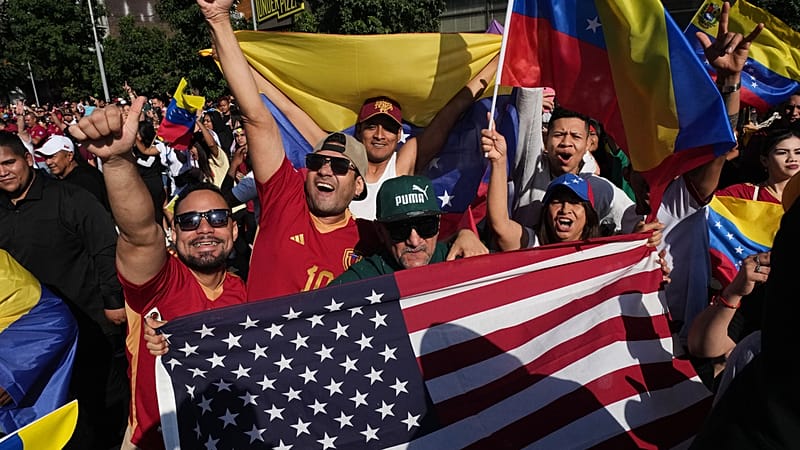
The US Takes Control of Venezuela
Following the unexpected arrest of Venezuelan President Nicolás Maduro and his wife, Cilia Flores, involving multiple branches of the US armed forces, President Donald Trump declared that Washington would take temporary control of the South American country. “We are going to run the country until such time as we can do a safe, proper and judicious transition,” Trump stated during a press conference at his Mar-a-Lago resort in Florida on Saturday.
“We can’t take a chance that somebody else takes over Venezuela that doesn’t have the good of the Venezuelan people in mind.”
Trump emphasized that the US would manage the country through a group of appointed individuals, including Secretary of State Marco Rubio, Defence Secretary Pete Hegseth, and General Dan Caine, the Chairman of the Joint Chiefs of Staff. 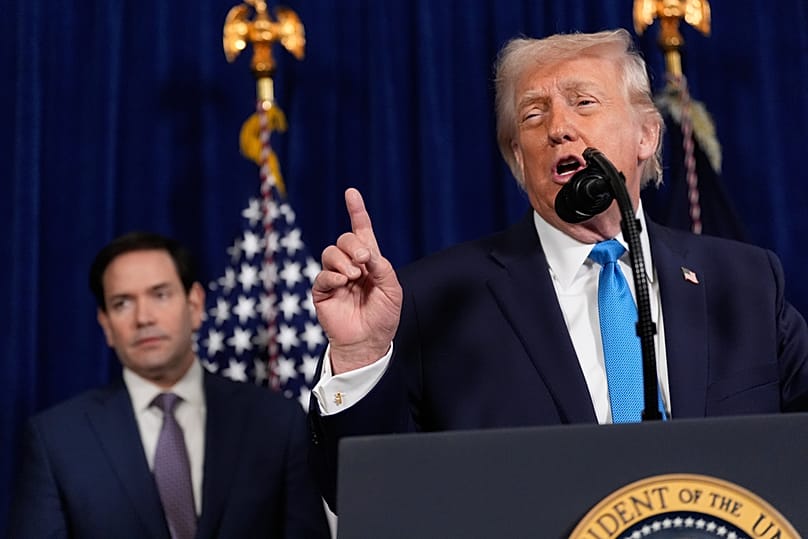
Despite this bold declaration, Trump provided few details about the specific plans for managing Venezuela. At one point, he claimed that Venezuela’s vice president, Delcy Rodríguez, had been sworn in as Maduro’s successor and was “willing to do what we think is necessary to make Venezuela great again.” However, the Venezuelan government has not confirmed this claim.
Trump’s announcement marks a significant escalation of US intervention in Venezuela after months of speculation about whether Washington would actually launch an invasion. “We’re not afraid of boots on the ground,” Trump said. He also mentioned that major US oil companies would invest billions to fix the country’s infrastructure and start generating revenue.
“And we are ready to stage a second and much larger attack, if we need to do so.”
At the press conference, US Secretary of State Marco Rubio denied the need for Congressional approval for the operation, calling it a law enforcement mission supported by the military. “Nicolás Maduro was indicted in 2020 in the United States. He is not the legitimate president of Venezuela,” Rubio stated. He added that Maduro was a fugitive with a $50 million reward. “I guess we’re saving $50 million now,” he said.
Trump suggested that the administration did not inform Congress because the plans could have leaked. 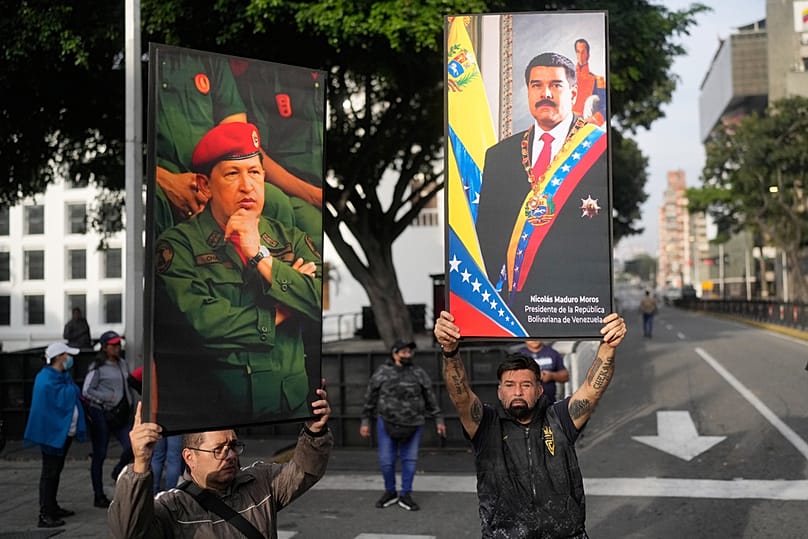
Political Reactions and Concerns
The political opposition in Washington quickly criticized Trump’s actions without absolving Maduro. Democratic Senator Mark Warner, vice chairman of the Senate Select Committee on Intelligence, raised concerns about the precedent being set. “If the United States asserts the right to use military force to invade and capture foreign leaders it accuses of criminal conduct, what prevents China from claiming the same authority over Taiwan’s leadership? What stops Vladimir Putin from asserting similar justification to abduct Ukraine’s president?” he asked.
Warner also pointed out the hypocrisy of the administration’s approach, comparing the Venezuela operation to Trump’s pardon of former Honduran President Juan Orlando Hernández, who was convicted of drug trafficking charges. “You cannot credibly argue that drug trafficking charges demand invasion in one case, while issuing a pardon in another.”
On the other hand, support for Trump came from the Republican Party in Congress. Senator Roger Wicker, chairman of the Senate Armed Services Committee, commended the administration for ordering a successful mission to arrest Maduro and bring him to justice in the United States. “This arrest was the culmination of a monthslong effort by the Trump administration to degrade the narco-terrorist organizations that Maduro oversaw,” Wicker said.
Potential Impacts and Uncertainties
The operation in Venezuela could lead to significant changes in the country, according to Daniel DePetris, a fellow at the think tank Defense Priorities. “Whether that change will be positive or negative in the long-term remains to be seen,” he noted.
DePetris warned of potential scenarios such as a split in the Venezuelan military, an expansion of criminal groups, civil war, or the rise of an even worse autocrat. “None of these would bode well for regional stability or US interests in its sphere of influence,” he said.
The Trump administration’s rationale for targeting Maduro has evolved over the past several months. Initially, the focus was on countering drug trafficking and reclaiming oil resources that Venezuela supposedly stole from the US. Later, the justification shifted to deposing an authoritarian government in the name of democracy.
However, DePetris argued that these justifications give too much credit to the Maduro regime. “In reality, Venezuela is a bankrupt state whose economy has declined precipitously over the last decade,” he said.


