Rising Hopes for US-North Korea Engagement
Recent statements from a top South Korean official have sparked renewed interest in the possibility of improved relations between the United States and North Korea. The remarks came amid growing speculation that U.S. President Donald Trump might seek a meeting with North Korean leader Kim Jong-un during his upcoming visit to China in April.
In an informal meeting with South Korean reporters in Washington, the official, who wished to remain anonymous, suggested that “there may be some new progress in a few days.” This statement has raised expectations that Washington could take a more open approach toward Pyongyang. However, the official also emphasized that any developments would likely be modest and not indicative of immediate negotiations.
The current South Korean government, led by President Lee Jae Myung, has been actively seeking U.S. support to encourage North Korea to return to dialogue and reduce tensions on the Korean Peninsula. These efforts come after a period of heightened hostility under former President Yoon Suk-yeol, who was impeached earlier this year.
Despite these hopes, the official downplayed the idea of full-scale negotiations, describing any potential moves as “a kind of goodwill gesture” from the U.S. side. He noted that North Korea’s stance on dialogue remains firm, and it is something that must be closely monitored.
Earlier this week, South Korean Foreign Minister Cho Hyun and U.S. Secretary of State Marco Rubio reaffirmed their commitment to the “complete” denuclearization of North Korea during talks in Washington. Cho urged Rubio to continue working together to encourage Pyongyang to return to discussions through joint messages promoting dialogue.
Rubio acknowledged South Korea’s efforts to reduce regional tensions and enhance cooperation, according to the foreign ministry. These interactions have been interpreted as signs that Seoul is pushing for forward-looking policies from the U.S. regarding North Korea, with Washington responding positively.
Both South Korea and the U.S. have expressed a desire to re-engage with Pyongyang. However, it remains unclear whether Kim will respond to these overtures, especially as he deepens ties with Russia and China amid a growing superpower rivalry.
Trump has repeatedly shown interest in reviving talks with Kim, who has also indicated openness if Washington stops insisting on denuclearization. However, Kim has avoided direct engagement with Washington and Seoul since the breakdown of the 2019 Hanoi summit. Instead, he has shifted focus toward Moscow, particularly amid the ongoing conflict in Ukraine.
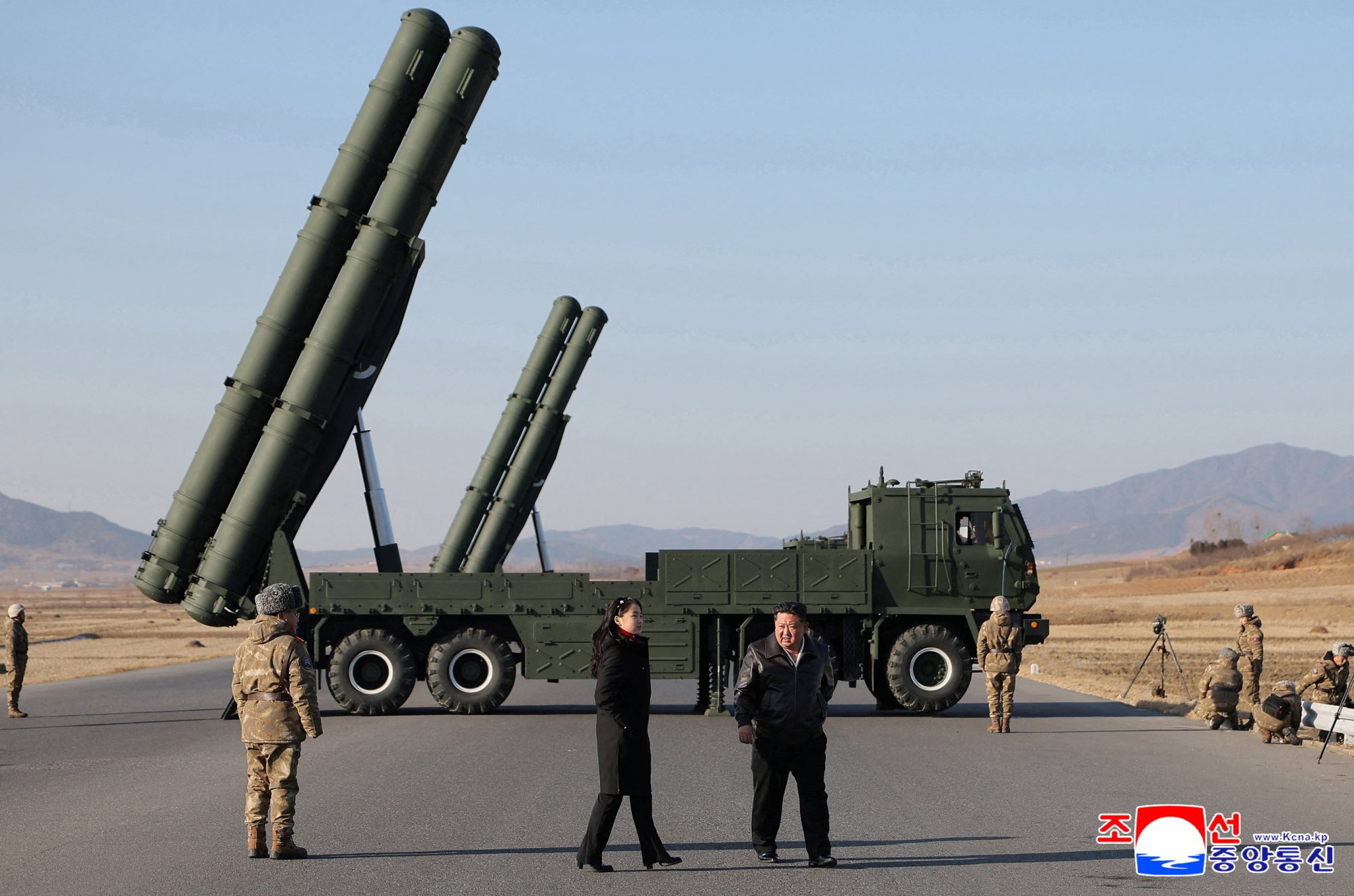
Hong Min, a senior research fellow at the Korea Institute for National Unification, suggested that there is a possibility that Washington may soon present policy details concerning North Korea. He believes the U.S. is likely to signal its intention to engage in dialogue, including addressing North Korea’s security interests.
Political science professor Yang Moo-jin of the University of North Korean Studies proposed that the U.S. could introduce measures to facilitate humanitarian aid, such as medical supplies, or ease travel restrictions to create a more conducive environment for dialogue.
Humanitarian aid has always been outside the scope of sanctions, but financial transaction restrictions and political factors have hindered delivery. For example, the failed transport of Tamiflu from South Korea in 2019 highlighted these challenges.
“If such an announcement is made, it would give more room for humanitarian organizations and civic groups to reach out to the North, making them less reluctant to engage,” Yang said. “Washington could also ease travel restrictions on its citizens, allowing tours to Pyongyang.”
Edward Howell, a former Korea Foundation Fellow, noted that the new U.S. national security strategy released in December did not focus much on the Korean Peninsula. This suggests that Washington’s main priority in the region is to deter Beijing, particularly economically, rather than focusing on Pyongyang.
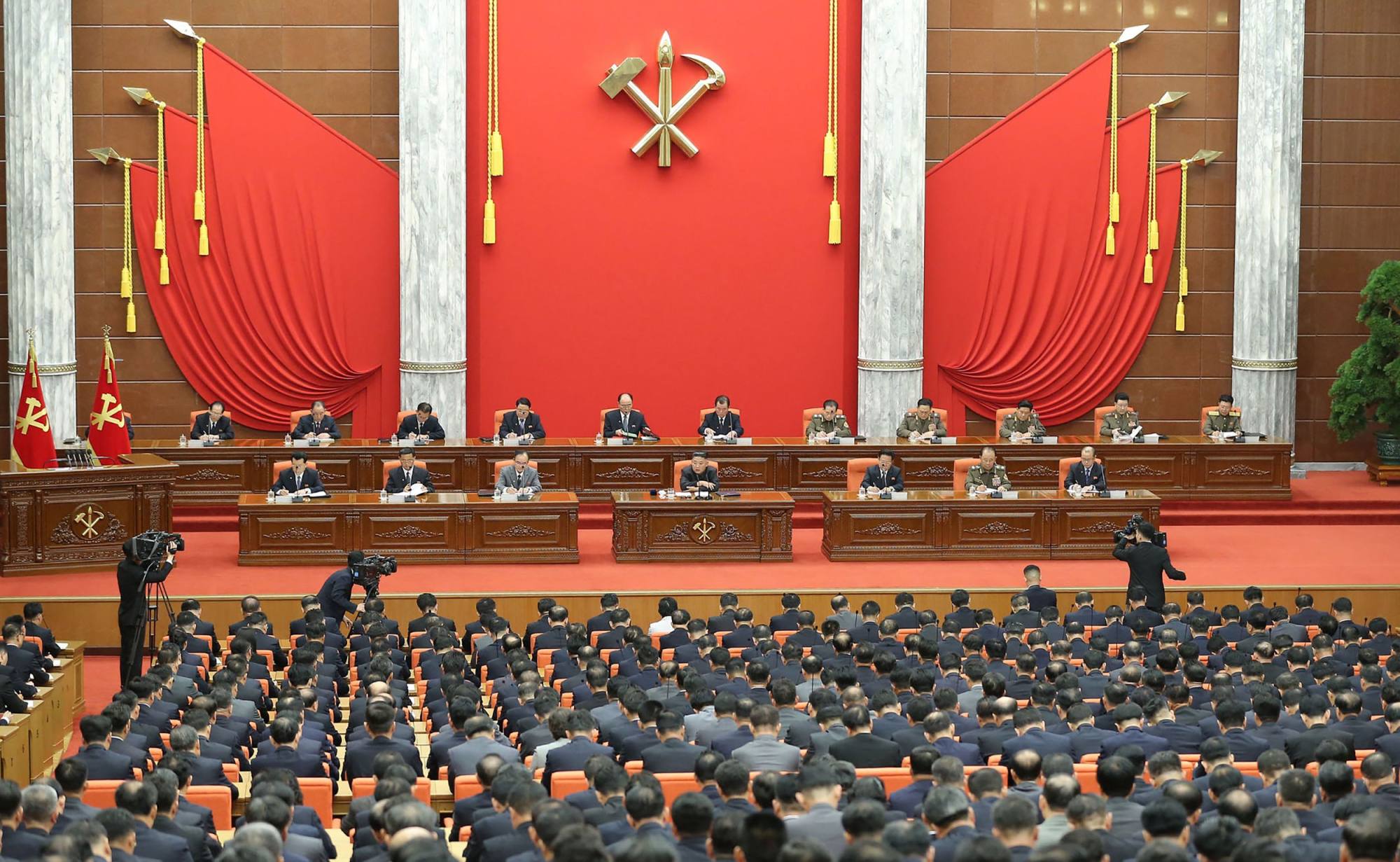
North Korea appears to be preoccupied with preparations for its upcoming party congress, which is expected to outline the country’s policies on the economy, external relations, and defense for the next five years. The regime has claimed that “new records” have been achieved in improving people’s livelihoods.
Despite these developments, inter-Korean civic exchanges face obstacles due to South Korea’s law penalizing contact with those from the North. Official channels of communication remain completely severed.
Against this backdrop, 31 lawmakers from the pro-government bloc introduced a bill to abolish the decades-old National Security Act. This has reignited debate about how South Korea should balance civil liberties with national security.
Supporters of the move, including many lawmakers from Lee’s liberal Democratic Party of Korea, argue that the 1948 Act, which penalizes individuals for “praising, encouraging, disseminating or cooperating” with North Korea, is outdated and has been used to suppress political dissent.
Conservatives, led by the People Power Party, warn that removing the law would weaken South Korea’s ability to defend against espionage. A recent Korea Gallup survey showed that most respondents favored maintaining the Act, with 55% in favor and 21% opposed.