Trump Ends Illegal Tariffs, Announces New Global Duty
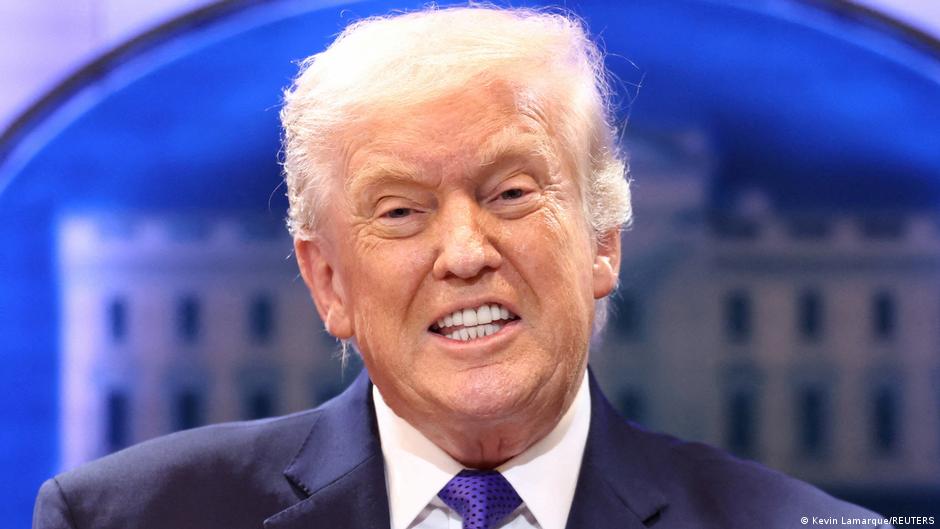
After facing a significant loss at the Supreme Court, US President Donald Trump has ended the tariffs that were declared illegal. However, he has also announced a new 10% global duty on imports, signaling a shift in his approach to trade policy.
The White House announced the end of certain duties enacted under a law used to address national emergencies, following the Supreme Court’s decision to strike down sweeping tariffs imposed by President Trump. The statement from the White House said those tariffs “shall no longer be in effect and, as soon as practicable, shall no longer be collected.”
Despite this, Trump took to his Truth Social platform to announce a new order imposing 10% tariffs on global imports, claiming they would be “effective almost immediately.” This move comes after the conservative-majority Supreme Court ruled that the 1977 International Emergency Economic Powers Act (IEEPA), which Trump had used to impose tariffs, does not authorize the president to do so.
Trump’s Use of Tariffs for Political Policies
Trump’s use of tariffs has been a contentious issue, with critics arguing that he has routinely levied or threatened to levy such penalties on trading partners for various reasons. These include vague claims of unfair treatment and attempts to influence foreign courts to help his political allies abroad. The US Constitution grants Congress the sole power to levy tariffs, but Trump is the first president to use IEEPA for import taxes.
The court’s decision upheld a lower court ruling from May that found Trump had overstepped his authority by unilaterally declaring punitive and “reciprocal” tariffs. The government had appealed the lower court ruling, but the Supreme Court ultimately ruled against Trump’s use of IEEPA for tariffs.
What Did the Supreme Court Rule?
In its majority opinion, Chief Justice John Roberts emphasized that the Framers of the US Constitution did not vest any part of the taxing power in the Executive Branch. The court found that if Congress had intended to convey the distinct and extraordinary power to impose tariffs with IEEPA, it would have done so expressly, as it consistently has in other tariff statutes.
Canadian Chamber of Commerce President and CEO Candace Laing called the ruling a legal decision, not a policy reset, adding that Canada should prepare for new mechanisms to reassert trade pressure.
Trump Criticizes the Supreme Court
Hours after the news broke, Trump called the decision “deeply disappointing” and directed his ire at the justices who voted against his tariff authority. He labeled those who voted against his power to unilaterally levy tariffs as a “disgrace to the nation” and accused the liberal justices of being “unpatriotic” and “anti-American.”
Trump also claimed that foreign countries are “dancing in the streets” over the decision but insisted that more measures are in the works. He brushed off questions about consulting Congress, stating, “I don’t have to. I have the right to do tariffs, and I’ve always had the right to do tariffs.”
First Time Supreme Court Limits Trump’s Executive Power
Friday’s decision marked the first time the Supreme Court has taken steps to rein in Trump’s executive authority. While conservative Justices Samuel Alito, Clarence Thomas, and Brett Kavanaugh dissented, the ruling signaled a shift in the balance of power.
In his dissent, Justice Brett Kavanaugh argued that the decision is unlikely to greatly restrict presidential tariff authority going forward. However, the ruling has certainly limited Trump’s ability to impose tariffs under IEEPA.
Impact on Trade Relations
The tariff ruling has undercut Trump’s leverage, according to US Treasury Secretary Scott Bessent. He stated that while the Supreme Court has taken away Trump’s leverage, it has made the leverage he has more draconian because they agreed he does have the right to a full embargo.
Bessent also stressed that every country is expected to honor the trade agreements made with the Trump administration. He urged all countries to move forward with these agreements.
EU Calls for Policy Stability
Reacting to the decision, EU Trade & Economic Security spokesman Olof Gil emphasized the need for stability and predictability in the trading relationship between the US and the EU. He advocated for low tariffs and working towards reducing them.
As a result of US actions, the EU and other US trading partners have shifted alliances, signing extensive trade agreements with China and India. German politician Jürgen Hardt noted that it is too early to judge whether the Supreme Court ruling will lead to meaningful changes in the Trump administration’s conduct of trade relations.
Agathe Demarais, a senior policy adviser at the European Council on Foreign Relations, expects the Trump administration to pursue other avenues to keep tariffs in place. She highlighted that the data show US firms and consumers bear 96% of tariff costs, not foreign exporters.
Conclusion
The Supreme Court’s decision marks a pivotal moment in US trade policy, limiting Trump’s ability to impose tariffs under IEEPA while opening the door for new strategies. The implications for international trade and economic relations remain to be seen, but the ruling has undoubtedly reshaped the landscape of executive power in the United States.