The Political Landscape and Economic Challenges in Nepal
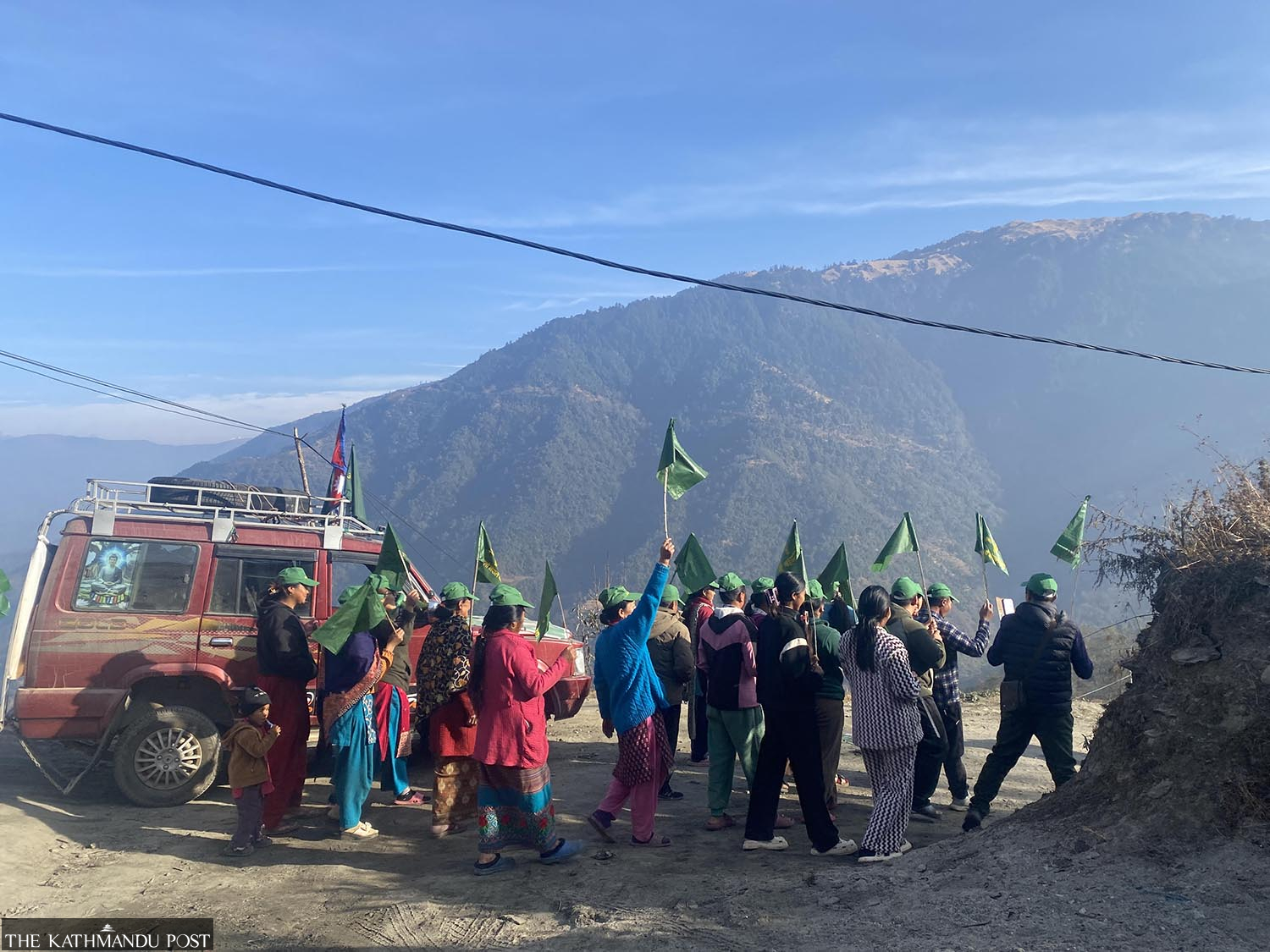
In the remote village of Khijiphalate, located in Okhaldhunga district of Nepal’s eastern hills, Dendi Sherpa finds solace in the political campaigns taking place in his locality. For him, this means a temporary boost in business after months of stagnation. “After months, I have seen my business get a boost for at least three weeks,” said Sherpa, the owner of Norlahi Sherpa Hotel and Lodge.
Sherpa has experienced a cycle of working abroad and returning home to start a business. There was a time when tourists frequently passed through Okhaldhunga on their way to the 4,065-meter Pikey Peak in the lower Khumbu valley of the Everest region, one of Nepal’s short and off-beat trekking routes. Now, he barely sees them. “Villages are getting empty as youths are leaving in droves as there are no jobs. Who will fix all this?” he asked.
For Sherpa, elections have become ritualistic events—accompanied by lofty pledges that are often forgotten after the ballots are counted. Over the past three decades, Nepal has earned an unenviable reputation for political instability and recurring scandals that have sown the seeds of systemic corruption. High-profile cases—from the Bhutanese refugee scam and the Lalita Niwas land scam to cooperative fraud, gold smuggling cases to aircraft procurement controversies—have dented public trust and weighed on the economy.
Young people are migrating abroad in record numbers. Nepalis living overseas now account for nearly 14 percent of the country’s working-age population. Remittance inflows are equivalent to around 24 percent of the gross domestic product, one of the highest shares in the world. At the same time, the country remains vulnerable to natural disasters and frequent air and road accidents that claim hundreds of lives each year and strain the economy.
Despite the grim outlook, Sherpa remains cautiously optimistic. A capable leadership, he believes, could still alter the country’s trajectory.
Major Political Parties Unveil Election Manifestos
Against this backdrop, major political parties have unveiled their election manifestos this week. Critics, however, describe them as “beautiful prose” detached from harsh economic realities.
The Rastriya Swatantra Party (RSP), backed by former Kathmandu Metropolitan City Mayor Balendra Shah, popularly known as Balen, has put forward some of the most ambitious targets. The relatively new party, which emerged strongly after the 2022 elections, has pledged to generate 30,000 megawatts of electricity within 10 years and expand energy exports through improved regional diplomacy.
It aims to increase per capita electricity consumption to 1,500 kilowatt-hours per year by 2035, up from the current 465 kWh. The party has also promised to double tourist numbers and spending within five years and to fully operationalise the two international airports in Bhairahawa and Pokhara, both often described as ‘geopolitically loaded’ projects. It has pledged to dismantle syndicates in the transport sector.
The RSP envisions an annual economic growth rate of 7 percent over five years, laying the foundation for a middle-income country status with an economy worth $100 billion, up from the current $49 billion, and increasing per capita GDP from $1,447 to $3,000.
Other commitments include promoting the private sector, attracting foreign investment, and advancing a green economy to sustain growth of above 7 percent. The manifesto promises collateral-free loans of up to Rs2 million for entrepreneurial women through banks and financial institutions, along with free insurance coverage for businesses and loans.
Youth Engagement and Economic Growth
The CPN-UML manifesto also places strong emphasis on youth engagement, jobs, and innovation, particularly in the wake of recent Gen Z protests that rattled the party leadership. Targeting voters aged 18 to 28, the party has promised 10 GB of free mobile data per month for a year, dollar cards worth up to $10,000 for young people and entrepreneurs, interest-free student loans of up to Rs2 million, and paid internship schemes.
Guided by its communist ideology, the UML envisions a welfare state and aims for annual economic growth of 7 to 9 percent. The party says it will expand the size of the national economy to Rs10 trillion within five years and Rs20 trillion within 10 years. It has set a target of creating 1.2 million jobs over five years, though it does not detail the specific basis for this projection.
Likewise, the Nepali Congress has unveiled its manifesto with a goal of attracting three million tourists annually within ten years and increasing tourism’s contribution to 20 percent of the GDP. It has pledged to strengthen the management of Nepal Airlines Corporation within six months and transform it into a true “flag carrier of the people.”
Within five years, the party says it will create at least 1.5 million dignified and productive jobs and reduce the number of people leaving for foreign employment by 50 percent. It plans to increase per capita electricity consumption to 750 units and installed capacity to 14,000 megawatts, while advancing large hydropower projects such as the 1,200 MW Budhi Gandaki and 670 MW Dudhkoshi.
Skepticism and Realistic Concerns
Sanjib Humagain, a political analyst with a doctorate in political economy from Yonsei University in South Korea, said the manifestos are different this time in that they focus less on ideological “-isms” and more on economic growth and employment. “Words are beautiful in all documents. But there are no bases to ensure the parties will implement them,” he said, pointing to gaps between programmes and practical execution.
He questioned proposals such as free higher education, asking whether private institutions would agree and how such initiatives would be financed in a resource-constrained economy. “Before the election, all parties should be held accountable for the basis of their commitments. Everything needs to be crystal clear,” he said.
Economists remain sceptical. Chandra Mani Adhikari said that while the manifestos now emphasize jobs and growth, they are neither research-based nor evidence-driven. “Every document introduced by the political parties is unrealistic. It has confused voters again,” he said.
For an economy already under strain, additional obstacles such as grey-listing risks would further deter investment. For the younger generation, reassurance that their aspirations will be addressed at home is crucial. That requires leadership willing to pursue genuine reforms and ensure stability.
For people like Sherpa in Okhaldhunga, the priorities are basic: jobs, roads, drinking water, electricity, and a functioning health system. “Nepal is a glaring example of mismatch between high rhetoric and actual achievements, which politicians have been giving us for decades,” Sherpa said. “We see this being repeated.”