Rising Tensions in Nepal Ahead of Elections
With less than two weeks until the March 5 elections, Nepal is witnessing increasing confrontations between political party cadres, raising concerns about potential escalations in the coming days. While sporadic incidents and minor clashes have been reported earlier in some districts, officials and experts are particularly worried about a repeat of what occurred in Dang on Thursday evening.
The Rastriya Swatantra Party (RSP) burned a flag featuring the CPN-UML’s election symbol—the sun—in Tulsipur, Dang. This act escalated into a confrontation, prompting a strong reaction from the UML. The incident took place in the hometown of UML General Secretary Shankar Pokharel, intensifying fears of further clashes as the election approaches.
On Friday evening, UML supporters burned effigies of RSP President Rabi Lamichanne and senior leader Balendra Shah. However, Lamichanne, speaking at a public event in Dang on Saturday, claimed the incident was orchestrated by infiltrators aiming to damage the RSP’s image. He stated that the party would take action if any of its supporters were found guilty. Meanwhile, UML supporters also vandalized the RSP office in Dang.
The UML strongly condemned the incident, labeling it a criminal offense against the state, democracy, and the constitution. Social media videos and photographs show individuals supporting the RSP chanting slogans against UML and Oli, ringing bells, and burning the party flag.
The UML’s volunteer wing, the National Volunteers Force, and its student wing, the All Nepal National Free Students Union (ANNFSU), warned that they would retaliate if no action was taken. In a statement, the UML’s publicity department emphasized that “its patience should not be mistaken for weakness” and urged authorities to identify and bring those involved to justice.
The RSP, however, denied involvement in the incident. Its Dang district chair, Binay Ghimire, claimed that infiltrators had created a misleading situation and demanded that those responsible be held accountable. The Dang police have arrested one person in connection with the incident.
Hemanta Malla, a former Nepal Police deputy inspector general, highlighted the security challenges ahead. He noted the deep distrust between the people and political parties, along with aggression on all sides. “Voters are aggressive, candidates are aggressive, and there is still confusion about whether the elections will happen,” he said. Malla expressed hope inspired by Bangladesh’s election process, which managed to overcome significant adversity.
Security experts warn that if the government fails to manage the situation, similar incidents could spread across the country, further destabilizing the security environment. Some speculated that the RSP’s decision to cancel mass meetings in Bhairahawa and Pokhara, scheduled for Saturday and Sunday, was linked to security concerns.
However, an RSP leader clarified that the cancellations were due to health issues involving senior leader Balendra Shah. Shah returned from Surkhet early on Friday morning after experiencing fever, vomiting, and stomach problems. He was admitted to a local hospital in Surkhet before being transferred to Kathmandu. He is currently resting and following medical advice, according to the RSP leader.
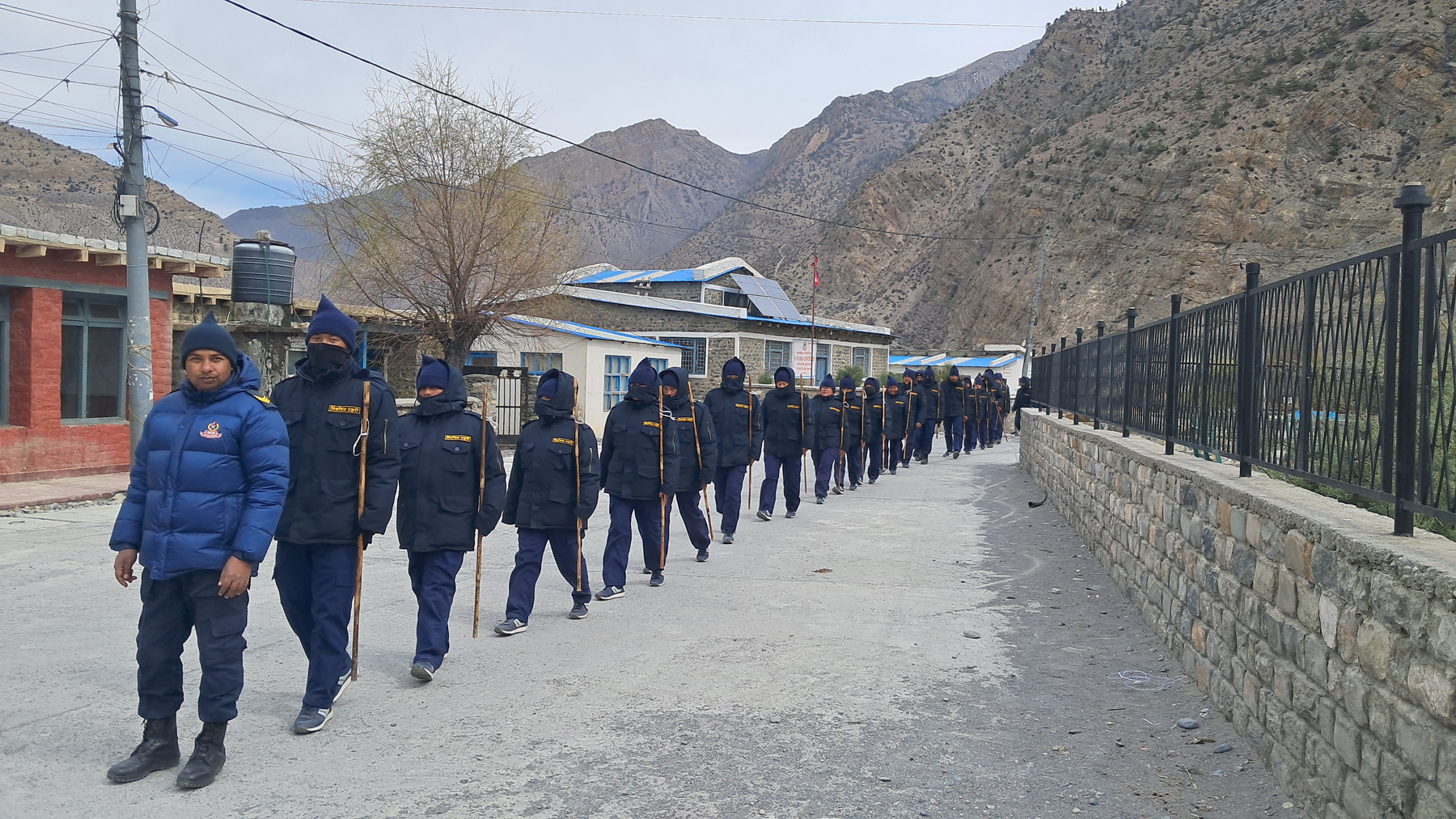
Following the Dang incident, special security measures were implemented in Ghorahi, where the RSP held a gathering. A senior security official mentioned that a unified security plan had anticipated clashes between party cadres and supporters as a major challenge. “We expected clashes between party cadres, but they won’t result in election postponement,” he added.
The Rastriya Prajatantra Party (RPP) also condemned the actions of RSP supporters in Dang on Thursday night. Some RSP supporters protested at the statue of King Birendra while welcoming Lamichhane. The RPP issued a statement on Friday, expressing strong opposition to this act.
Malla emphasized the need for the government and security agencies to foster a sense of security. “There is a dangerous level of aggression in society,” he said. He also pointed out that top leaders feel insecure and are confined to their electoral constituencies. For example, Oli and Pushpa Kamal Dahal, the coordinator of the Nepali Communist Party, are unable to hold mass rallies due to security concerns.
Tensions involving the RSP have also been reported in other parts of the country. On Thursday, Ashok Chaudhary, an RSP leader and candidate for Sunsari constituency-3, reportedly called non-supporters of the party’s bell symbol “traitors to the nation” during an event in Itahari. Youths responded by chanting “Down with the bell!” forcing Chaudhary to cut his speech short. Police escorted him out of the venue.
Another candidate, Ghanashyam Gurung, confronted Chaudhary during the event, questioning how he could label opponents as “traitors.” As both parties mobilize supporters and tensions rise in Dang and surrounding areas, security officials remain on high alert to prevent clashes during election-related events.
Home Minister Om Prakash Aryal stated that his ministry and security agencies are closely monitoring the situation. “The government is impartial and will conduct the elections in a free and fair manner,” he added.