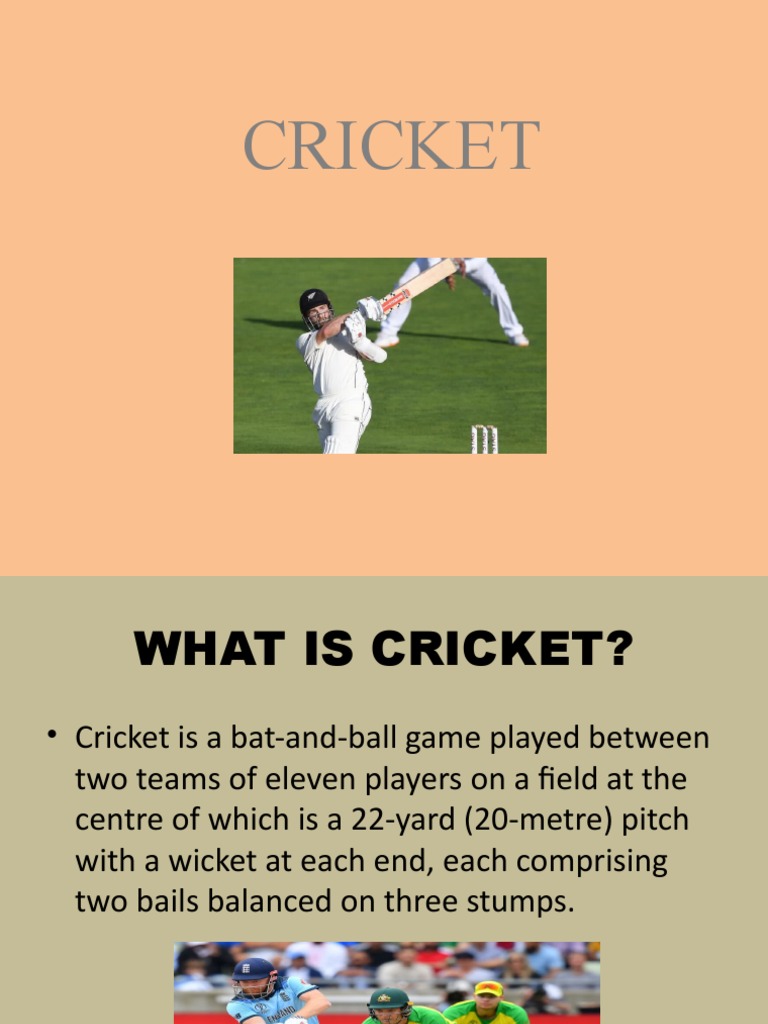
The Evolution of Cricket and the Unique Dynamics of the Game
Cricket has always been a sport that thrives on innovation. From its origins as a five-day Test match to the fast-paced T20 format, the game has continually evolved to capture the attention of fans around the world. With World Cups held every two years instead of the traditional four, the International Cricket Council (ICC) is constantly trying to find the right balance between tradition and entertainment.
In 2011, Mike Norrish proposed some lighthearted ideas to make cricket even more exciting. These suggestions included:
- If a batsman catches one of his own shots, he is not out.
- A “People’s Powerplay” where, for one over, only three fielders are allowed on the pitch, and boundaries do not count, forcing batsmen to run everything.
- If a batsman hits the ball over the fence, he must go and fetch it himself.
- Crowd catches count, and batsmen caught in the crowd should be given out.
- To punish singles during the middle overs, an extra stump is added at the end of the over.
- Fours and sixes count double during this period.
These ideas, while humorous, highlight the creative spirit of cricket and how the game can be made more engaging for fans.
The Quirky Terminology of Cricket
Cricket is known for its unique terminology, which often baffles outsiders. From silly mid-off and silly mid-on to short leg, long leg, square leg, third man slip, gully, and the wicketkeeper, the names of fielding positions are anything but straightforward. Even the term “cow corner” raises questions about its origin. This peculiar language adds to the charm of the sport, making it distinct from other team games.
The Individual vs. the Team
Despite being a team sport, cricket places immense pressure on individual players. A batter, for instance, is essentially one man against eleven others. He must deal with the physical challenge of facing a fast-moving ball while also handling verbal taunts and sledging from opponents. This dynamic is reminiscent of the Henry Newbolt poem Vitae Lampada, which captures the intense pressure on a single player when the entire team’s fate rests on his shoulders.
There are numerous examples of individual brilliance that have not translated into team success. Chris Gayle once carried his bat for 63 out of the team’s total of 101 in a T20 match in 2009. Martin Guptill scored 93 runs in New Zealand’s chase of 118 against Sri Lanka in 2015, accounting for 79% of the team’s total. In One Day Internationals (ODIs), Charles Coventry of Zimbabwe scored 194 not out, which was 50.5% of the team’s total of 384/6, yet the team still lost the match.
The Role of Bowlers and Batters in T20 Matches
In T20 matches, the final overs often come down to a battle between a bowler and a batter. Fielders may not be heavily involved, and the outcome of the game can hinge on a few crucial deliveries. The famous 2016 T20 World Cup Final is a perfect example, where Carlos Brathwaite hit four consecutive sixes in the final over to secure a dramatic victory for the West Indies. Commentator Ian Bishop famously exclaimed, “Carlos Brathwaite, remember the name!” It was a moment that highlighted the power of individual performance in a team sport.
Lessons from Cricket
Cricket teaches valuable lessons about teamwork, resilience, and individual responsibility. Whether it’s a batter standing alone at the crease or a bowler delivering under pressure, the game emphasizes the importance of both personal and collective effort. Innovation may come in many forms, but the core values of the sport remain unchanged.
As the game continues to evolve, it’s clear that the balance between tradition and innovation will shape its future. Whether through new rules, exciting formats, or unforgettable moments, cricket remains a sport that captivates and challenges its players and fans alike.