European Commission President Faces Criticism Over Foreign Policy Actions
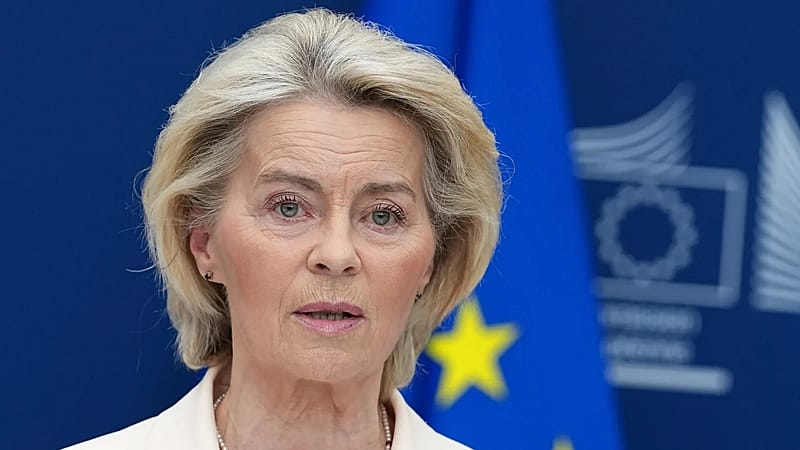
European Commission President Ursula von der Leyen has drawn significant criticism for her response to the ongoing conflict between the United States and Israel in Iran. Critics argue that her actions represent a foreign policy “power grab,” despite the limited formal diplomatic powers of the European Commission. The situation highlights the complex interplay between the Commission and member states as they navigate their roles in international affairs.
When the war began with U.S. strikes on Iran, von der Leyen was the first European leader to issue a public reaction, expressing concern over the developments. Since then, she has been active on social media, posting 12 messages about Iran on X, and engaging in discussions with at least 12 EU and Gulf leaders, including the Crown Princes of Saudi Arabia and Bahrain. Her call for a “credible transition” in Iran has further fueled controversy, as it aligns with U.S. and Israeli interests in regime change, a stance not supported by the 27 EU member states.
A Controversial Stance on Regime Change
In an interview with Euronews, Israel’s foreign minister, Gideon Sa’ar, indicated that neither his country nor the U.S. intends to impose a specific candidate but aims to create conditions that would allow the Iranian people to rise against the regime. This approach has raised questions about the extent of external influence in Iran’s internal affairs.
Three days after the initial strikes, von der Leyen convened a “special Security College” meeting involving all 27 commissioners, including those with portfolios not traditionally linked to security. While the Security College was created last year to enhance preparedness and understanding of emerging threats, its purpose remains unclear to many in Brussels. One Commission official admitted, “We still don’t understand what it is.”
Institutional Confusion and Criticism
The repercussions of the U.S.-Israeli conflict in Iran are expected to be a focal point this week when von der Leyen chairs the meeting of the College of Commissioners and meets with Fatih Birol, Executive Director of the International Energy Agency. Analysts suggest that the situation may lead to further scrutiny of the Commission’s role in foreign policy.
Critics argue that the emphasis on preparedness has become a vehicle for expanding institutional authority and projecting EU influence. Under EU rules, the Commission does not have a formal foreign policy role. Its primary duties include proposing legislation, ensuring implementation by member states, and managing the EU budget, while the High Representative for Foreign Affairs and Security Policy, Kaja Kallas, leads diplomatic coordination.
MEPs and Political Analysts Voice Concerns
Several Members of the European Parliament (MEPs) have criticized von der Leyen for overstepping her remit. Marc Botenga, a Belgian MEP from The Left, stated that she attempts to concentrate power and that such actions without a mandate do not strengthen her position. Similarly, Spanish socialist MEP Nacho Sánchez Amor questioned the legitimacy of the “special Security College,” suggesting that a “treaty mutation” is occurring without proper discussion or assessment.
Alberto Alemanno, a professor of EU Law at HEC Paris Business School, noted that von der Leyen’s calls for regime change in Iran operate outside her formal responsibilities. He emphasized that such decisions should be made by the member states, the High Representative, and the Council.
Preparedness as a Foreign Policy Tool
Von der Leyen’s approach to foreign policy has evolved significantly since her appointment in 2019. Initially seen as a compromise choice, she has used various crises—such as the COVID-19 pandemic and Russia’s invasion of Ukraine—to consolidate the Commission’s authority and position herself as a key figure in EU diplomacy.
Her participation in high-level meetings, such as the one hosted by former U.S. President Donald Trump, highlighted her growing influence. However, this also came with consequences, as the EU faced unfavorable trade deals under Trump’s administration.
A Mixed Legacy
Guntram Wolff, a senior fellow at Bruegel, acknowledges that while von der Leyen’s responsiveness can be an asset, it also reflects broader institutional challenges. He suggests that the current structure, with multiple leaders, may not be ideal for effective decision-making. “From an institutional standpoint, it would be preferable to have essentially a single president making the key decisions,” he added.
As the EU continues to navigate its role in global affairs, the debate over von der Leyen’s actions will likely persist, raising important questions about the balance of power within the Union.