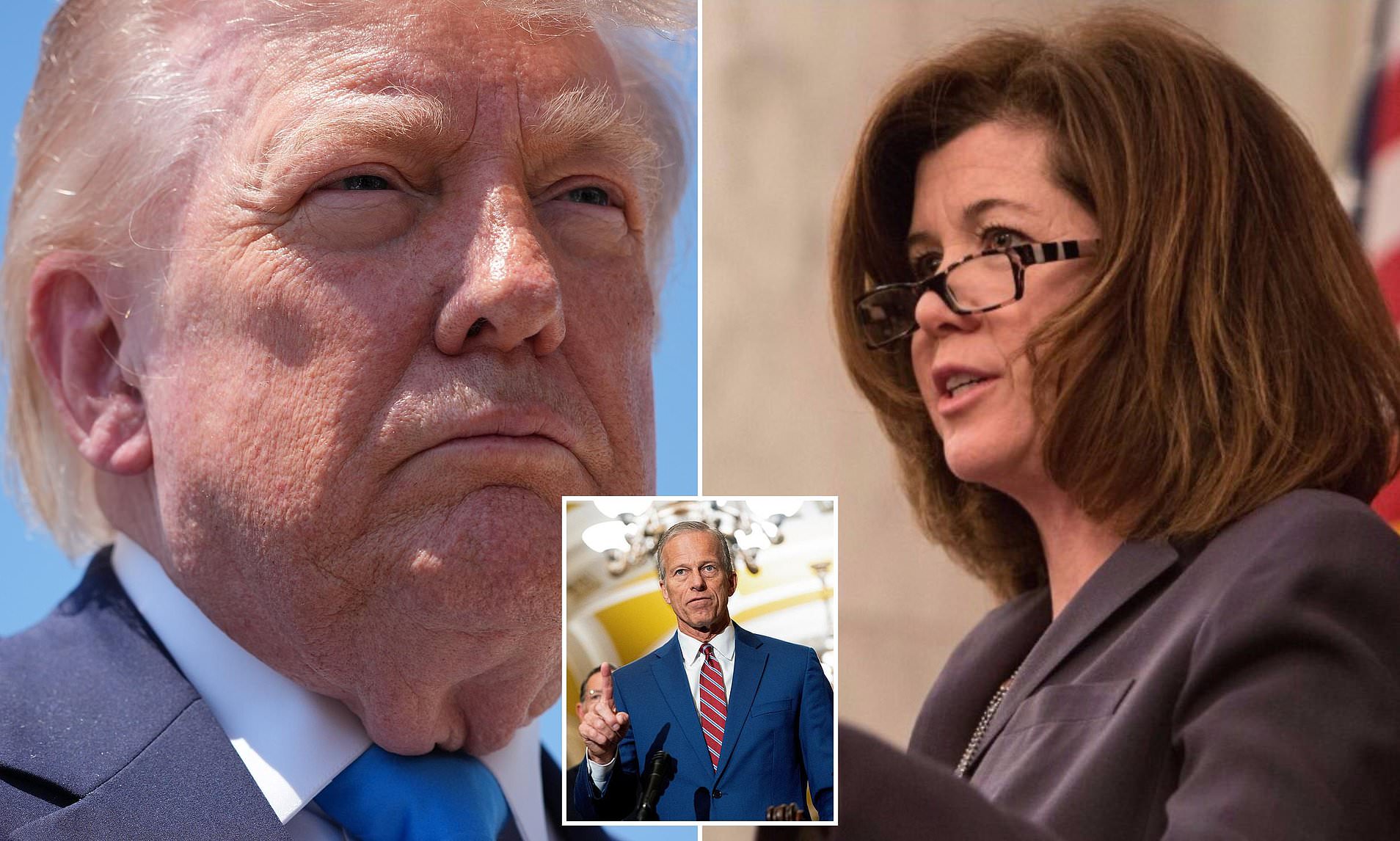
Trump’s Demands on Senate Republicans and the Role of the Parliamentarian
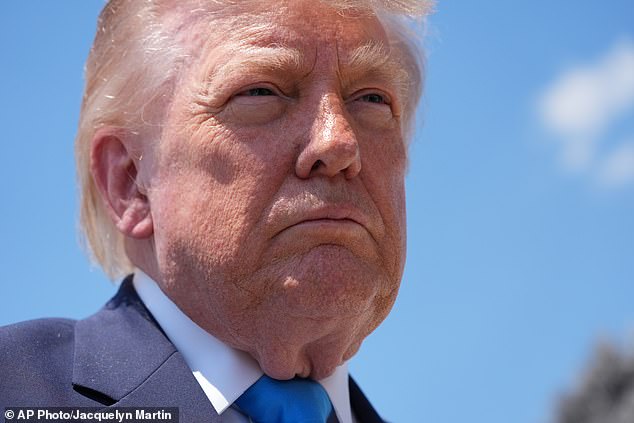
Donald Trump has made a strong public demand for Senate Republicans to remove the parliamentarian, Elizabeth McDonough, following her decision to block the inclusion of funding for his ballroom in a reconciliation bill. This move comes after she ruled that the $1 billion allocated for ICE (U.S. Immigration and Customs Enforcement) and his personal project could not be part of the bill.
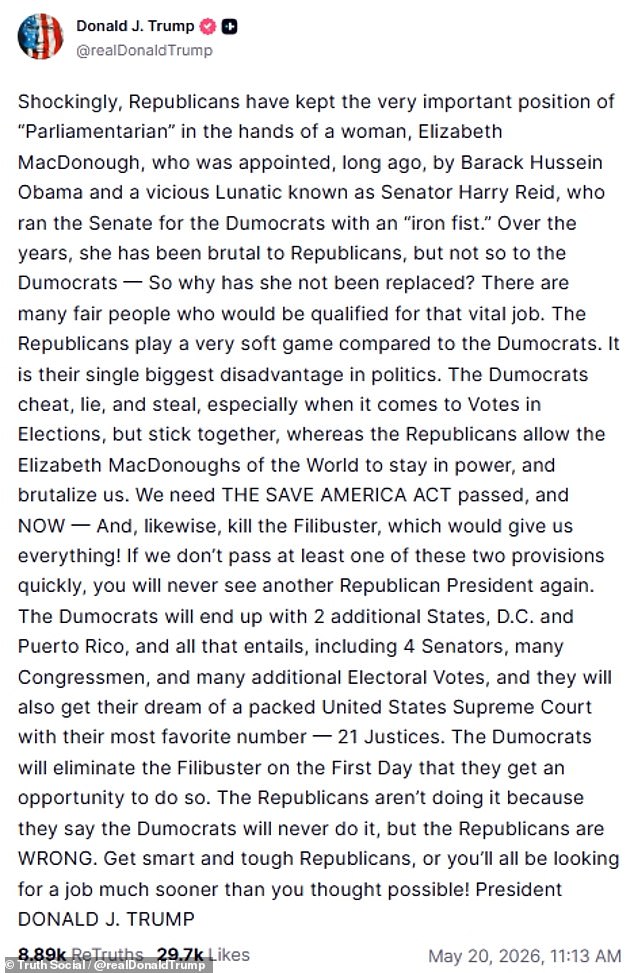
In a lengthy post on Truth Social, Trump accused McDonough of being biased in favor of Democrats, stating that she had been “brutal to Republicans” but not to the opposition party. He claimed that there are many qualified individuals who could replace her in this critical role. Trump also criticized the late Senate Majority Leader Harry Reid, referring to him as a “vicious lunatic” and suggesting that McDonough was under his influence.
He continued by using a new nickname for the Democratic Party, calling them the “Dumocrats,” and claimed that they cheat, lie, and steal, especially when it comes to election votes. Trump emphasized that Republicans need to be tougher and more united, warning that if they do not act, there may never be another Republican president again. He also suggested that the Democrats would push for statehood for Washington, D.C., and Puerto Rico.
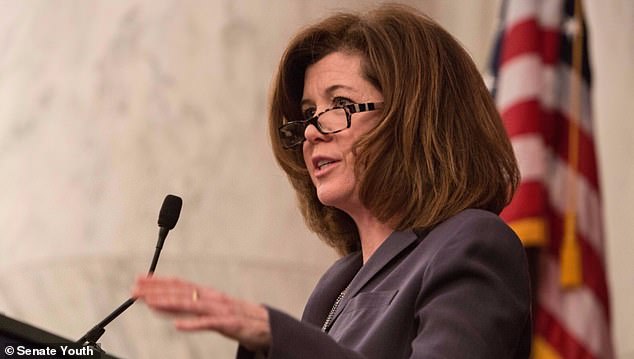
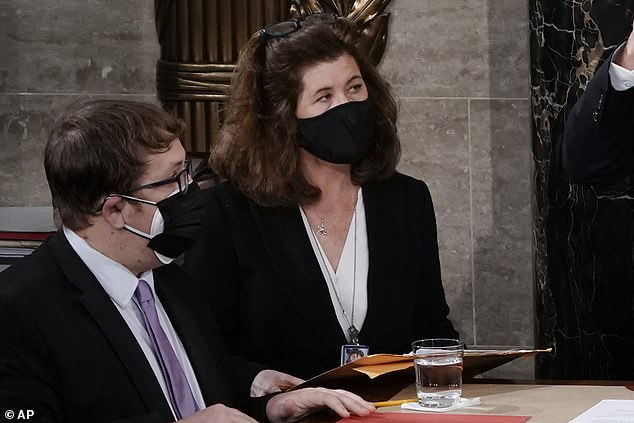
The role of the parliamentarian is often overlooked, as their primary function is to ensure that Senate procedures are followed. However, during budget reconciliation, the parliamentarian becomes a central figure. This process allows the Senate to pass bills with a simple majority instead of the usual 60 votes needed to overcome a filibuster.
For Republicans, who hold 53 seats in the Senate, this process is particularly advantageous. A unified GOP can pass a bill without needing any Democratic support. However, the parliamentarian has the authority to review and potentially cut line items from the bill. They are responsible for interpreting the Byrd Rule, which ensures that reconciliation bills only include provisions that affect the budget.
The Byrd Rule, named after the late Senator Robert Byrd, prohibits reconciliation bills from containing provisions that do not impact the budget. It also prevents such bills from overhauling Social Security or increasing the deficit for a fiscal year not included in the bill’s scope. The test for compliance with the Byrd Rule is known as the “Byrd Bath.”
McDonough previously used the “Byrd Bath” to reduce President Joe Biden’s Build Back Better package in 2022, striking down attempts to provide a pathway to citizenship for eight million undocumented immigrants. Now, she has the power to significantly impact Trump’s agenda, though it remains unclear what specific elements she might target.
Pressure from the White House has led Republicans to attempt to add the funding to a roughly $70 billion bill aimed at restoring resources to ICE and the Border Patrol. However, this proposal has faced criticism from some GOP lawmakers who question its cost and the lack of detail on how the funds will be used.
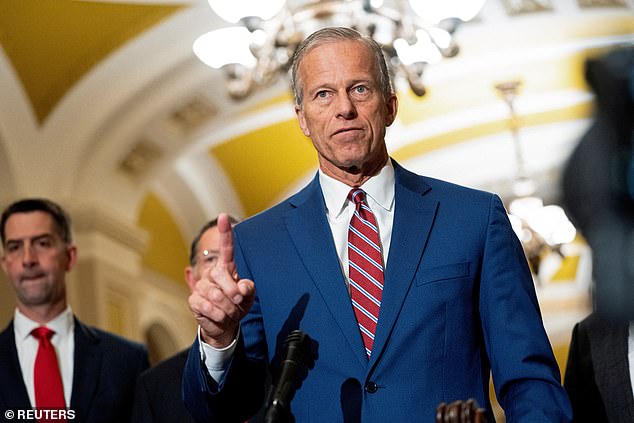
Senate Majority Leader John Thune described the situation as “concerning” and unnecessary, noting that many issues in the bill already have the necessary votes to pass. He emphasized the importance of ensuring security around the Capitol.
Despite these challenges, the funding for ICE and Border Patrol remains in the bill. Democrats have long blocked this funding in protest of the Trump administration’s immigration enforcement policies. While Democrats demanded reforms for the agencies, negotiations with the White House yielded little progress.
Republicans are leveraging the reconciliation process to fund the agencies through the end of Trump’s term, using a simple majority and no Democratic support. However, passage still requires approval from the parliamentarian and unity among Republicans.
“We’re working on it,” Thune said as he left the Capitol on Wednesday evening.
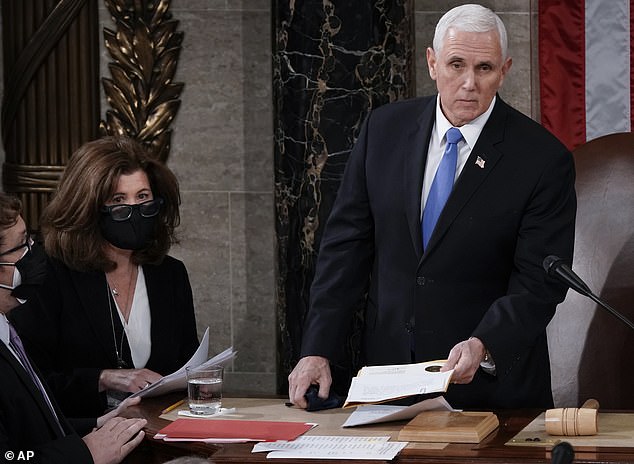
There is precedent for the Senate ignoring the parliamentarian. The decisions of McDonough and previous parliamentarians have always been non-binding and lack actual enforcement power. Historically, Senate leaders have even removed the parliamentarian over disagreements regarding the Byrd Rule.
On May 7, 2001, then-Senate Majority Leader Trent Lott, R-Miss., fired the parliamentarian at the time, Robert Dove, because he was obstructing President George W. Bush’s budget bill. Just one month later, with a new parliamentarian in place, Bush was able to sign his first major tax cut into law.