
Cyclists Could Face New 12mph Speed Limits Amid Rising Accidents
A growing number of accidents involving cyclists have led to discussions about implementing stricter speed limits for bicycles in the UK. The proposal, which could include harsher penalties for cyclists who cause serious harm or death, has gained attention following several high-profile incidents.
One such incident involved Patricia Jenkins, an 80-year-old woman who was killed while crossing a road in Tameside, Manchester. She was struck by John Andrew, a cyclist participating in the Tour de Manc, an annual cycling event that raises money for various charities. This tragic event has sparked calls for change, with her husband, Anthony Jenkins, advocating for the UK to adopt similar measures as seen in the Netherlands.
The Dutch Model and Its Implications
The Netherlands recently introduced a 12mph speed limit for cyclists, although it currently does not impose fines for violations. Authorities believe this policy will encourage safer behavior rather than relying on punishment. The decision was made in response to the increasing number of e-bikes, which are often used at high speeds in urban areas.
In the Netherlands, there were approximately 81,000 reported incidents of cyclists in hospitals last year, marking a nine percent increase from 2024. Meanwhile, in the UK, police data shows a 10 percent rise in cycling casualties over the same period, the highest among all road users.
Anthony Jenkins criticized the lack of enforcement of speed limits for cyclists in the UK. He highlighted the inability of authorities to gather conclusive evidence regarding the speed of the cyclist involved in his wife’s accident. Despite the presence of a bike computer, a Garmin watch, and other digital devices, no definitive proof of speeding could be obtained.

Legal Challenges and Calls for Change
Assistant coroner Anna Morris acknowledged that the cyclist was traveling at least 27mph before the collision but noted that there was no evidence he exceeded the 30mph limit. Currently, cyclists involved in serious incidents can face fines of up to £2,500 for dangerous cycling.
Under the proposed Crime and Policing Act 2026, a cyclist causing death or serious injury could face a maximum penalty of life in prison. However, the Department for Transport has stated it has no plans to introduce a speed limit for cyclists, focusing instead on reducing road deaths and serious injuries by 65% by 2035.
Andrew Gilligan, a former No 10 transport adviser, emphasized the need to address the issue of illegal e-bikes. He suggested that enforcing existing laws, cracking down on the sale of modified e-bikes, and increasing on-the-ground enforcement could be effective solutions.
A Tragic Case and Family Reactions
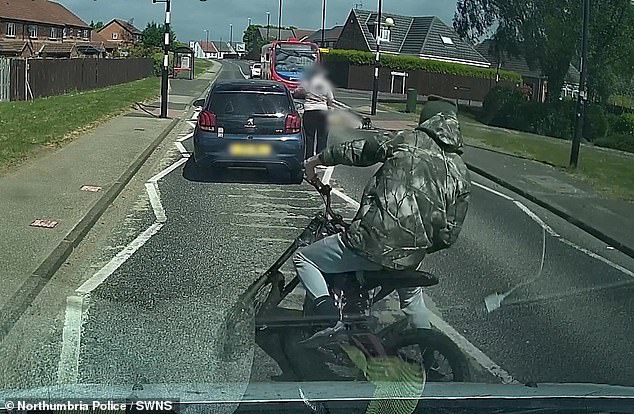
Another incident involving an e-bike has further fueled calls for stricter regulations. Gloria Stephenson, a grandmother, was killed by Billy Stokoe, an 18-year-old who was using an illegal e-bike purchased on Facebook Marketplace. The vehicle was not road legal and was prohibited from public highways.
Dashcam footage showed Stokoe colliding with Ms. Stephenson while she walked her daughter’s dog. After retrieving the bike, he fled the scene, leaving the grandmother lying motionless. Stokoe was also using a mobile phone and was under the influence of cannabis at the time.

At Newcastle Crown Court, Stokoe pled guilty to causing death by dangerous driving and received a six-year, nine-month sentence. His family described the conviction as an “insult” to their mother’s memory, arguing that the punishment was too lenient given the circumstances.
Julie Francis, one of Ms. Stephenson’s daughters, expressed frustration with the legal system. She called for stronger deterrents against the use of illegal e-bikes and suggested that all such vehicles should be registered with the DVLA and have a number plate. She believes that increased penalties would serve as a warning to others.
The family continues to advocate for changes in the law, hoping to prevent future tragedies and ensure that those responsible for such incidents face appropriate consequences. Their efforts highlight the urgent need for action to address the growing concerns around e-bike safety and enforcement.