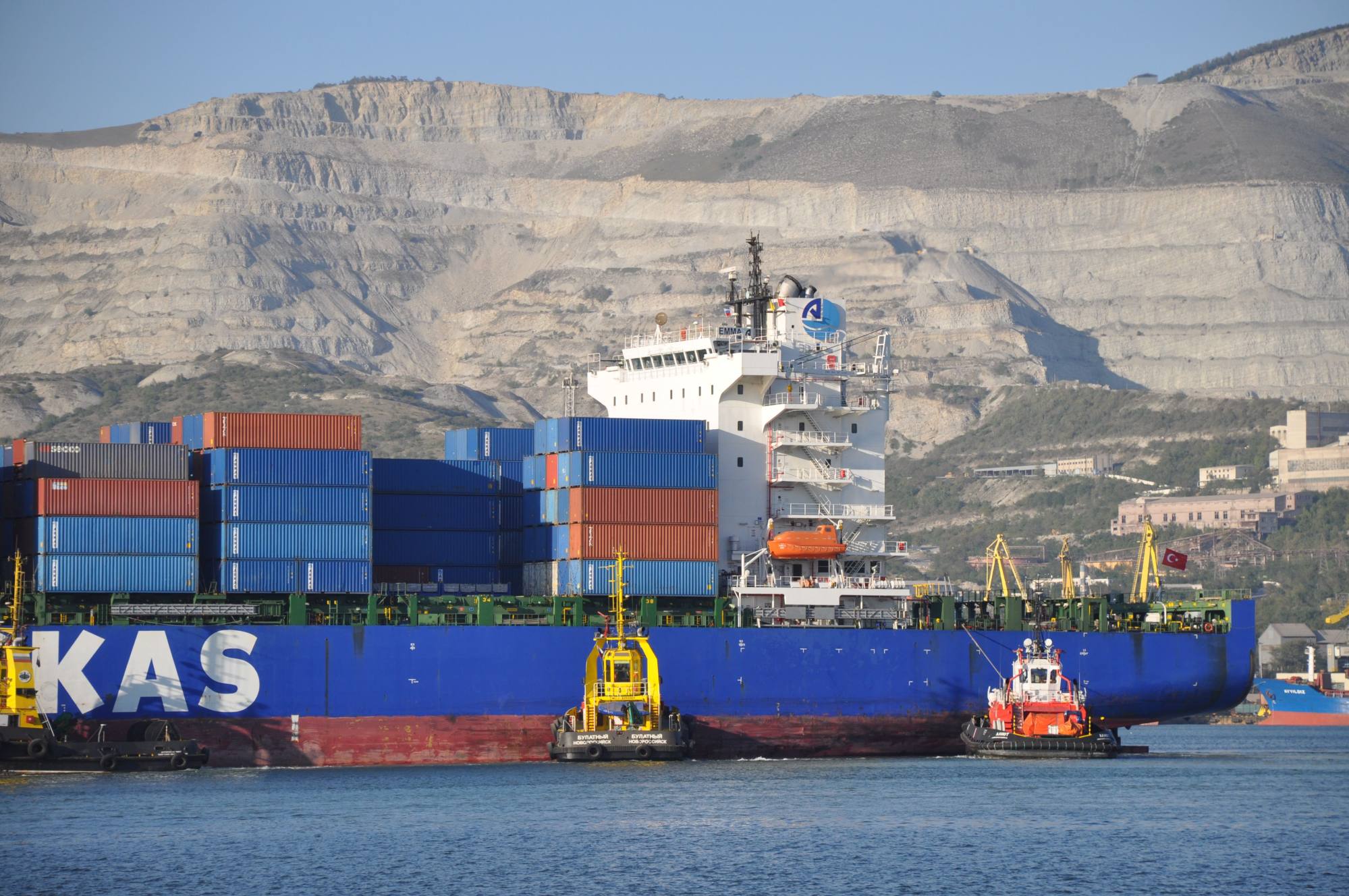
Damage to Black Sea Grain Terminals Disrupts Exports
Grain shipments from the Black Sea port of Novorossiysk are currently impossible due to serious damage to terminal infrastructure. Three of Russia’s largest grain terminals in the area have halted operations after being damaged in a massive overnight drone attack by Ukraine. According to people familiar with the matter, the damage has significantly impacted the region’s ability to export grain.
A loading gallery at United Grain’s Novorossiysk Grain Plant collapsed following the strikes, and several silos were damaged, as reported by sources. Additionally, a gallery and truck unloading facility at Demetra’s terminal were also affected. The KSK terminal was hit, though details remain unclear. These incidents have raised concerns about the stability of the region’s agricultural supply chain.
The attacks have intensified fears over global food security, particularly as Russia and Ukraine account for more than a quarter of global wheat exports. With the current harvest season underway, the disruption has led to a surge in wheat futures, which rose as much as 4% in Chicago on Wednesday—the biggest intraday increase in three weeks.
Russia has accused Ukraine of targeting its grain and agricultural infrastructure, claiming that such actions are driving up global food prices and exacerbating shortages. A foreign ministry spokeswoman, Maria Zakharova, stated that the Kyiv regime’s actions are “cynical” and serve the interests of certain Western nations. She added that these actions are worsening grain and fertilizer shortages, increasing the burden on developing countries, and fueling global food price inflation.
A state of emergency has been declared in Novorossiysk, with water supplies suspended. The city is one of Russia’s main transit points for grain exports, and shipments had already been severely curbed in recent days due to attacks on nearby cargo ships. Ship-tracking data from Bloomberg and Kpler shows that loading activity at the port has nearly come to a halt.
Ishan Bhanu, lead agricultural commodities analyst at Kpler, said that Russian and Ukrainian exports will be sharply lower this month. He noted that while more Ukrainian grain may eventually reach Europe, European Black Sea ports are already dealing with peak exports and have limited extra capacity. Russia may shift some grain through its Baltic ports, but those have only exported 400,000 tonnes in their highest month.
Representatives of KSK and Demetra-owned NZT declined to comment, while United Grain’s NKHP did not immediately respond to requests for comment. United Grain confirmed that no employees were injured but provided no other details.

Russia’s agriculture ministry is exploring alternative export options, including ports on the Baltic and Caspian seas, the Far East, and overland routes. Satellite images from NASA’s Fire Information for Resource Management System show heat anomalies in Novorossiysk, likely indicating fires. Local officials said the city and surrounding Krasnodar region were targeted by several hundred Ukrainian drones overnight.
Ukrainian President Volodymyr Zelensky claimed that missiles and drones targeted the city’s naval base, which is the last major stronghold of Russia’s Black Sea fleet. Strikes against Russian air-defense positions, piers, and seaport infrastructure have been confirmed. Zelensky emphasized that the war must be stopped and that all reasonable diplomatic proposals are on the table.
Later on Wednesday, Ukraine’s security service (SBU) reported that the military hit “the portal of the tunnel” connecting the Grushovaya oil-storage site with Transneft PJSC’s Sheskharis terminal. The SBU also stated that the infrastructure of three berths was hit, though specific locations were not disclosed.
NASA data suggests blazes near a grain terminal and a naval base near the Sheskharis oil terminal. The apparent absence of fire at the oil terminal could be due to limited geolocational accuracy.
State-run oil-pipeline operator Transneft and the Novorossiysk port administration did not respond to requests for comment. Ukrainian military officials have not yet commented on the attack.
Ukraine has been targeting Russian energy assets, including refineries, export terminals, tankers, and pipeline infrastructure, in an effort to curb Moscow’s ability to process and sell crude and fuels. Earlier this year, similar strikes temporarily halted loadings at the Sheskharis oil terminal and disrupted operations at the Caspian Pipeline Consortium terminal nearby.
On Wednesday, two oil tankers were seen moored at the CPC Terminal, according to satellite images from Planet Labs PBC, suggesting that loadings may still be ongoing. The U.S. recently asked Ukraine not to attack the port so that Kazakh oil could reach global markets.
Additional reporting by Reuters.