Rising Displacement in Nigeria’s North-West
The International Organisation for Migration (IOM) has reported a significant increase in internal displacement across Nigeria’s North-West region, with 737,073 people displaced due to various factors. The majority of these displacements, around 620,000 individuals, are attributed to armed banditry and kidnapping. This alarming figure highlights the deepening humanitarian crisis in the area.
Sharon Dimanche, the IOM Chief of Mission in Nigeria, revealed these statistics during a press conference in Katsina. She emphasized that the situation is not just a regional issue but a national one, affecting food production, education, and overall stability. “It affects education and access to basic services. It also affects local economies and social cohesion and, ultimately, Nigeria’s wider stability and development,” she said.
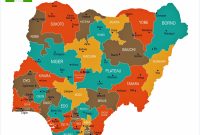
Katsina State alone has recorded 180,938 internally displaced persons (IDPs), while Zamfara has 261,995. These numbers reflect the severe impact of ongoing conflicts and environmental challenges in the region. Additionally, nearly 147,000 returnees have been documented across the North-West, including over 37,000 in Katsina. However, Dimanche cautioned that returning home does not automatically mean a durable solution.
“A return is not automatically a durable solution. People need to return to places where they feel safe, where they can earn a living, where their children can go to school, and where the conditions that displaced them in the first place have been addressed,” she explained.
Factors Driving Displacement
Insecurity remains the primary driver of displacement, but climate-related disasters are increasingly contributing to population movements. Between January 2025 and January 2026, more than 138,000 people were displaced in Katsina alone. Nearly 72,000 of those displacements were linked to floods, heavy rainfall, or windstorms, while almost 60,000 were caused by armed banditry and kidnapping.
Dimanche highlighted the need for stakeholders to view displacement beyond isolated categories of insecurity or climate disasters. “A family does not experience displacement in categories. Whether they flee because of violence or because floods have destroyed their homes and livelihoods, the consequences can be very similar: the loss of livelihoods, children out of school, fear, uncertainty and communities placed under enormous pressure,” she stated.
Regional Trends and Challenges
Across the North-West and North-Central regions combined, the assessed number of IDPs declined by nearly five per cent between October 2025 and February 2026, while the number of returnees increased by almost five per cent. Although this trend is encouraging, Dimanche warned that returning home without adequate security and basic services could expose communities to renewed displacement.
Peacebuilding and early warning systems are identified as critical tools for preventing conflicts from escalating into violence and displacement. The IOM praised the Federal and state governments for their leadership and collaboration, as well as the European Union for its support through the Conflict Prevention, Crisis Response and Resilience Programme (CPCRR).
Jean Nahesi, the IOM Head of Sub-Office, North-West and Programme Manager, Katsina, provided further details on the displacement figures. He mentioned that about 620,000 people across the North-West had been displaced by banditry, highlighting the scale of insecurity in the region. He also noted that 74 per cent of assessed IDP locations required shelter, while 89 per cent reported inadequate sanitation facilities.
Ongoing Challenges
Nahesi outlined several challenges affecting peacebuilding and humanitarian programming in the North-West. These include weakened social cohesion and trust between communities and institutions, climate-related shocks, competition over natural resources, limited engagement of faith-based organizations, multidimensional poverty, and unemployment.
The CPCRR programme has established 80 Community Peace and Resilience Committees across Katsina and Zamfara states and trained 1,700 community members and stakeholders on conflict prevention, early warning, and early response. Additionally, 11 early warning and transhumance flow monitoring reports have been published during the period.
Key Displacement Figures
According to the latest IOM figures presented at the briefing:
- Katsina: 180,938 displaced persons
- Kano: 10,461 displaced persons
- Zamfara: 261,995 displaced persons
- Sokoto: 176,099 displaced persons
- Kaduna: 107,580 displaced persons