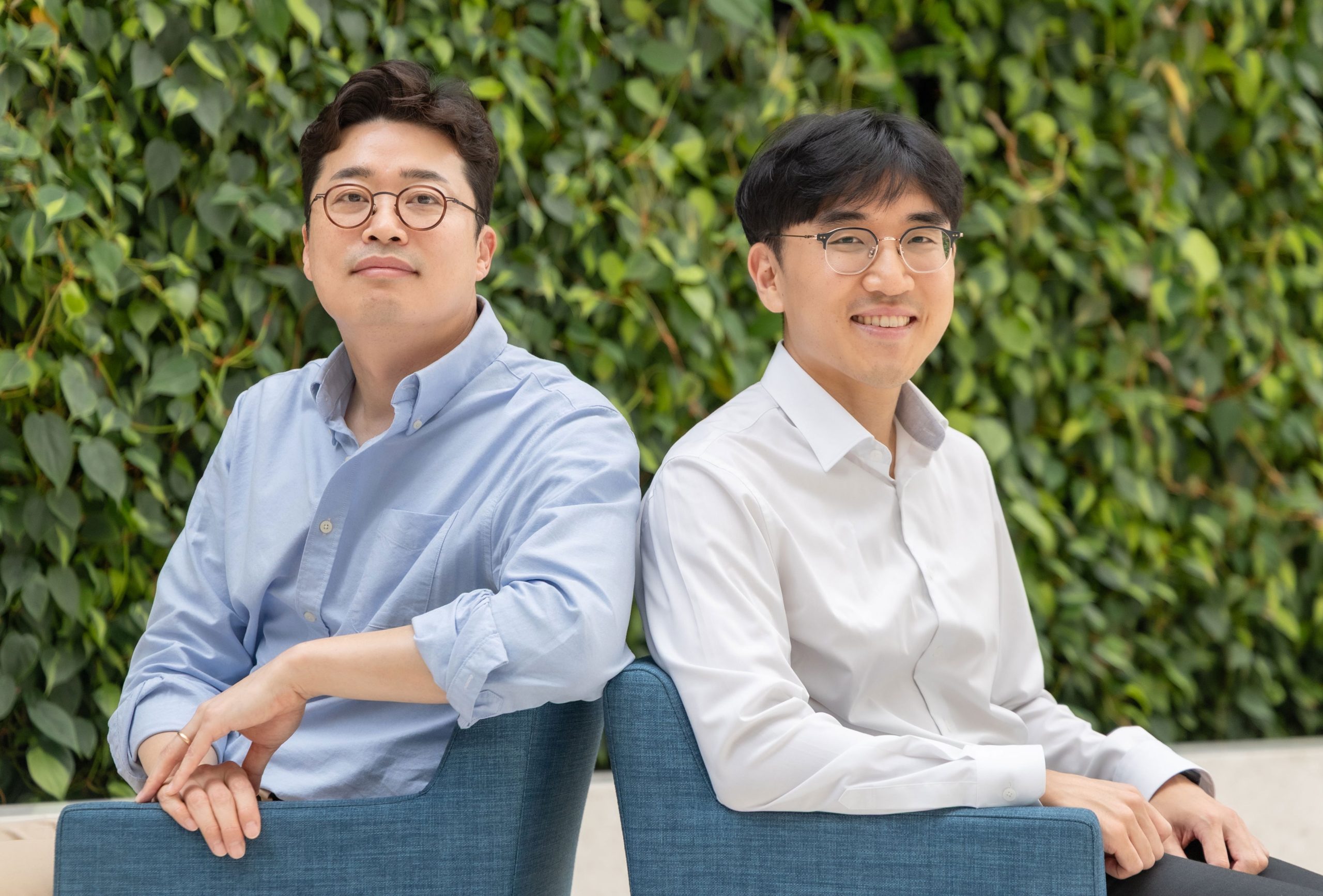
“In South Korea, a country with a rigid labor market, artificial intelligence (AI) is uniquely pushing out only the 20s and 30s youth generation from jobs. At a time of rapid technological change, it is time to reconsider whether Korea’s current system, which solidifies the power of insiders, is appropriate.”
Oh Sam-il, head of the Bank of Korea’s Employment Research Team at the Economic Research Institute, who has gained domestic and international attention for his series of reports on AI and jobs, said in a recent interview, “The high interest from overseas institutions and scholars suggests that the world is closely watching how Korea, the country that has benefited the most from the AI boom, integrates AI into its economy.”
Oh is recognized as the Korean researcher most closely watched by global economists studying the impact of AI on jobs. Since November 2023, he has consecutively published seven reports analyzing AI’s effects on employment and productivity, each sparking significant attention. His papers, which combine data from the Ministry of Data and Statistics with surveys directly conducted by the Bank of Korea, are considered the fastest analyses addressing the global question of “the future of AI and jobs.” His research team includes Seo Dong-hyun, a section chief who earned his Ph.D. under Anton Korinek, a leading scholar in AI and macroeconomics at the University of Virginia.
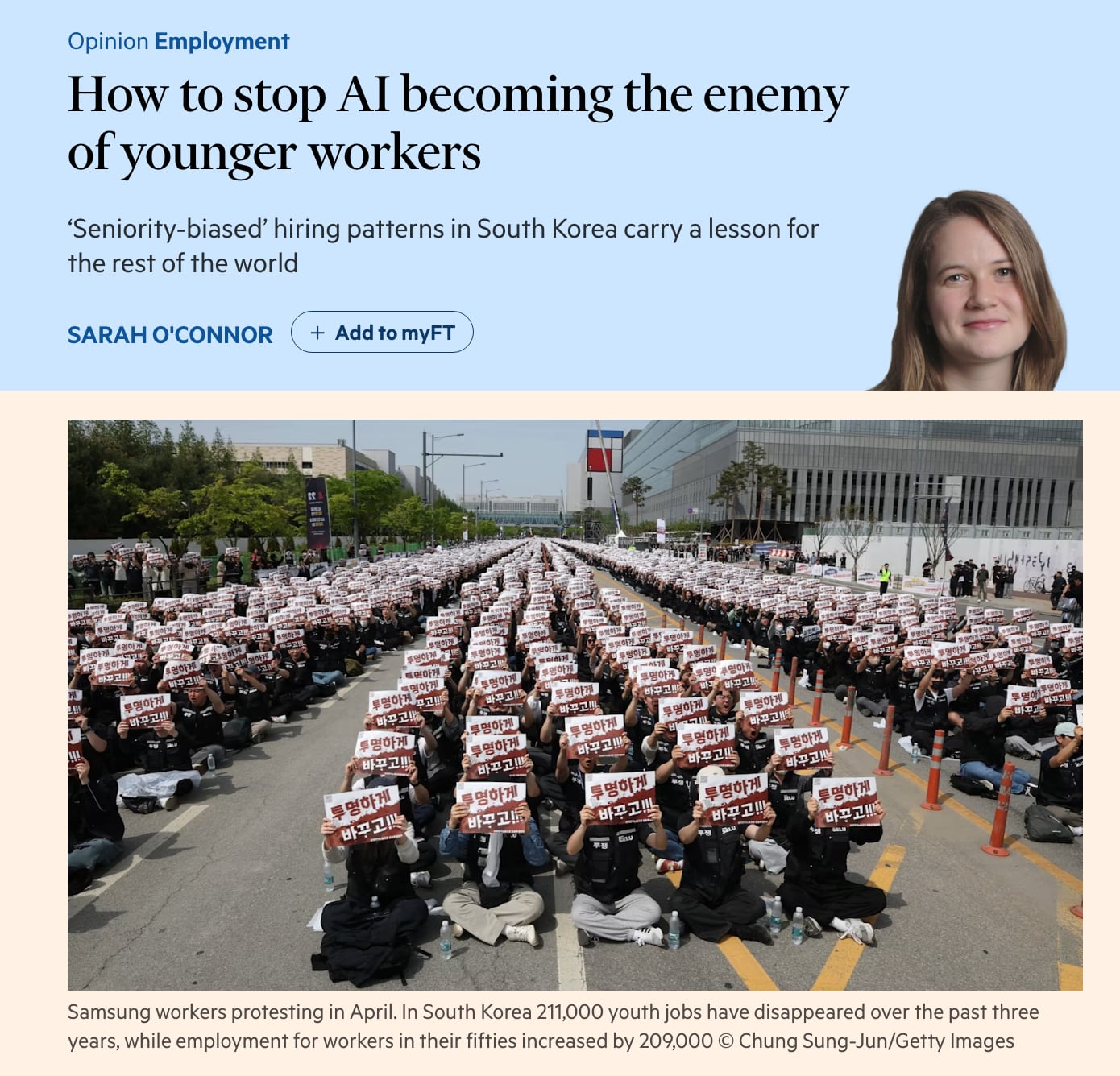
The team has collaborated with the IMF (International Monetary Fund) and recently co-authored a paper with Nicholas Bloom, a world-renowned AI economist at Stanford University’s Department of Economics. All reached out to Oh after reviewing his work. Last month, Sarah O’Connor, a jobs columnist for the Financial Times, wrote a column titled “How to Prevent AI from Becoming the Enemy of Young Job Seekers,” citing Oh’s research and highlighting Korea’s youth unemployment problem overshadowed by the semiconductor industry’s stellar performance.
It is unusual for reports from the Bank of Korea, often called a “monastery,” and especially its Economic Research Institute, dubbed the “monastery library,” to attract global attention. Oh said, “I think this reflects the world’s keen interest in what is happening in Korea’s job market, where the adoption of new technologies is exceptionally fast.”
◇“Fastest AI Impact on Korean Jobs, World Paying Attention”
The team’s reports are seen as real-time tracking of AI’s impact on jobs. Their first paper, published in November 2023, analyzed that AI would replace more white-collar jobs than simple production roles. While this was initially considered surprising, it has become a reality as AI excels in “brain labor,” pushing knowledge workers out of jobs.
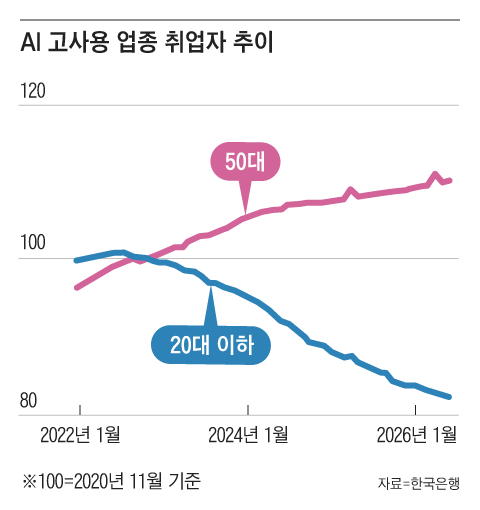
Reports published in October last year and August this year, analyzing the relationship between youth employment and AI, caused significant waves. They revealed that AI proliferation is pushing the tech-savvy youth out of the job market while solidifying the “iron rice bowls” of AI-inexperienced 40s and 50s. Oh said, “I believe this is a transitional phase where current AI excels at simple tasks but struggles with context understanding or workflow coordination—tasks typically handled by experienced workers.”
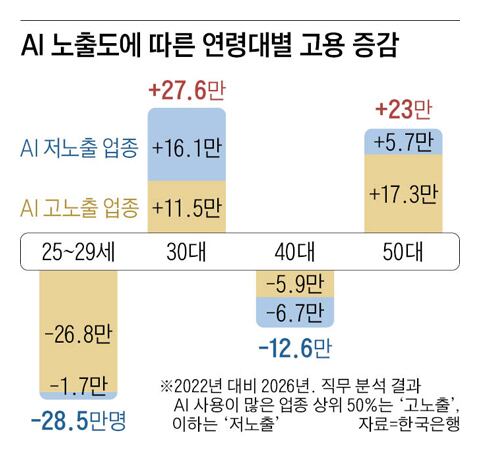
Seo Dong-hyun said, “Due to Korea’s highly rigid labor market, companies are responding to AI-induced uncertainty by halting youth hiring. If this continues, there could be a problem where no employees will have the ‘experience’ to begin with. I believe companies are aware of this issue and are researching solutions.”
◇“To Global Scholars, Korea Is the ‘Future Arrived Early’”
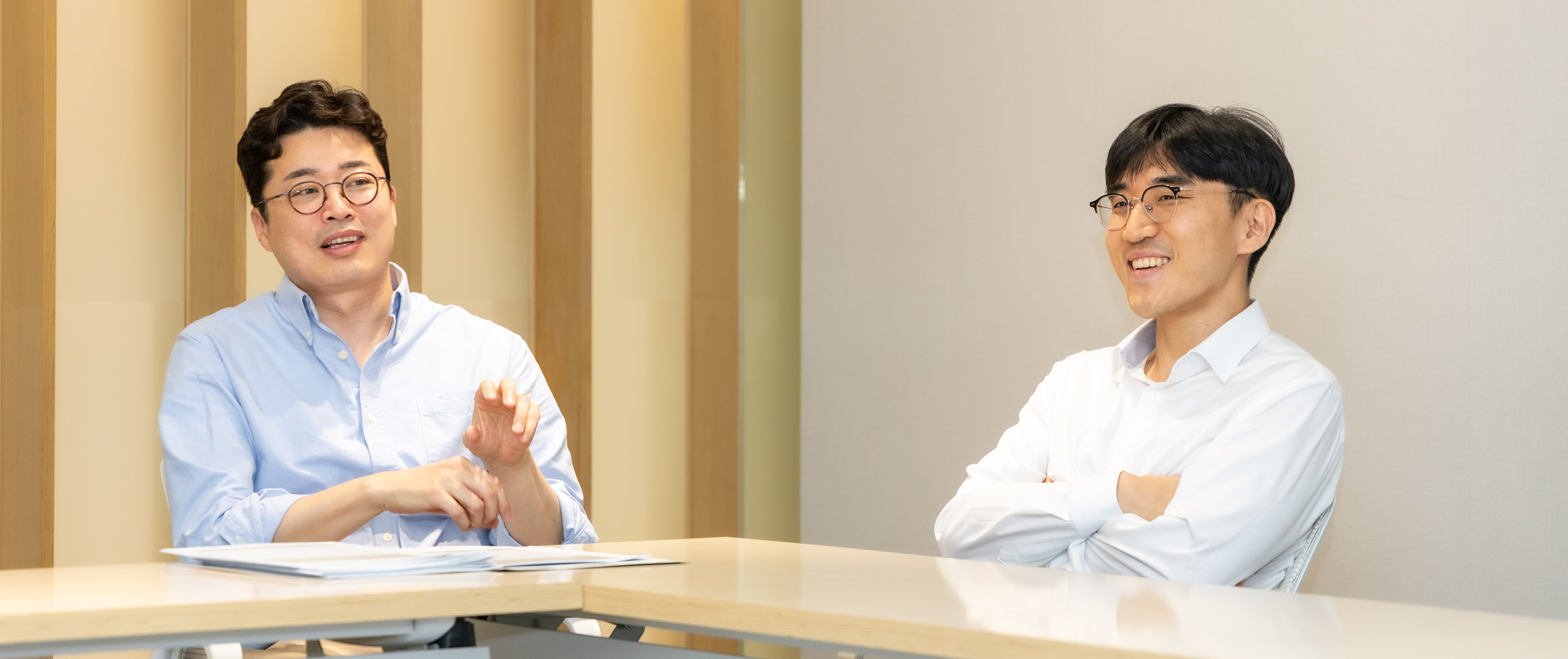
Following is a Q&A with Oh Sam-il (Oh) and Seo Dong-hyun (Seo).
-What prompted the series of reports on AI and jobs?
Oh: The first was “AI and Labor Market Changes” in late 2023. It argued that white-collar professions like doctors, lawyers, and accountants are highly vulnerable to AI. After reading a U.S. study, I wondered, “What about Korea?” The report was cited extensively—more than all my previous labor market reports combined. Around that time, the IMF’s Korea team contacted me.
-Why the strong reaction?
Oh: The IMF official said Korea is “unique.” AI adoption is extremely fast, and people readily accept technology. I realized this topic would attract global interest. It felt like the world was trying to glimpse the future through Korea. Previously, researchers used U.S. data first, and Korea followed. Now, we’re on the front lines.
-How did you respond?
Oh: We can’t compete with scholars on theory, so we decided to compete with data. Seo, who joined in 2024, suggested the Bank of Korea conduct its own surveys. We designed a representative sample and believed it would be widely cited.
-Is it unusual for the Bank of Korea to conduct surveys?
Oh: Typically, we analyze existing data. But AI is so new that such data doesn’t exist anywhere. Producing data on who uses AI and which companies adopt it could be a major contribution. We applied for a budget, which was approved, allowing us to conduct one survey last year and two this year, including corporate surveys.
A survey of 5,512 people on AI usage and productivity found “no change in productivity.” This June’s report, which highlighted this, garnered global attention. Oh said, “Under Korea’s rigid reward system, people use the time saved by AI for leisure rather than additional work. This shows that to boost productivity, Korea must change how it works and rewards.”
◇“AI’s Job Impact Still in Early Stages”
Seo, who joined the Employment Research Team in 2024, presented research on AI and corporate capital investment with his advisor, Korinek, at the World Economists Conference in Seoul last year.
-Why join the Bank of Korea after AI research?
Seo: I earned my Ph.D. studying AI and labor markets. During my studies, data was scarce, so I focused on theory. After graduating, I wanted to continue this research. Korea’s Bank of Korea was nearly the only institution analyzing AI and employment, so I applied with high expectations.
-Are there unexpected findings in the reports?
Oh: It was surprising that U.S. findings—AI disproportionately affecting youth jobs—applied to Korea. Given Korea’s rigid labor market, I expected AI adoption to not immediately reduce jobs. But youth employment was impacted as rapidly as in the U.S. European studies showed no similar results.
Seo: The most surprising result was that increased AI usage didn’t boost productivity. I assumed people who used AI less would complete more tasks, but that wasn’t the case. Some are skeptical about AI’s productivity impact, while others predict massive changes. I’m in the latter camp. This is a transitional phase, and as workflows and organizations adapt, productivity gains may emerge. I plan to study the conditions needed for AI to enhance productivity.
-Does this mean AI’s relationship with jobs and productivity will evolve?
Seo: Yes. AI performance evolves rapidly. The AI of last year is different from today’s. Adjusting workflows and organizations for current AI might become obsolete next year.
-Why is the Bank of Korea so focused on AI research?
Oh: AI’s impact on economic fundamentals is crucial for monetary policy. Questions about potential growth rates, productivity improvements—these depend on AI-driven technological changes. Some predict AI will spark a productivity revolution, lowering inflation and interest rates while boosting growth. To implement effective monetary policy, the central bank must agilely track how AI transforms economic fundamentals.
Seo: Understanding changes in economic fundamentals is essential for appropriate monetary policy. The labor market is the first sector affected by AI. Traditionally, lowering interest rates spurred corporate investment and hiring. With AI, the link between capital and labor may break. More capital could mean fewer workers needed, exacerbating “K-shaped polarization.” Without understanding these shifts, lowering rates during an economic downturn might boost capital investment but not improve the labor market. We aim to provide timely data on how capital-labor relationships are changing to aid monetary policy decisions.
◇“Incentivize Firms to Invest in ‘People’”
-What role should the government play amid these changes?
Oh: Korea’s labor market institutions have barely changed since the 1997 Asian financial crisis, focusing on protecting “insiders.” It’s time to reconsider if maintaining these systems, which marginalize “outsiders” like young job seekers, is appropriate. Additionally, the government’s incentives for labor and capital are imbalanced. Capital investment enjoys depreciation and tax benefits, while hiring increases costs like social insurance. To encourage firms to invest in “people” rather than AI during this transition, expanding related benefits is necessary.
Seo: AI’s defining feature is uncertainty, which society must manage. Past technologies affected repetitive jobs, but generative AI impacts non-repetitive knowledge workers—a first, causing widespread anxiety. Korea must identify key uncertainties and policy tools to manage them. This year’s semiconductor boom has sparked discussions on distribution and future investments, possibly starting these conversations earlier than other countries—a fortunate turn for Korea.
-What AI do you use?
Oh: I use ChatGPT with a $20 monthly subscription. Seo reportedly uses a $200 plan. We pay out of pocket—no company support, haha.
Seo: Last month, I used Claude, and now I frequently use GPT Codex. AI changes so fast that I switch tools as needed.
- 월 5900원 멤버십, 신문 독자에게는 2900원, 조선멤버십
- 55000원 상당의 신문-잡지 8종 마음껏 보기, 조선멤버십
- 현금처럼 쓸 7000포인트 받아 알뜰한 쇼핑, 조선멤버십

Related posts:

Fiction park: He was the best in class. He still wasn’t good enough

Gagan Thapa takes oath as Congress president, vows to regain public trust

Inside knowledge that has locals gripped by fear after gran’s body found decomposing in cattle dip

New property purchase disclosure rule in Japan sparks fears it may curb foreign investment

Dino-mite treasures: inside Singapore’s Fort Knox storing playthings of ultra-rich