
A new ‘arms race’ has begun alongside the AI revolution. It involves securing more powerful GPUs and massive memory to maximize productivity and efficiency. We are witnessing astronomical investments in nurturing AI talent, building data centers, and a major boom in semiconductor companies. This is a pattern that has repeated during periods of technological innovation in human history. Behind this lies the competition among nations and individuals yearning for powerful ‘computing power, the power of calculation.’ –Editor’s note
1642 was a peculiar year when signs of a massive shift in power—spanning science, technology, economy, and military—began to emerge. In January, Galileo Galilei passed away in Italy, and on Christmas Day (Julian calendar) that year, Isaac Newton was born in England.
The same year, England plunged into civil war after King Charles I and Parliament reached an extreme confrontation. This was followed by Charles I’s execution, the establishment of a republic, Oliver Cromwell’s Protectorate, and the Restoration—18 years of upheaval. Though chaotic, a new atmosphere of leapfrog growth was also brewing as the world turned upside down and Newton came of age.
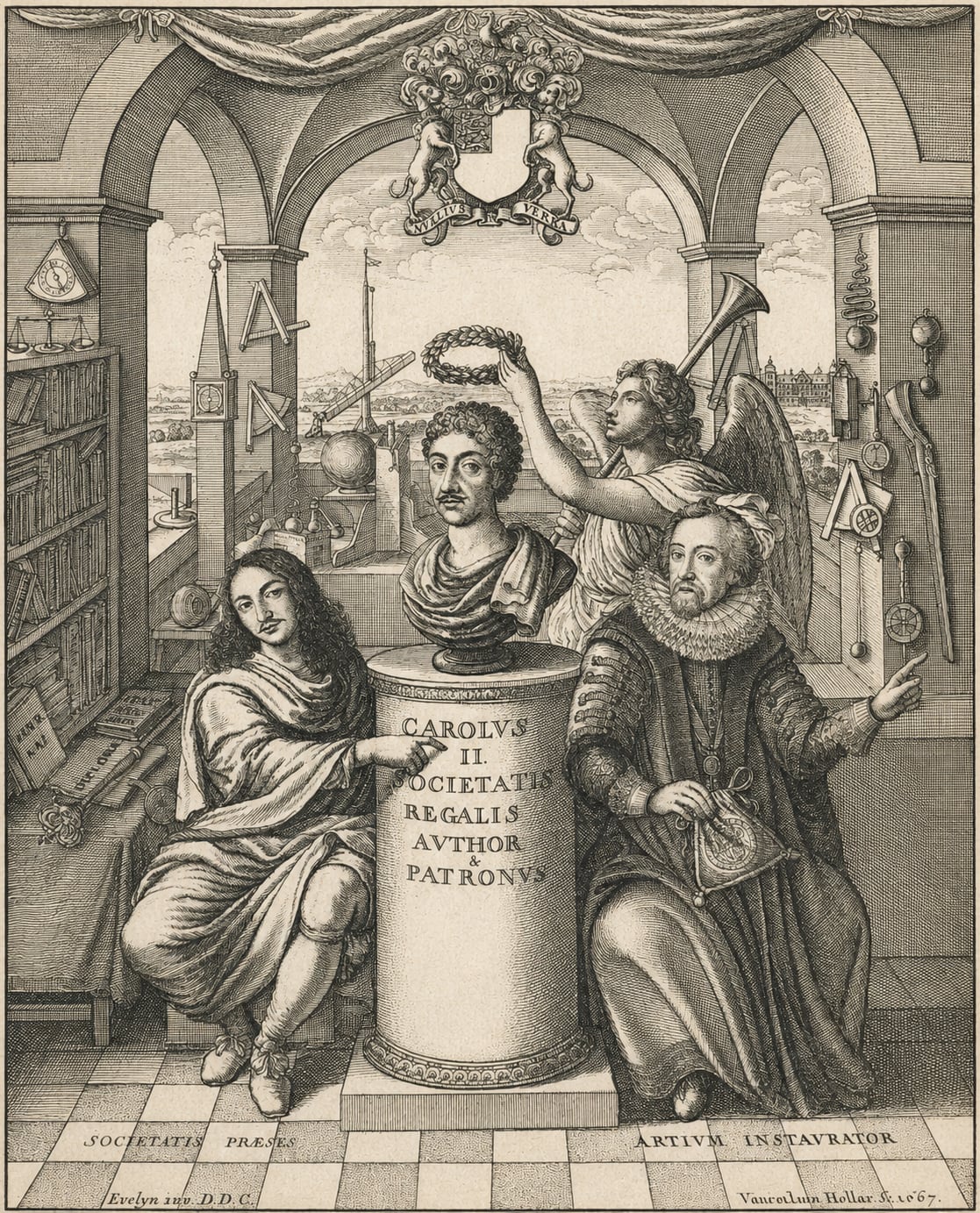
Charles II, the crown prince exiled in the Netherlands and France, experienced Europe’s new science and technology culture firsthand, recognizing its importance. After ascending the throne in 1660, he was ready to actively support the institutional space for scientists and the monarchy’s authority.
The British scientific community seized this opportunity. Since the 1640s, traditions of experimentation and debate had continued at Gresham College in London and Oxford. In November 1660, 12 prominent figures formed an academic group and requested royal support. Charles II granted the group a royal charter in 1662, leading to the birth of the famous ‘Royal Society.’
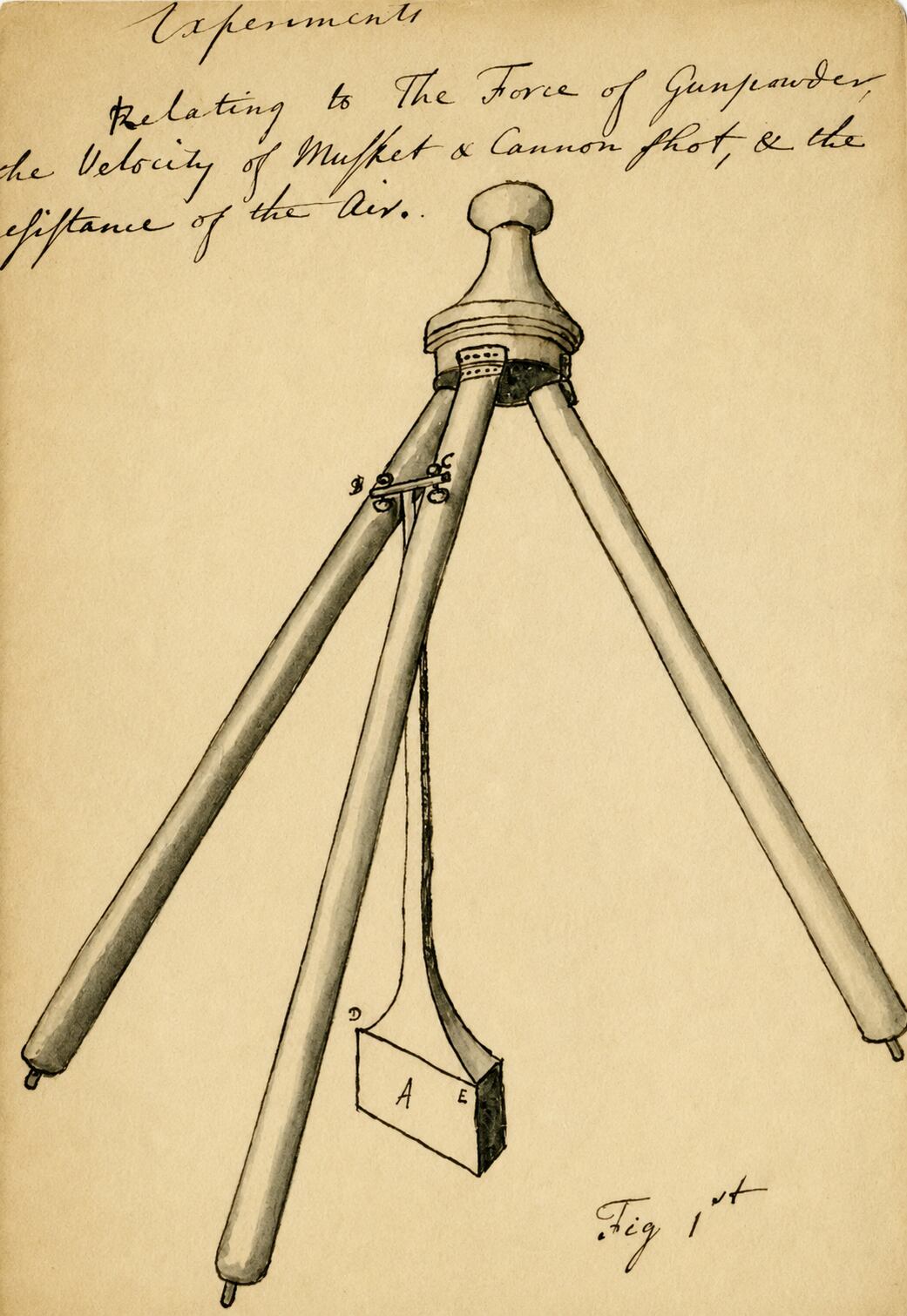
Robert Moray, a founding member of the Royal Society, was a close aide to the king and a military figure, but not just a figurehead. He researched tidal phenomena necessary for safe naval navigation and, in 1667, published a paper in the Royal Society’s journal urging systematic studies on direct fire range, optimal gunpowder quantity, and performance based on cannon caliber and material—demonstrating his scientific acumen. Prince Rupert, elected a fellow in 1665, was the king’s cousin and a seasoned military commander. He set up a laboratory at Windsor Castle to research gunpowder manufacturing, ammunition, and weaponry—a military technology enthusiast.
Meanwhile, scientists began to deeply engage in state affairs. Mathematician Jonas Moore took charge of surveying for the Ordnance Office in 1669, placing him at the center of administrative organizations responsible for cannons, ammunition, and military facilities. He supported astronomer John Flamsteed, leading to the establishment of the Royal Greenwich Observatory. He also secured the Ordnance Office’s budget and resources for the observatory’s operation. Chemical weapon manufacturing and navigation technologies began to interlock within the national science and technology system.
Scientists actively utilized these changes. A prime example was Edmond Halley, who predicted the return of ‘Halley’s Comet.’ In his early twenties, he traveled to Saint Helena in the South Atlantic aboard an East India Company ship for astronomical observations. Later, he directly commanded naval vessels to measure geomagnetism in the Atlantic. Halley recognized and practiced that scientific advancement could enhance a nation’s political, economic, and military power.
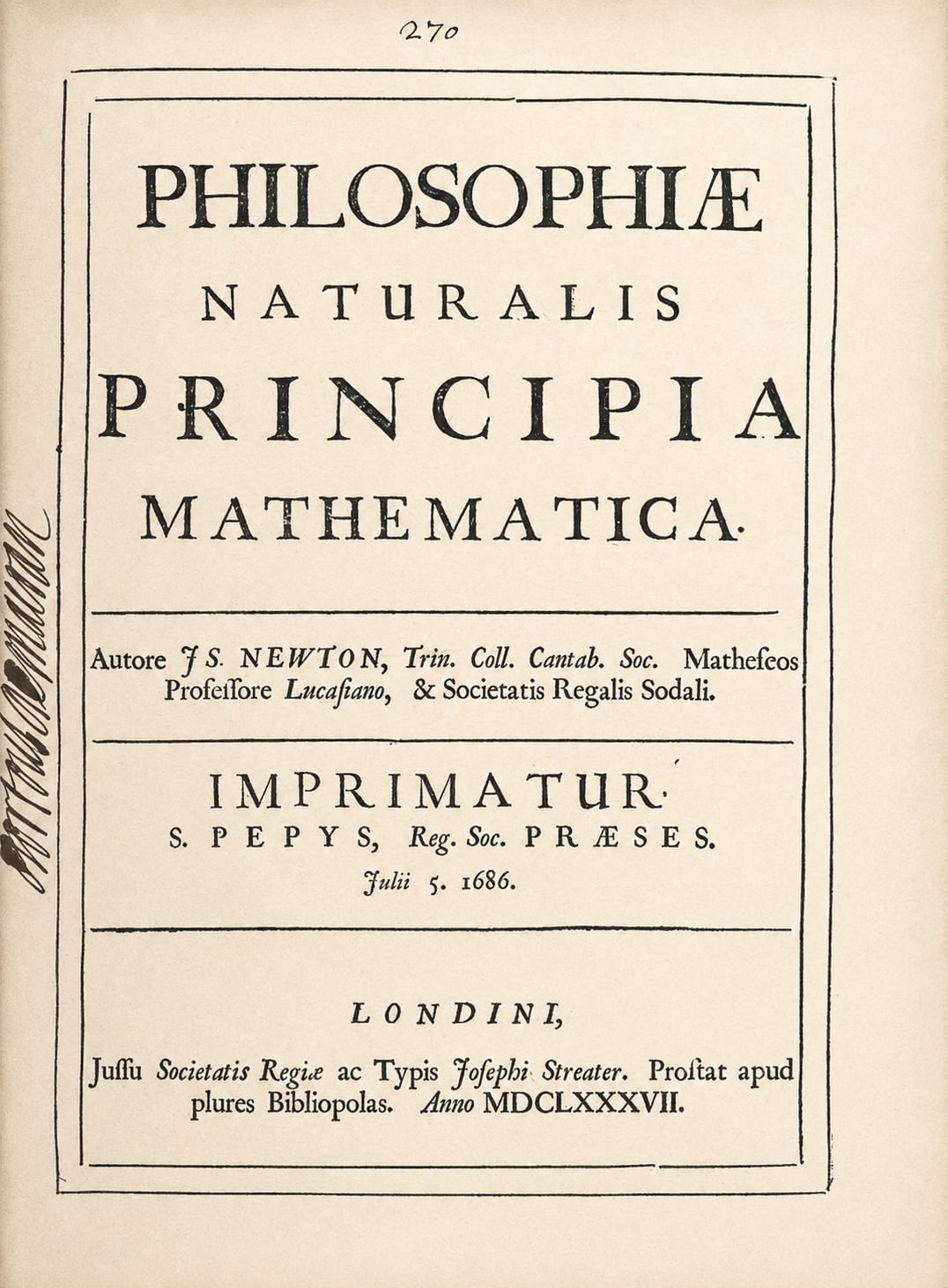
Around this time, Halley discovered groundbreaking research from his acquaintance Newton—a theoretical framework explaining both falling objects on Earth and celestial bodies in the sky through a single mathematical law, i.e., Newtonian mechanics. Newton was building a system to predict and calculate natural phenomena. Recognizing its potential, Halley persistently encouraged Newton, covering printing costs to publish the scientific masterpiece ‘Principia’ in 1687.
Newton devoted a significant portion of ‘Principia’ Volume 2 to studying the motion of objects and fluids under resistance—directly related to cannonballs flying through the air. At the time, the Royal Society was researching projectile motion and artillery under figures like Wallis and Halley, and Newton actively incorporated these into his mechanical system through exchanges with colleagues.
Benjamin Robins, a later member of the Royal Society, elevated this trend. Enthralled by Newtonian mechanics, he published ‘A New Principle in Gunnery’ in 1742, establishing the foundation of modern experimental ballistics. He advanced the ballistic pendulum into a precise measurement tool, calculating the muzzle velocity of cannons as they exited the barrel. Artillery, once reliant on empirical rules and simplified geometry, transformed into a scientific problem requiring precise measurements and computing power.
Ultimately, 17th–18th century Britain’s leap in science and technology and computing power resulted from three interlocking elements: political power opening institutional spaces for new knowledge, intermediaries like Moray and Moore connecting national issues with scientists, and a research community sharing and accumulating experimental and computational results. It was also significant that figures who were adversaries during the civil war collaborated within the Royal Society to study natural problems.
Based on such scientific advancements and modern ballistics knowledge, the British Army and Navy gradually developed powerful artillery, laying the foundation for becoming an empire ‘on which the sun never sets.’ Despite massive costs from repeated wars, Britain created a virtuous cycle of military technology development, growth in manufacturing and finance, and expansion of global trade networks, steadily building national strength.
Britain’s experience is not vastly different from today’s AI competition era. Simply gathering top-tier researchers and pouring astronomical budgets into semiconductors and data centers is insufficient. Decision-making structures that understand technology, individuals connecting research to real-world problems, and systems that rapidly verify and accumulate knowledge must move in tandem. History shows that what determines the outcome of technological supremacy is not just the quantity of computing resources but a nation’s entire ‘organized computing power’—the ability to transform those resources into real-world strength.