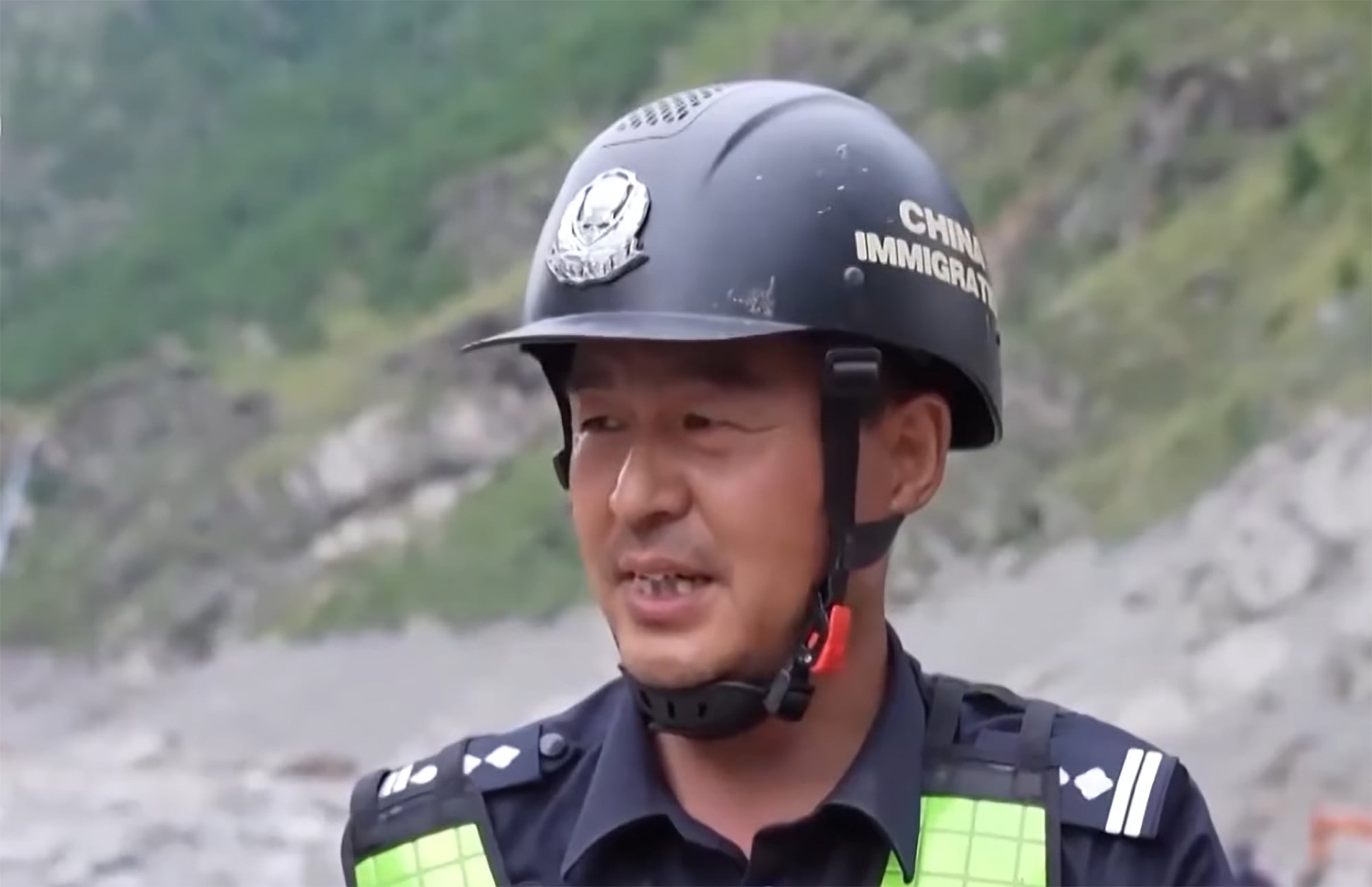
In the ruins of a bustling border crossing, the search goes on for signs of the lives that were swept away on that devastating day
“I do not want to stop [searching]. If I pause, I start thinking about my brothers and sisters and all the moments of my life here.”
Gui Xinwei, deputy chief of the Gyirong Border Inspection Station, was speaking to Chinese state broadcaster CCTV from the ruins of his workplace, seven days after the devastating mudslide erased the port crossing where China and Nepal meet.
“I just don’t want to stop.”
Do you have questions about the biggest topics and trends from around the world? Get the answers with SCMP Knowledge, our new platform of curated content with explainers, FAQs, analyses and infographics brought to you by our award-winning team.
Gui was away on holiday on August 26 when a glacier collapsed in Nepal, triggering a massive mudflow and floods that travelled 22km (14 miles) in just seven minutes, flattening the entire Gyirong Port area. Many of his colleagues were lost in the disaster.
Returning to the site, Gui found the 20-metre (65 feet) port building that had survived previous heavy floods as well as strong earthquakes completely gone.
It was as if he had been thrown into “a parallel universe or a nightmare”, he said – until a pine tree on the mountain ridge reminded him that this was the very place where he had worked for more than 20 years.
“Every single thing I dug up, a piece of clothing, jewellery, cosmetics or just tiny items – even a charging cable or a phone case – I don’t know if they belonged to my brothers and sisters,” Gui told the reporter.
“But I know for sure that these things belonged to someone. They definitely belonged to someone.”
The report, which aired on Sunday, detailed the heroic search and rescue efforts carried out in extreme circumstances: blocked roads, thick mud, falling rocks, torrential rain, precarious barrier lakes and the looming risk of secondary flooding.
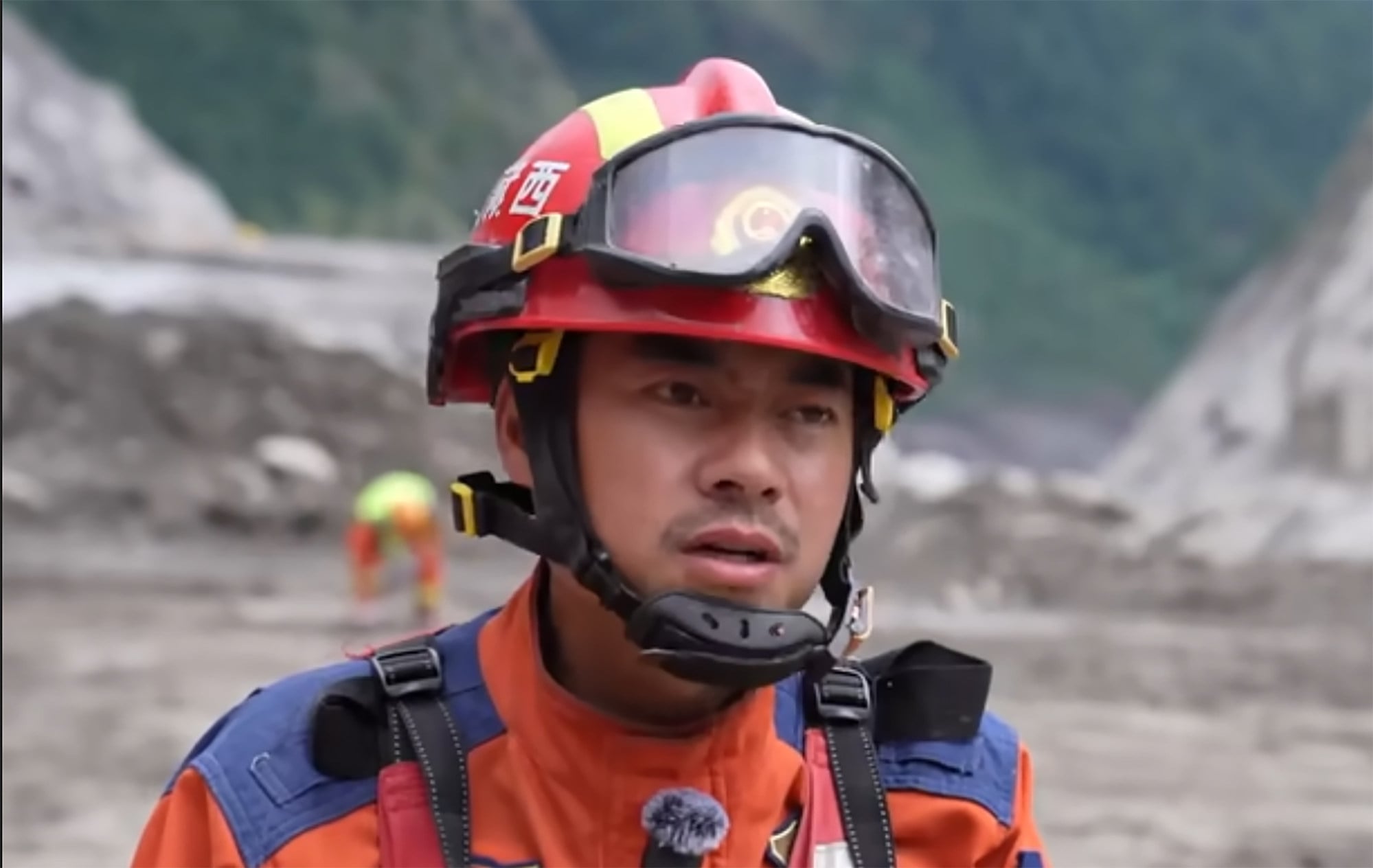
Firefighter Yang Qiqiao, from the closest city, Shigatse, was among the first rescuers to reach the site, after bushwhacking through rain-soaked forest, thousands of metres above sea level. They struggled for 12 hours to advance just a few kilometres on the map.
“It felt like the mountains had no top and no bottom … It was just one mountain after another,” Yang said. “All we could think about was to keep pushing and breaking through, so we could get to the site as quickly as we could.”
When they arrived, Yang and his team found the area blanketed by thick silt. They immediately began searching through the metre-deep mud, calling out into the silence for survivors.
“The truth is, no one answered. It was truly heartbreaking,” Yang said.
The rescuers spent the first two nights in small caves, taking shelter from the rain. They were forced to evacuate once, when a barrier dam breached and triggered new flooding.
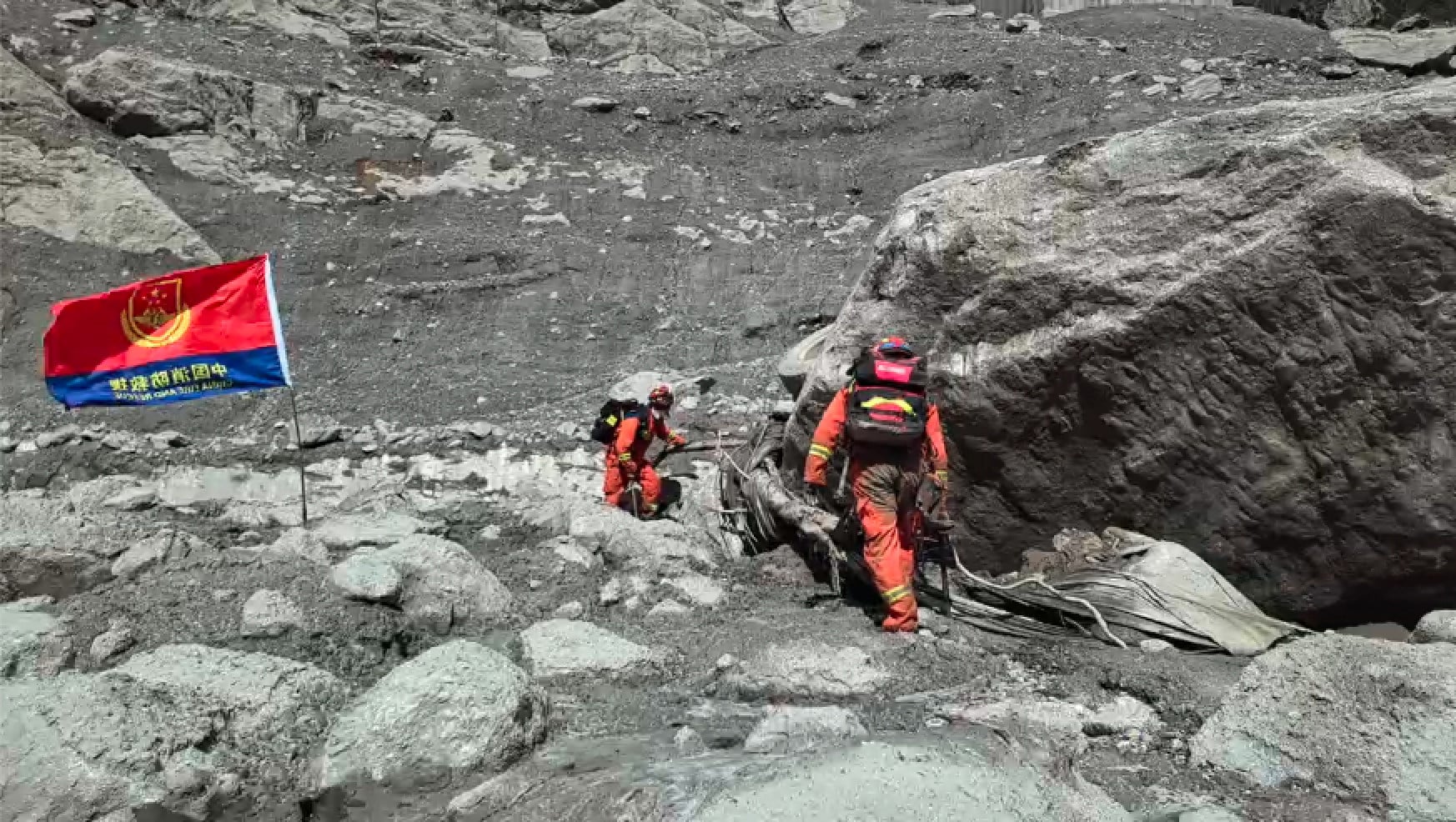
Although there was dim hope of finding anyone alive, Yang and his fellow dozens of rescuers continued their search. They were instructed to also look for any personal items that could help to identify the missing, such as ID or clothing.
“Yesterday we found an immigration police officer’s vest. The sight was devastating. When the immigration officers came to check, they were deeply grieved,” Yang said.
Engineers and construction crews have been working tirelessly to repair a 1.8km stretch of the G216 road which was destroyed and buried by debris, blocking access to the port site.
Excavators operated in a narrow line between unstable cliff walls on one side and fast-flowing floodwaters on the other. In a series of safety measures, the cab doors were removed, the operators were given life vests and escape ladders were hung from the cliffs.
“In case of an emergency, they can jump out immediately … and climb to safety,” said Li Hongjun, commander of the construction team.
Huang Xun, operator of the first excavator in the line, found his track submerged most of the time. With no way of knowing the conditions beneath the water, he drove blindly, “relying solely on feel”.
“Because once I drove in, the second and third excavators followed right behind me. A whole string of them came in. If I delayed, I’d hold up the entire line. The faster I moved forward, the sooner we could all get in,” Huang said.
The repairs to the road were finally completed and heavy machinery was able to enter the site on September 2.
As of Saturday, the Chinese side has counted 43 deaths while 519 people were still missing, including 261 foreign nationals from 23 countries. Rescuers have recovered 993 items from the debris.
State media has reported that more than 60 forensic experts are working across three laboratories to identify the victims.
On the Nepalese side, by Monday morning the death toll had risen to 1,355 with an additional 4,996 missing.
More Articles from SCMP
China’s highest court sets out new AI red lines with rules on deepfakes and privacy
Hong Kong Ballet takes on China’s Mogao Caves in Dunhuang: In Search of Light
Openness must not be sacrificed in US science and tech policy on China
Uber to apply for Hong Kong licence by end of October as Macau rides surge
This article originally appeared on the South China Morning Post (www.scmp.com), the leading news media reporting on China and Asia.
Copyright (c) 2026. South China Morning Post Publishers Ltd. All rights reserved.

Related posts:
Fiction park: He was the best in class. He still wasn’t good enough
Gagan Thapa takes oath as Congress president, vows to regain public trust

Inside knowledge that has locals gripped by fear after gran’s body found decomposing in cattle dip

New property purchase disclosure rule in Japan sparks fears it may curb foreign investment
Dino-mite treasures: inside Singapore’s Fort Knox storing playthings of ultra-rich