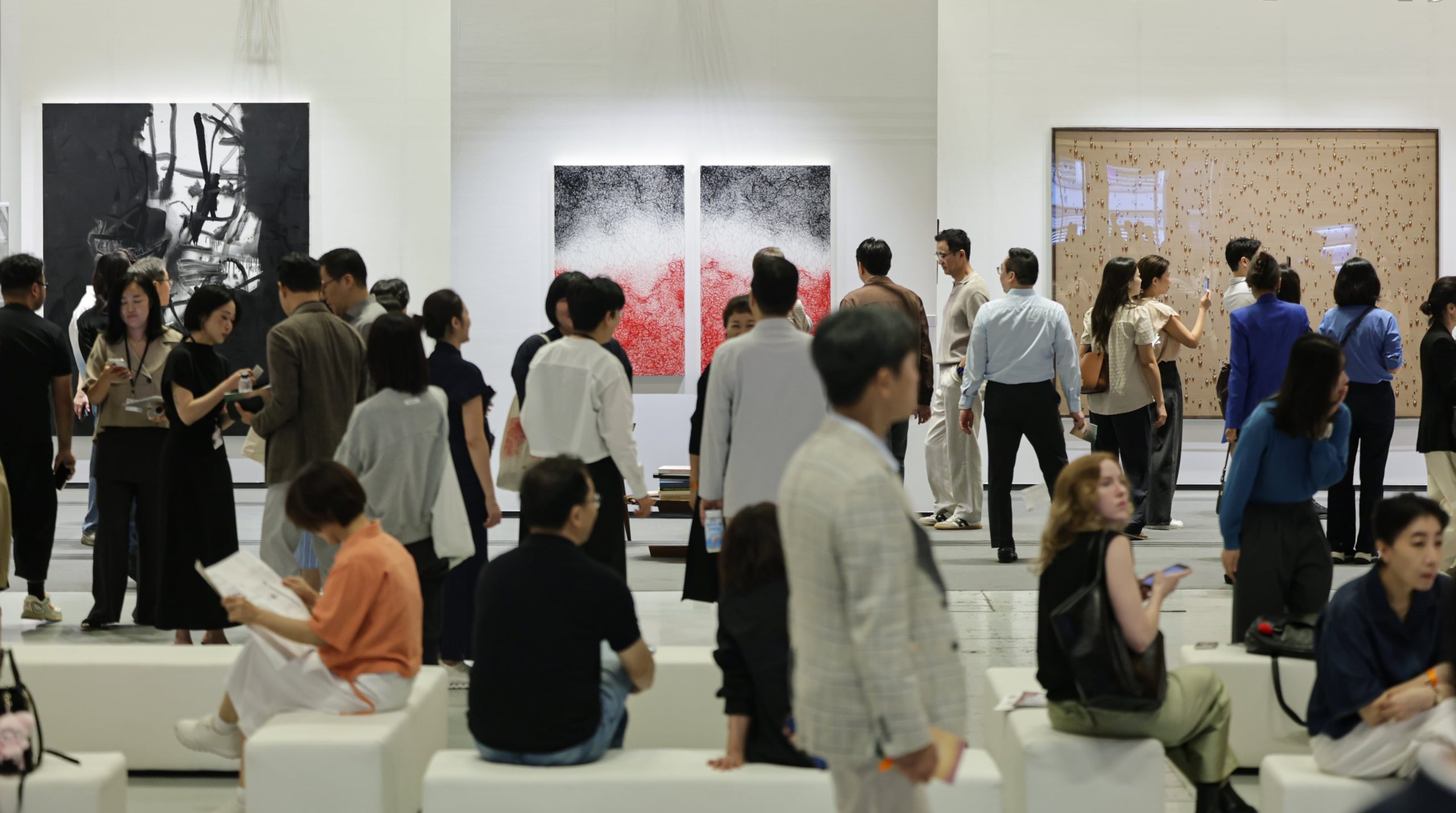
On September 5, at the “Frieze Seoul 2026” held at COEX in Seoul, a man in his 50s selecting works at a booth of an overseas gallery said, “The exchange rate has dropped from around 1,500 Korean won to around 1,300 Korean won, so I came to buy paintings.” He added, “Compared to the previous rate of around 1,100 Korean won, the current rate isn’t low, but I see this as the ‘new normal.’ If a work costs 1 million dollars, buying it at 1,350 Korean won instead of 1,550 Korean won saves about 200 million Korean won in won terms.”
Another female investor in her 50s said, “I think the art market bubble that inflated during COVID-19 has largely deflated, so I’m actively buying again.” She continued, “Stocks and bonds are unstable these days, and real estate requires calculating taxes every time you buy, hold, or sell. Art, with relatively lower tax burdens, is attracting attention again.” She added, “I also believe that good artists’ works steadily appreciate in value over the long term, like ‘Gangnam apartments.’”
Money is flowing back into the art investment market, which had been frozen for a while. The art industry cites three major positive factors: the recent decline in the won-to-dollar exchange rate, relatively favorable tax policies compared to other assets, and the correction of art prices that surged during COVID-19 amid high interest rates.
The global art market, which peaked during COVID-19 and then stagnated, rebounded into growth for the first time in three years. According to global investment bank UBS, the global art market transaction volume in 2025 was 59.6 billion dollars, a 4% increase from the previous year. This marked a rebound after two consecutive years of decline in 2023 and 2024. South Korea’s art market also grew by 6% last year.
◇1,550 Korean won → around 1,300 Korean won… 14% exchange rate discount effect
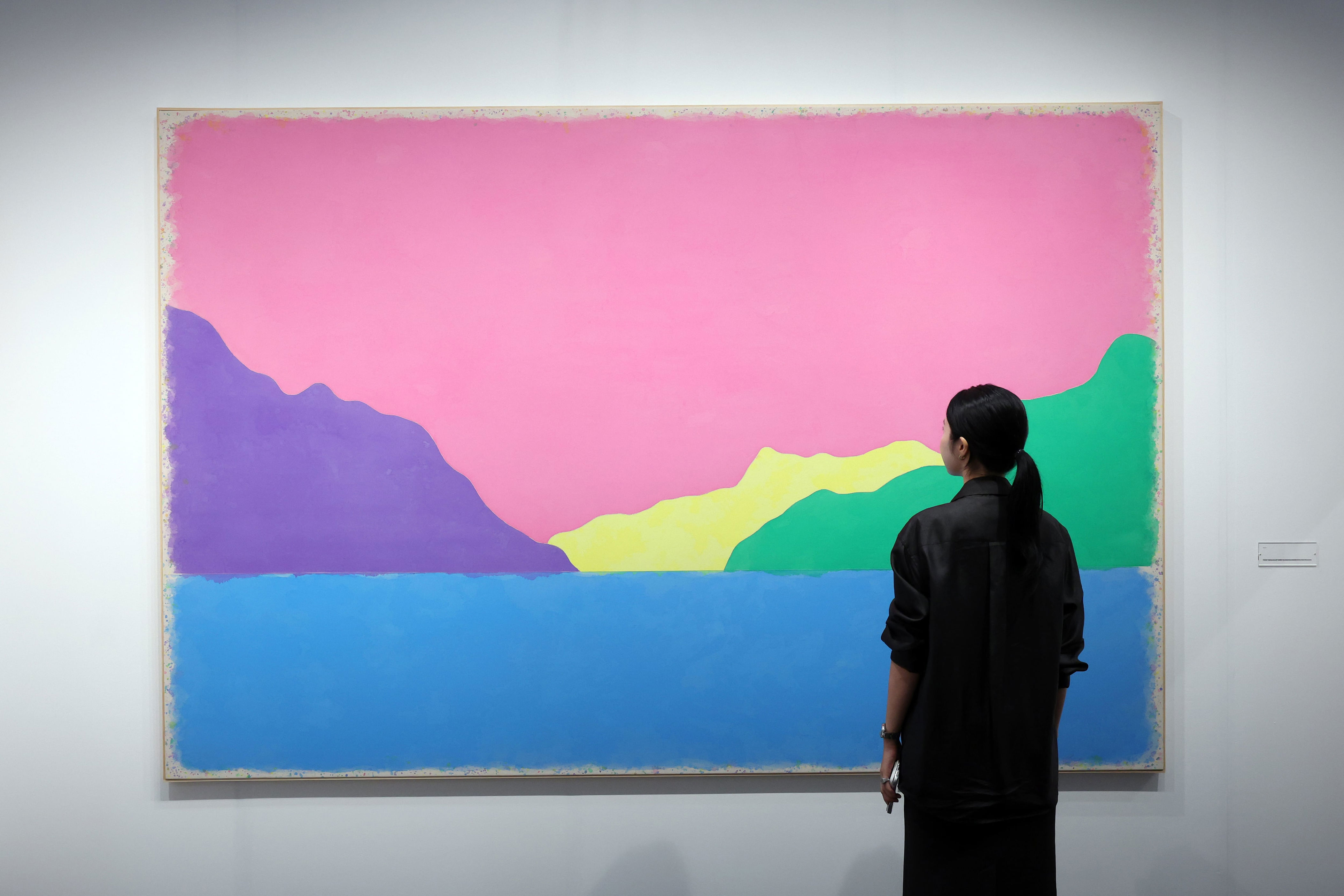
The first positive factor is the exchange rate. In June, the won-to-dollar exchange rate soared to 1,550 Korean won but recently fell to around 1,300 Korean won—a 14% drop from the peak. Many works traded at overseas galleries, as well as those by domestic artists, are priced in dollars or euros. For Korean collectors, a stronger won means purchasing the same work at a 14% discount.
Patrick Lee, Frieze Seoul’s director, also cited the exchange rate as a key variable in this year’s art market. He said, “The impact of exchange rate fluctuations is real, especially for those who must pay in dollars.” A representative from David Zwirner Gallery added, “Korea has a sophisticated collector base with deep knowledge of Western artists, and the region’s purchasing power remains strong.”
Indeed, at this year’s Frieze, Korean purchases of overseas artists’ works stood out. Most works by American artist Chase Hall, showcased by Los Angeles’ David Kordansky Gallery, were sold to Korean private collectors. Hauser & Wirth sold American artist Rashid Johnson’s 2025 work *Soul Painting ‘Interiors’* for 1.2 million dollars to a major Korean institution. David Zwirner also sold two paintings by Swedish artist Mama Andersson to a Korean museum.
High-value transactions by global galleries continued. Thaddaeus Ropac sold Adrian Ghenie’s work for 1.1 million dollars and Antony Gormley’s for 1 million dollars. At Almin Rech, works by Lee U-fan and George Condo were traded between 1.25 million and 1.5 million dollars. White Cube sold Georg Baselitz’s work for 925,000 dollars and Gerhard Richter’s painting for 723,000 dollars.
The second factor is taxes.
Real estate requires acquisition tax upon purchase, property tax during ownership, and capital gains tax upon sale. High-end homeowners and multiple property owners face growing tax burdens due to policy uncertainties. For asset owners, real estate tax calculations are becoming increasingly complex.
In contrast, purchasing and holding art incurs no acquisition tax, property tax, or comprehensive real estate tax. Taxation upon disposal is also relatively favorable. Individuals are taxed on other income only if the sale price of a single artwork exceeds 60 million Korean won. Additionally, works by living domestic artists are exempt from this tax. Unlike stocks or bonds, art can be displayed on walls for appreciation, making it a representative “consumable alternative asset.”
The third factor, paradoxically, is the art market’s slump over the past two years.
Post-COVID-19, the global art market experienced unprecedented prosperity. Low interest rates, abundant liquidity, and expanded online trading drove a 31% surge in the global art market transaction volume to 66.1 billion dollars in 2021. It further rose to 68.1 billion dollars in 2022.
However, as central banks raised interest rates to combat inflation, the atmosphere shifted. Art does not generate interest, so higher rates increased the appeal of financial products like deposits and bonds, reducing investments in alternative assets like paintings. High-end owners hesitated to sell, and collectors became cautious amid economic uncertainty and geopolitical conflicts.
The global art market transaction volume fell by 4% to 65.2 billion dollars in 2023 and plummeted by 12% to below 57.5 billion dollars in 2024—a 16% drop from the 2022 peak. The art industry views this correction as having reduced the burden of inflated COVID-era prices.
◇End of two-year adjustment… Global art market rebounds after three years
Last year, the art market’s trajectory shifted again. According to UBS’s *Global Art Market Report 2026*, the global art market transaction volume in 2025 was approximately 59.6 billion dollars, a 4% increase from the previous year. Though still below the 2022 peak, it marked the first growth after two consecutive years of decline. UBS described it as a “turning point.”
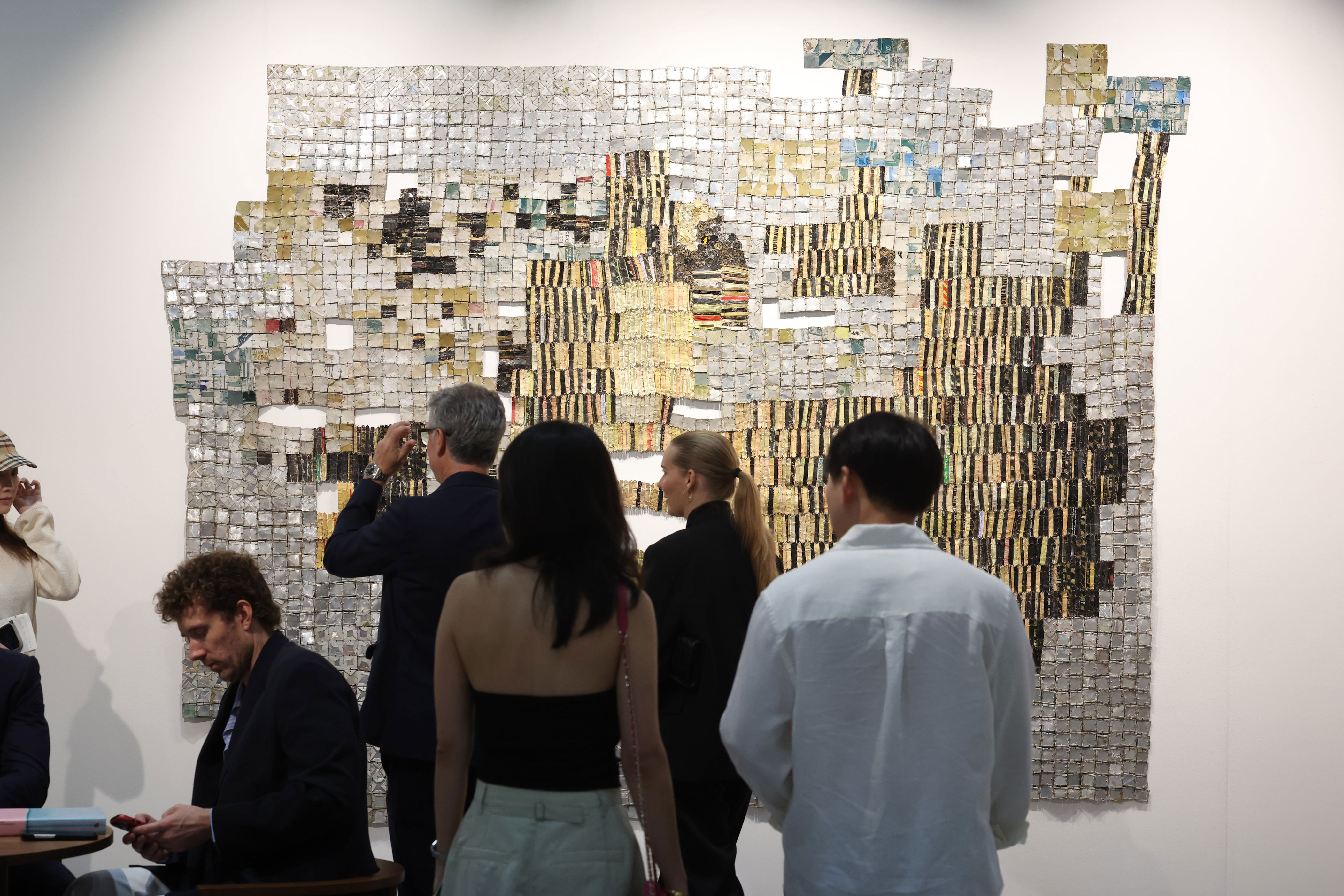
Notably, the high-end art market, which had been the weakest, revived. Public auction sales in 2025 increased by 9%, and dealer/gallery markets grew by 2%. In the second half of the year, transactions of ultra-high-value works exceeding 10 million dollars surged, and “single-owner collection sales”—where entire private collections are sold—also increased.
In the U.S., auction sales of fine artworks priced over 10 million dollars jumped by about 40%. The total U.S. art market transaction volume reached 26 billion dollars, a 5% increase, ending two years of decline.
South Korea also rebounded. According to UBS, Korea’s art market transaction volume grew by 6% last year, a relatively high rate compared to Japan’s 1% decline and China’s stagnation.
The growing volatility of traditional investments has also boosted art’s appeal. Stocks fluctuate with economic cycles, interest rates, and AI investment trends, while bonds, once seen as safe, are now volatile due to interest rate changes. Real estate involves not only price risks but also taxes and regulations.
Consequently, high-net-worth individuals are increasingly diversifying their portfolios with assets whose price movements differ from stocks, bonds, and real estate.
Indeed, the proportion of art in global wealthy individuals’ asset allocations has risen. A UBS survey of 3,100 high-net-worth individuals across 10 countries, including the U.S., UK, China, Singapore, and Japan, found that the average allocation to art increased from 15% in 2024 to 20% in 2025. 40% of respondents planned to increase their art purchases over the next year.
Art fairs are also reviving. Last year, sales through art fairs increased by 4%, accounting for 35% of total gallery revenue—the highest level since 2022. The COVID-era trend of online purchases is weakening, with high-value works increasingly traded offline after in-person viewings.
This year’s Frieze Seoul reflected this shift. Over 70,000 visitors from 54 countries and regions attended, and 178 representatives from 25 countries and regions’ museums and institutions participated—both records since Frieze Seoul’s inception.
- 월 5900원 멤버십, 신문 독자에게는 2900원, 조선멤버십
- 55000원 상당의 신문-잡지 8종 마음껏 보기, 조선멤버십
- 현금처럼 쓸 7000포인트 받아 알뜰한 쇼핑, 조선멤버십

Related posts:

Artists protest National Theater for Young Audiences’ non-specialist appointment

Booker-winning translator Deepa Bhasthi on why she has ‘nothing kind to say about AI’

Beijing signals support for rebuilding flood-ravaged Rasuwagadhi route

Infrastructure Minister Sunil Lamsal on rebuilding after the Bhotekoshi floods
Why Nepal’s climate crisis is also a public-health emergency