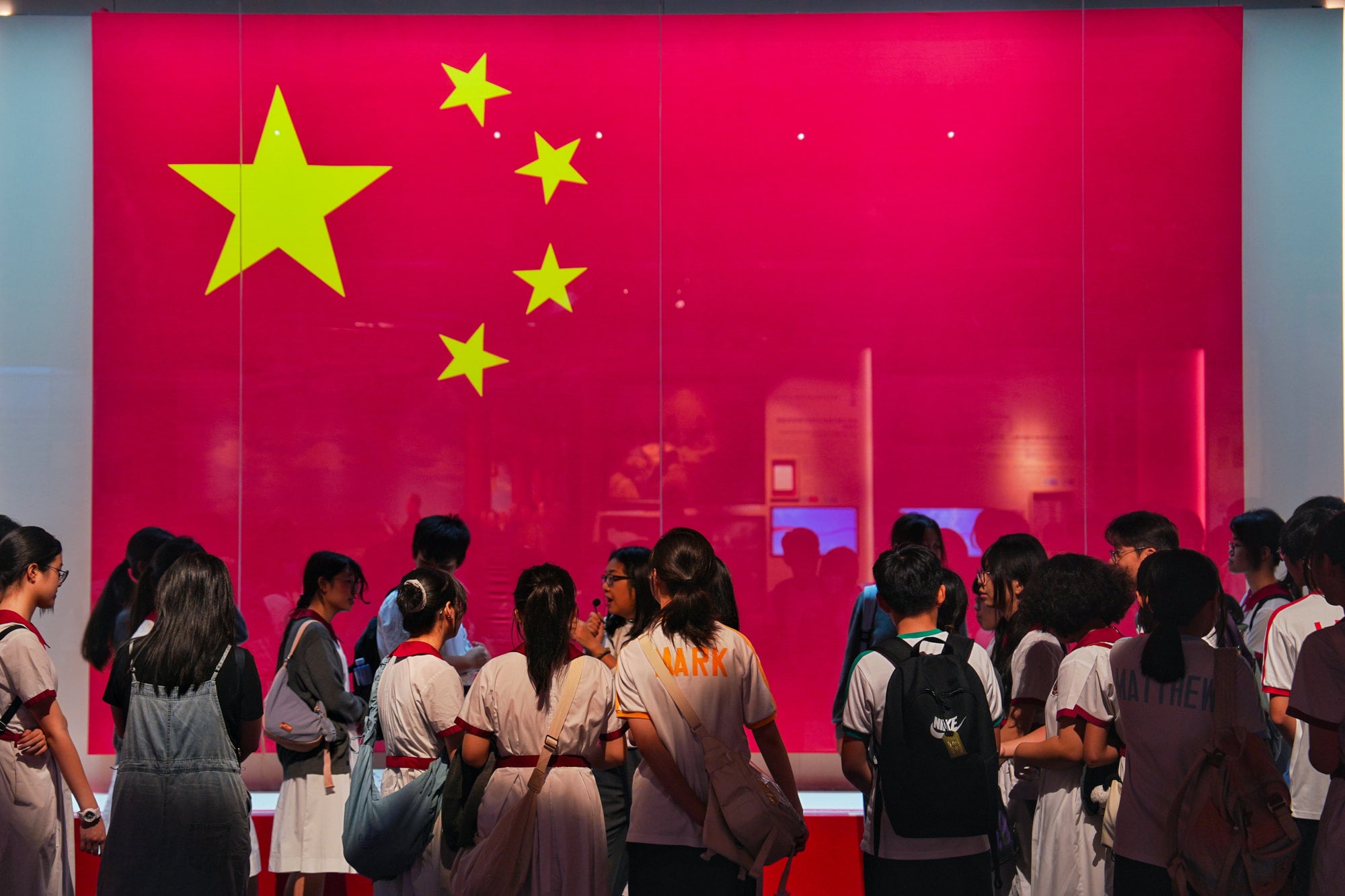
Hong Kong’s openness is both a strength and a weakness, so it must build robust security frameworks to reap rewards of national development, experts say
In the final instalment of our series of previews on the five-year plan and policy address, to be announced on September 16, Natalie Wong and Matthew Cheng look at how national security spans areas such as finance and technology and what Hong Kong must do to earn Beijing’s trust. Read part one here, part two here, part three here and part four here.
With the recent sentencing of former leaders of Hong Kong’s Tiananmen Square vigil concluding a key high-profile subversion case, it would be easy to assume the city’s national security agenda has been largely settled.
Now would be the time to focus entirely on economic growth and downplay national security, some experts have argued, warning the issue could deter potential investors.
Do you have questions about the biggest topics and trends from around the world? Get the answers with SCMP Knowledge, our new platform of curated content with explainers, FAQs, analyses and infographics brought to you by our award-winning team.
But that would be an erroneous and narrow understanding of national security, overlooking how inextricably it is tied to economic development, other insiders familiar with the government’s thinking have said.
Indeed, in the coming inaugural five-year plan Chief Executive John Lee Ka-chiu will announce on Wednesday, a full chapter will be dedicated to national security, the South China Morning Post has learned.
The emphasis will be another clear rebuttal to detractors on why national security extends well beyond law enforcement or combating “soft resistance” efforts, and is the framework that ensures economic development can enhance value rather than expose vulnerabilities for the country.
Authorities are expected to lay institutional safeguards across key areas – most notably finance and technology among China’s 11 critical domains – to shield Hong Kong in its path to better support the country’s growth and its navigation of geopolitical risks.
For the Hong Kong government, strengthening safety nets in these domains in the next five years is seen as a prerequisite for the international financial centre to consolidate its position and develop further into a global innovation hub.
Observers said success would hinge on how the coming blueprint, complemented by the policy address, could leverage Hong Kong’s strengths to effectively and safely align with the nation’s five-year goals of achieving technological self-reliance and pushing for renminbi internationalisation.
They said gaining Beijing’s trust through robust security frameworks could open “new doors” for Hong Kong to pilot new services and frameworks as mainland China further opened up its economy.
Finance: safeguarding yuan internationalisation
With Hong Kong’s first government-coordinated blueprint, the city is on a steep learning curve to reorient its mindset: shifting from only serving local economic interests to also serving the country’s priorities amid geopolitical tensions.
One key arena in superpower rivalry is China’s push to internationalise its currency within a global financial structure dominated by the US dollar. Hong Kong has played a vital role by offering offshore renminbi liquidity support and building a fixed income ecosystem.
Finance sector lawmaker Ronick Chan Chun-ying, an adviser to Bank of China (Hong Kong), said that the initiative might prompt Washington to pressure belt and road, Asean and Middle Eastern economies to disrupt yuan flows outside China, so Hong Kong should act decisively to mitigate risks.
While mainland renminbi investment in Hong Kong has been largely confined to designated channels such as the Stock Connect programme and Wealth Management Connect scheme, Chan urged the city to accelerate the diversification of offshore renminbi products and fast track the introduction of derivatives to attract global capital.
He added that effectively clamping down on illegal investment channels and money laundering would be crucial to galvanising Beijing’s confidence for the expansion of schemes and creating more new financial products.
“It is very important for us to demonstrate to Beijing that the growing market is well-regulated, rather than a channel for mainland residents or enterprises to move capital offshore,” he said.
After mainland regulators imposed fines totalling more than US$330 million on three brokerage firms – Tiger Brokers, Futu Securities International and Longbridge Securities – to curb unauthorised offshore stock trading, Hong Kong authorities have worked to strengthen oversight.
In May, the Securities and Futures Commission required brokerages to conduct internal checks to validate documents used to open accounts.
The following month, the Hong Kong Monetary Authority told banks to require mainland customers opening accounts to declare that their funds originated outside mainland China.
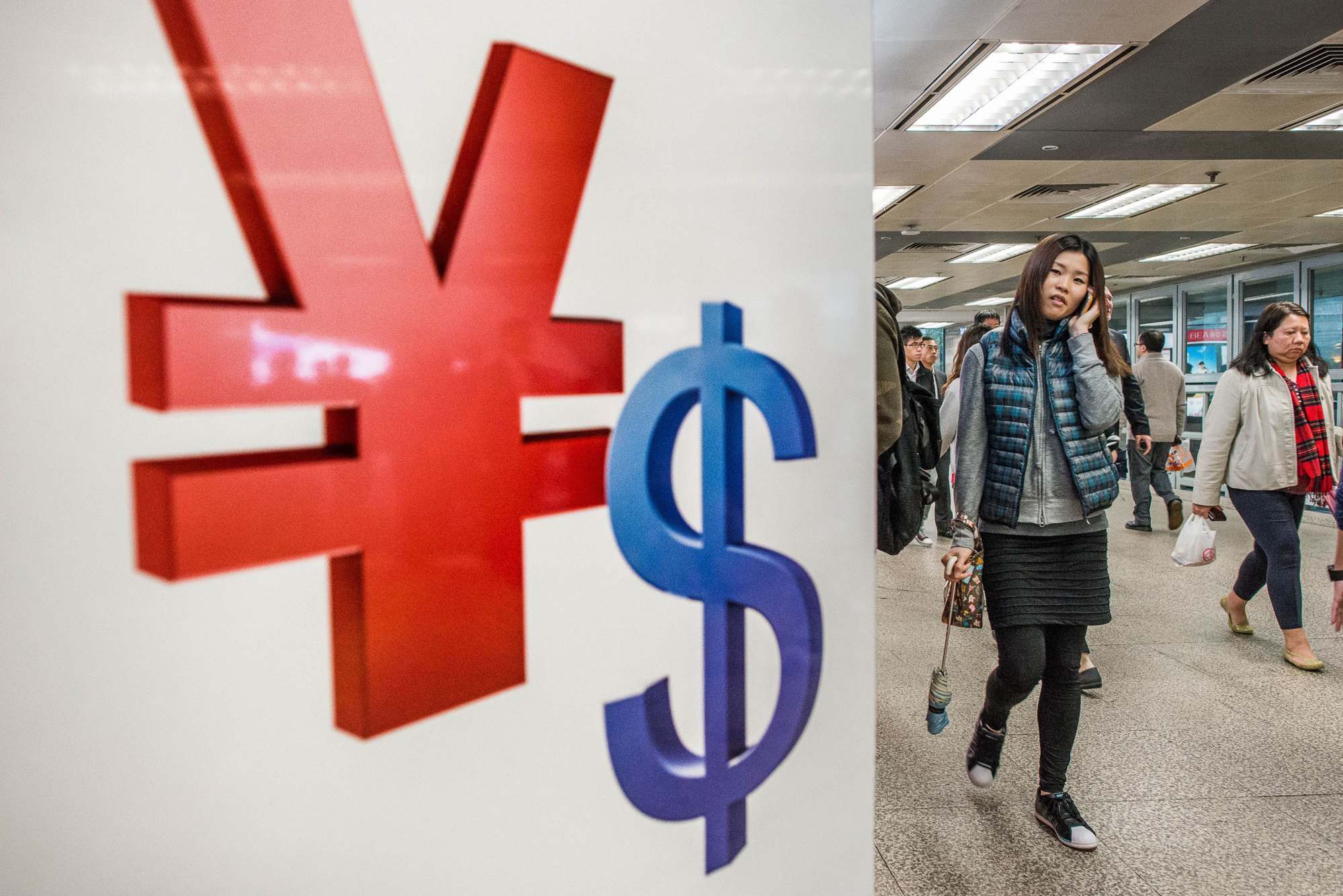
Chan also warned that emerging products, such as asset tokenisation and stablecoins, that rested on blockchain technology, could present security vulnerabilities.
“If we fail to [strengthen the safeguards for the financial infrastructure behind trading systems], when quantum computing and technologies mature, they could break our traditional financial encryption systems, and that would expose us to very high risks,” he said.
Technology: cross-border data flow security
Beijing’s strategy for technological self-reliance – which top officials regard as an existential national security matter – is to take ownership in every layer of the country’s tech stack.
To support this, tech entrepreneur-turned-lawmaker Johnny Ng Kit-chong argued that Hong Kong should better leverage the technology park at the Lok Ma Chau Loop to pioneer secure and controllable cross-border data channels with high-level safeguards, allowing mainland data to circulate within the city with proper limitations.
“We need to give the central government strong confidence that Hong Kong will not become a loophole,” Ng said.
“We need to have a well-established platform where the data is stored securely, and it will not be leaked under uncontrollable circumstances.”
He said a successful trial in the loop, which officially opened in December last year, could pave the way for cross-border data flows in other key schemes under the Northern Metropolis megaproject, such as the San Tin Technopole.
On local critical infrastructure, Ng warned that some key transport and energy networks remained reliant on technology from countries hostile to the mainland – a weak link requiring attention. He said a more diversified sourcing strategy was needed to reduce security risks.
“Sourcing from other places does not have to be limited to the mainland; it could be from relatively friendly European countries, belt and road countries, and even local suppliers can be considered,” he said.
Biosecurity: safeguarding samples
The government is also looking into measures to allow seamless cross-border flow of materials, including biological samples, within the Hetao Shenzhen-Hong Kong Science and Technology Innovation Cooperation Zone.
Henry Yau Kwong-chi, managing director of the University of Hong Kong‘s clinical trials centre, said that national security was among the country’s top concerns, including whether DNA data from Chinese people would be leaked.
Foreign pharmaceutical firms, for example, could make use of that DNA data to develop medicines that were more effective in treating Chinese people’s genome-related diseases, and then patent those treatments, he said.
“China could then lose the patent, and become subject to foreign countries and have to purchase drugs from them.”
A potentially more serious threat, Yau said, was that unfriendly foreign countries could develop viruses that only infected Chinese people.
“How can we properly monitor those samples so they do not end up in places or in the hands of people who should not be there,” Yau said.
He said a mechanism should be put in place to properly monitor the flow of such bio-samples once they left the mainland, including setting up a facility to store them, and deciding who should supervise the samples and handle problems when they arose.
National security: building trust
With the coming dual blueprints, Lee’s administration is expected to align immediate actions and long-term strategies across various policy areas, so Hong Kong builds momentum to achieve a higher level of growth.
National security runs through all of Beijing’s developmental goals, with authorities convinced that an insecure nation cannot focus on economic success and the well-being of its citizens.
Beijing had a “trust issue” with Hong Kong because the city, as an open economy, could not insulate itself from geopolitical tensions, and its openness was both an advantage and a potential weak link that hostile forces could exploit, said Wilson Chan Wai-shun, co-founder of the Pagoda Institute think tank.
It was therefore important for Hong Kong authorities to assure Beijing that the city was fortified against security risks.
“When [the mainland] further opens up, will it continue to place that new door in Hong Kong, or does it want to try other pilot locations, such as Shanghai? This is something Hong Kong must fight for,” Chan said.
He said the city’s task was to establish frameworks that both Beijing and the West could trust, operating within Beijing’s national security principles while adopting rules that the West was willing to comply with.
Citing the Hong Kong-based International Organisation for Mediation as a model case, Chan said: “How can we develop a language that the West understands and that can be a bridge to them, while at the same time serving as a set of operational principles acceptable to Beijing?
“This applies whether in finance, data or other strategic areas, and this is Hong Kong’s role today.”
Additional reporting by Elizabeth Cheung
More Articles from SCMP
Qatar seeks stronger logistics ties with China as war disrupts trade routes
Hong Kong Mark Six jackpot dispute, Brics finds common ground: 5 weekend reads you missed
Hong Kong 5-year plan to stick with capitalism, uphold ‘one country, two systems’: John Lee
Why France’s Louvre Museum is looking East to help fund its €1 billion transformation
This article originally appeared on the South China Morning Post (www.scmp.com), the leading news media reporting on China and Asia.
Copyright (c) 2026. South China Morning Post Publishers Ltd. All rights reserved.

Related posts:

Artists protest National Theater for Young Audiences’ non-specialist appointment

Booker-winning translator Deepa Bhasthi on why she has ‘nothing kind to say about AI’

Beijing signals support for rebuilding flood-ravaged Rasuwagadhi route

Infrastructure Minister Sunil Lamsal on rebuilding after the Bhotekoshi floods

Why Nepal’s climate crisis is also a public-health emergency