The South Korean president’s proposal reflects the reality that North Korea already has significant nuclear capabilities, analysts say
South Korean President Lee Jae Myung‘s proposal for a phased approach to Pyongyang’s nuclear and missile programmes is a pragmatic response, analysts say, but prospects for gaining its arch-rival’s acceptance remain uncertain.
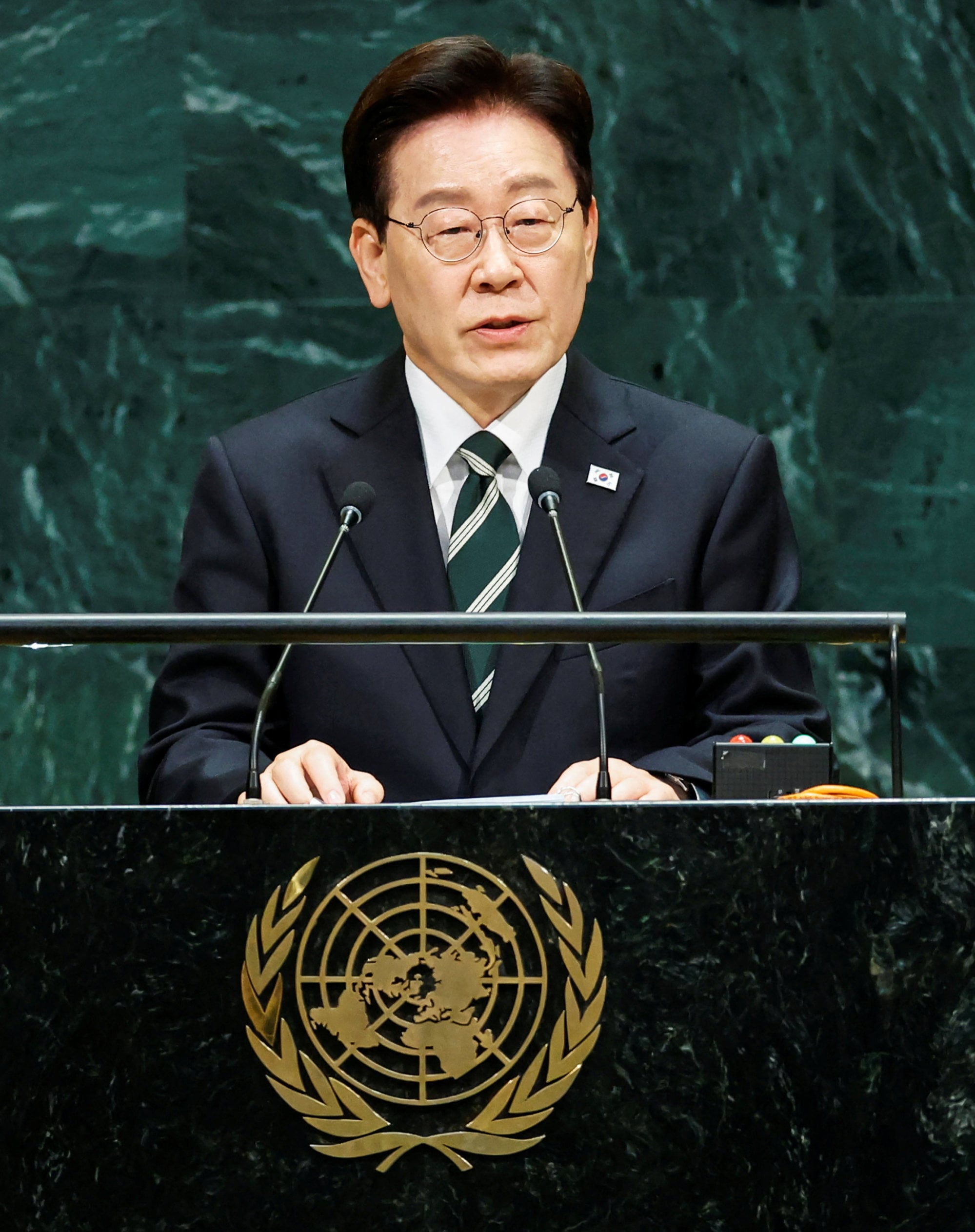
In a keynote speech to the UN General Assembly on Tuesday, Lee laid out a long-term, step-by-step sequence for pursuing the ultimate goal of North Korea’s denuclearisation. He had called for Washington to ease sanctions in return for North Korea stopping its nuclear programme in interviews with US media on Friday ahead of his trip to New York.
“We can move towards a nuclear-free Korean peninsula by first halting the advancement of North Korea’s nuclear and missile capabilities, followed by a reduction in the medium term,” Lee said at his UN speech.
Do you have questions about the biggest topics and trends from around the world? Get the answers with SCMP Knowledge, our new platform of curated content with explainers, FAQs, analyses and infographics brought to you by our award-winning team.
He also urged the establishment of a peace protocol, saying the effort should involve not only the two Koreas but also the United States and China.
“The most critical task is to bring an end to this decades-old war on the peninsula and establish a lasting peace regime,” Lee said. “For decades, the two Koreas, along with key countries such as the US and China, have recognised the need for a peace regime on the peninsula and discussed ways to achieve it.”
The proposal reflects the reality that North Korea already possesses significant nuclear capabilities and enshrined its nuclear policy in its constitution in 2023, according to Cho Han-bum, a senior research fellow at the Korea Institute for National Unification (KINU).
In an interview with The New York Times this week, Lee said sanctions were “not particularly effective”. “I believe there is significant value in a trade-off between sanctions, which are not particularly effective anyway, and a stop to the development of additional nuclear weapons and intercontinental ballistic missile technology,” he said.
Lee’s suggestion was “a pragmatic approach to the nuclear issue”, Cho said. “However, the North is unlikely to respond as long as Kim and Trump have yet to meet again.”
US President Donald Trump has said he planned to meet North Korean leader Kim Jong-un “later this year” but Pyongyang continues to portray US policy towards it as hostile.
Limited impact
Lim Eul-chul, a professor at the Institute for Far Eastern Studies at Kyungnam University, also assessed the likely impact of Lee’s proposal as limited.
“President Lee’s remarks may be appropriate as a message aimed at the international community, but North Korea is unlikely to accept a halt to nuclear activities, which it currently rejects, and the proposal could instead provoke a backlash,” he said.
Remaining indefinitely tied to denuclearisation, which Pyongyang has emphatically rejected, would make it difficult to break the deadlock, according to Lim.
For North Korea, “denuclearisation and a halt to nuclear activities will inevitably be regarded as essentially the same thing”, said Hong Min, a senior research fellow at KINU. “Ultimately, because the proposal is premised on denuclearisation, it will be difficult for North Korea to respond positively.”
The first step should be to secure a declaratory commitment from North Korea to halt further development of its nuclear capabilities, according to Yang Moo-jin, a professor at the University of North Korean Studies.
“In light of the stark reality that North Korea already possesses significant nuclear capabilities, the immediate priority is being given to preventing the situation from deteriorating further before pursuing reductions,” he said.
Pyongyang’s response to the three-part blueprint for peaceful coexistence and a nuclear-free Korean peninsula presented at the UN could be to counter with its own framework, casting the two Koreas as “two hostile states”, Yang added.
In his speech, Lee also praised Trump for reaching out to Kim and said South Korea would “devote its full efforts to opening and sustaining the path of dialogue”. This reflected the view that a US-North Korea dialogue could be a catalyst for building a peace regime involving the two Koreas, the United States and China, according to Yang.
“This recent message is considered a step forward, as he specifically identified not only the United States but also China as key parties,” Cho said. However, Lee would have to persuade Washington of the need for Beijing’s participation, “given the US position critical of China’s involvement”, according to Yang.
‘Self-harm’?
Without the demand for denuclearisation, one expert argued that easing sanctions would reward Pyongyang and effectively recognise it as a nuclear state.
“Even if all other countries in the world express scepticism over sanctions’ effectiveness, our government must maintain the position that sanctions and principles have to be upheld,” said Yang Uk, a research fellow at the Asan Institute for Policy Studies.
Lee’s proposal could serve in effect as “a road map towards recognising North Korea’s nuclear capabilities”, he said, describing it as “an act of self-harm that neutralises the means of pressure against North Korea”.
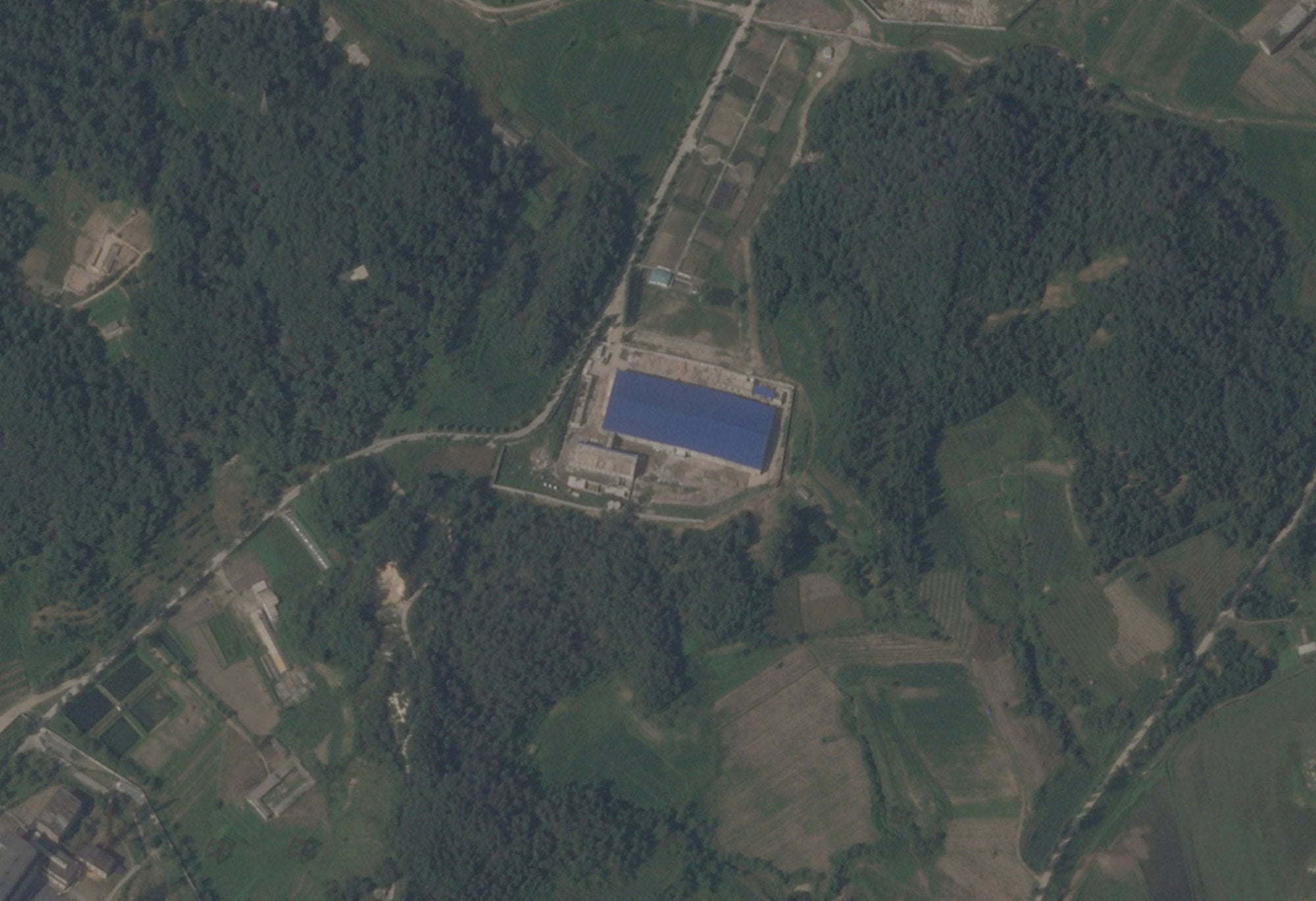
Yu Ji-hoon, a research fellow at the Korea Institute for Defence Analyses, however, said Lee was not abandoning the goal of denuclearisation but rather “it can be understood as a step-by-step approach aimed at first halting North Korea’s advanced nuclear and missile capabilities and then connecting that to reductions and denuclearisation”.
Questions also remain over how attractive an offer to exchange a halt to nuclear activities for sanctions relief would actually be to Pyongyang.
“Given that North Korea has significantly advanced its nuclear and missile capabilities and strengthened ties with China and Russia, it is uncertain whether sanctions alone would provide sufficient incentive for a return to dialogue,” he said.
“Therefore, if talks were to actually begin, a realistic approach might involve seeking common ground – such as halting further advancements in nuclear and [balistic missile] capabilities, managing the sanctions regime, and de-escalating tensions – rather than immediately discussing complete denuclearisation.”
More Articles from SCMP
Hong Kong rises in property market transparency rankings, but trails Singapore and Japan
Peng Liyuan and Melania Trump renew acquaintance as Xi arrives in US
Asian Games, day 5: Hong Kong’s silver start sets tone, Haughey chases third gold
US turns to South Korea to ease ammunition bottlenecks amid global conflicts
This article originally appeared on the South China Morning Post (www.scmp.com), the leading news media reporting on China and Asia.
Copyright (c) 2026. South China Morning Post Publishers Ltd. All rights reserved.