“I don’t know anything else besides baseball anymore….”
When asked why he hasn’t left baseball even after retirement, Choo Shin-soo, 44 years old, answered with such simplicity it felt almost understated. He, who first picked up a bat around age nine and spent 34 years on the field, repeated several times during the interview, “I only know baseball.”
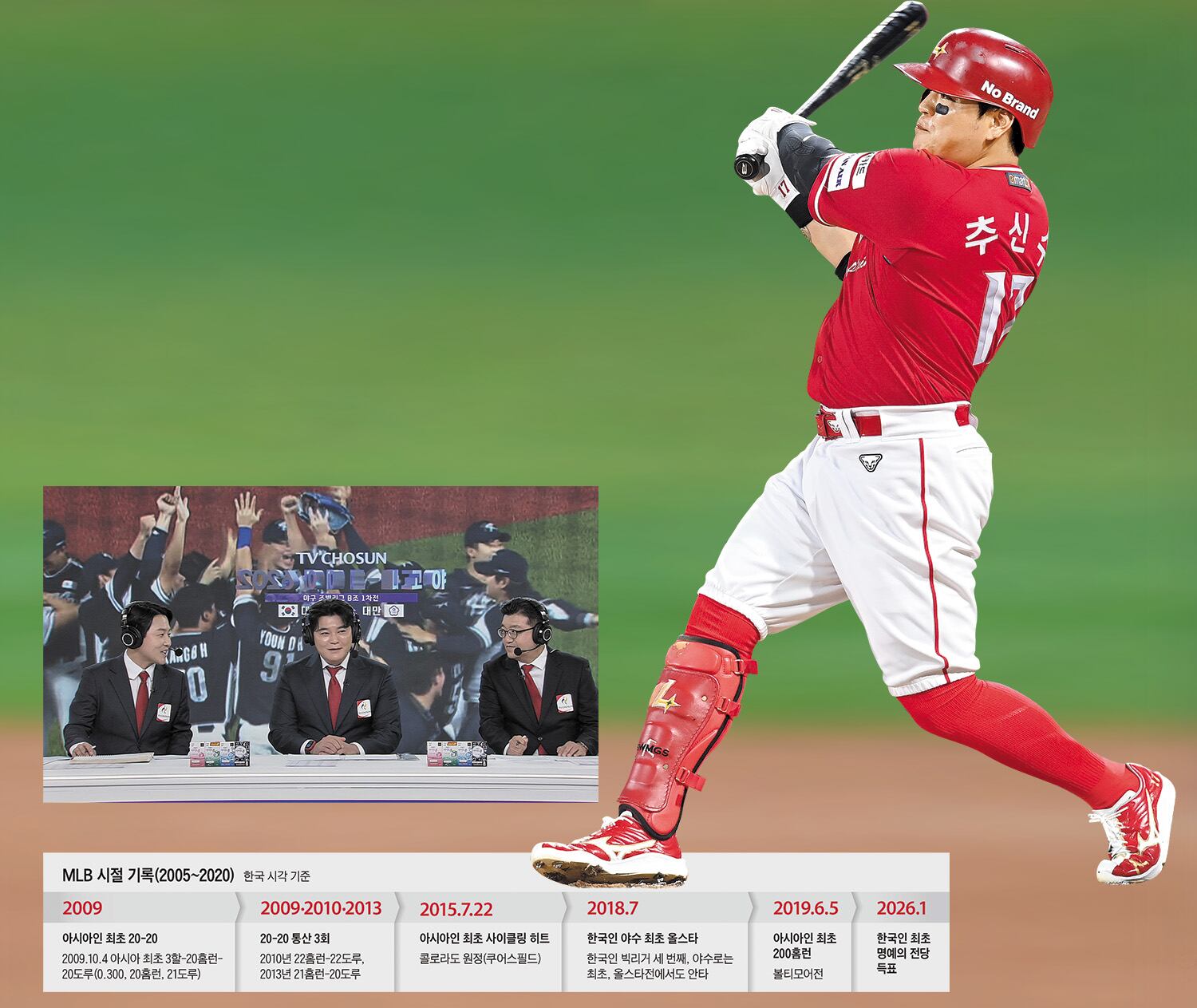
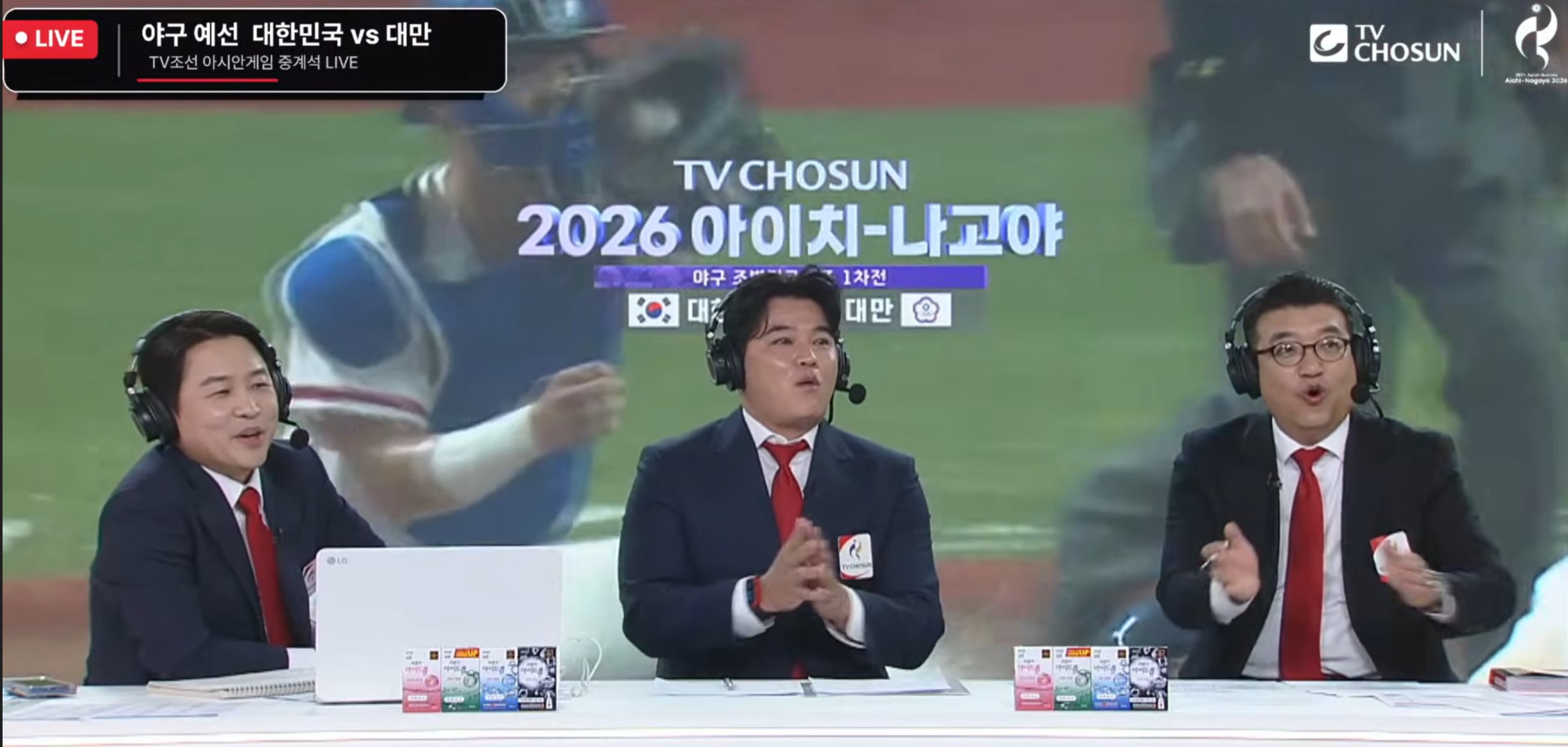
Choo Shin-soo, a “legend” who rewrote numerous records in the U.S. Major League Baseball (MLB) and currently serves as an aide to the SSG Landers’ owner and head of player development, debuted as a TV Chosun baseball commentator at the 2026 Aichi-Nagoya Asian Games, which opened on September 19. A new chapter has begun in his baseball life, which has never truly ended.
◇ “Baseball Was Beautiful”… Rookie Day, Pride Crumbled in 30 Minutes
Choo Shin-soo, a high school ace in Busan who was both a “top-tier pitcher” and a cleanup hitter, drew attention from domestic pro teams and MLB scouts. He entered the U.S. stage in 2001 with a contract with the Seattle Mariners. The moment he called the “turning point” of his life wasn’t his dazzling debut but a training ground shortly after arriving in the U.S.
—Interviews from your high school days mention you hoped to enter the MLB early. It must have felt like you’d gained the world.
“I thought I was the best at baseball from elementary school until high school graduation. I never said it aloud, but I always had that pride. I started in the lowest level of the U.S. leagues, the Rookie League. Watching their training, my entire world collapsed in 30 minutes.”
—Was it due to the skill gap?
“It wasn’t about being good. They did whatever they wanted without worrying about others’ eyes. For slow balls, they’d catch them with bare hands instead of gloves, do glove tosses (delivering the ball with a wrist snap when there’s no time to take it out of the glove or throwing it directly from the glove). We focused on not getting scolded by coaches or hearing complaints. Here, even if you made a mistake, the coach encouraged you, saying, ‘Good job.’”
—You must have been shocked.
“It was so beautiful. Plus, every morning, a monster-like player would show up. Since then, I’ve never thought I was good at baseball. If rookies were like that, I wondered what kind of people were in the MLB.”
◇ “I Created a Path Because I Needed Water”
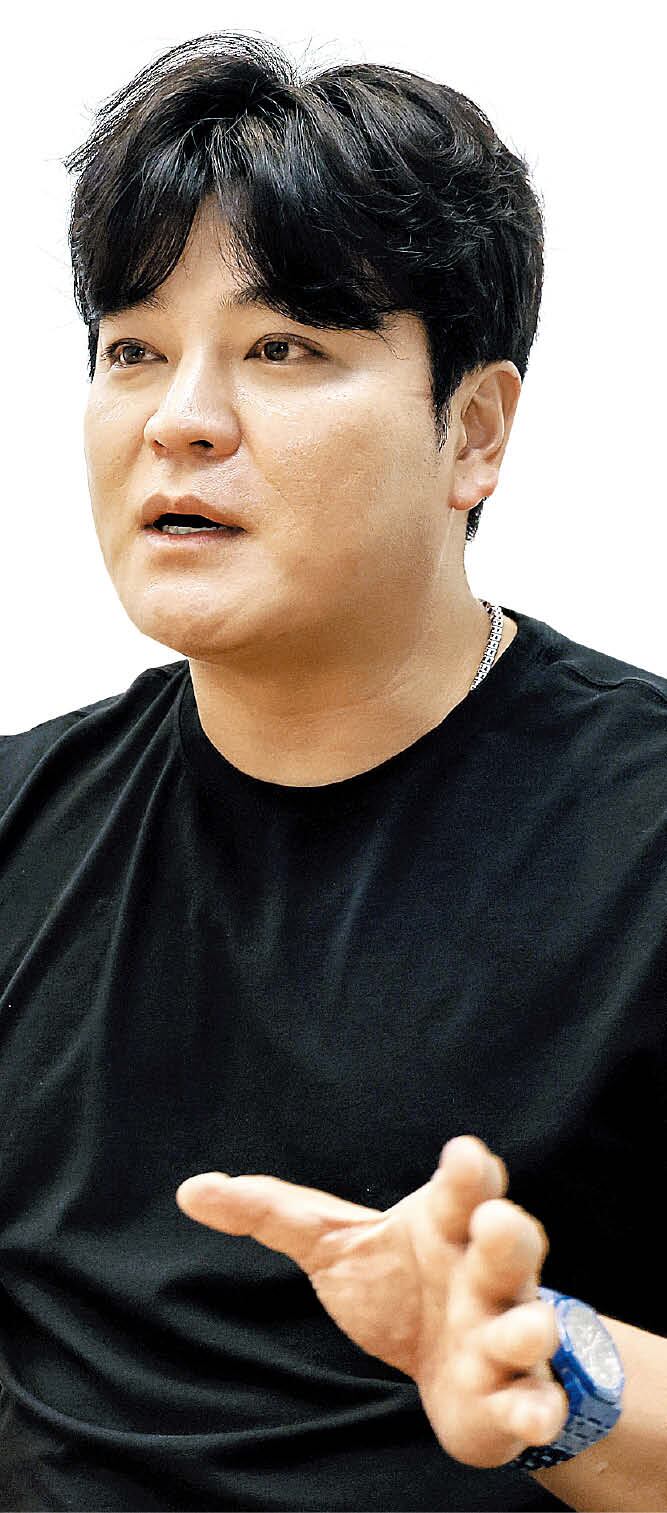
Choo Shin-soo, who played in the MLB from 2005, is often called a “trailblazer.” He was the first Korean player to be nominated for the Hall of Fame (HOF) and even received votes. Jeff Wilson, a Texas Rangers beat writer who cast a vote for him earlier this year, told a local media outlet, “He’s the Korean player with the most outstanding career,” adding, “When a Korean player enters the Hall of Fame, Choo Shin-soo will be mentioned as the trailblazer.”
—You’re praised for paving a path others couldn’t.
“It’s because I kept doing what I loved (baseball). In other words, I created a path because I needed water, not because I wanted to find water by making a path.”
—I thought you’d be goal-oriented.
“Personality-wise, I don’t like ordinary things. I’d rather be last than second.”
—You’ve often said, “I believe in myself.”
“Confidence doesn’t come from salary, career, or such things. It’s built little by little from the process: what time I arrived at the stadium, what I prepared for one at-bat or one game. I spent time trying to do well, so why be nervous or afraid? When I wore the uniform and stepped onto the field, I was always proud, even if the result was in the future.”
For over 20 years as an active player, he was always the first to arrive at the stadium at dawn, around 4–5 a.m., during spring training and game days. At the Landers, he was also consistently the first to arrive.
—Choo Shin-soo’s routine, like arriving at 4:30 a.m., is iconic.
“I watched good, model players and tried to imitate them. If it didn’t fit, I discarded it and tried something else. A routine is something you must do no matter what. When things go well, it’s energy to extend that flow. When things go badly, it’s strength to climb out of the slump quickly.”
—Didn’t you ever think, “Just take today off”?
“Of course. But when that happens, think of one thing: If I give up here, 15 or 20 years of effort become blank. Then, you’ll immediately get up. Literally, immediately.”

◇ Choo Shin-soo’s ‘6 Tools’… “When They Did 10, I Did 1,000”
—In a 2025 interview with MLB.com, you said, “I don’t think I had special talent.”
“If you’re scouted in the U.S., you must have had some talent. Compared to local players, I wasn’t tall, and I was at a disadvantage in natural strength or elasticity. What else could I do? When they practiced 10 times, I did 1,000. That’s why I always went out early. To win, that was the only way.”
Choo erased unchangeable variables (height, bone structure, elasticity) and bet everything on the remaining variable (repetition). In sports history, Ichiro Suzuki, a Japanese MLB star, is a prime example of someone who obsessively completed this equation. He did the same stretching at the same time for over 20 years and controlled his daily preparation process down to the minute. Kobe Bryant (1978–2020), a legendary U.S. basketball star, was also famous for training at 4 a.m.
—How did you realize talent alone isn’t enough?
“I learned it through seven years in the minor leagues until 2008 (demoted back to the minors after his 2005 MLB promotion). Over 80% of players with enough talent to reach the MLB couldn’t make it. Why? Baseball has ‘5 tools’: hitting well, power, fielding, baserunning, and throwing. So I created a sixth tool: mindset. Without the mentality to develop and maintain talent, the other five are useless.”
He emphasized Choo’s “6th tool”: “The first five are more than half talent. The sixth (mentality) is 100% yours. No one can take it away, and you can build it yourself.”
◇ Handling a 30% Game and 70% Failure
—What do you think about in the batter’s box? Mental management must be crucial.
“I tried to empty my mind as much as possible. If I couldn’t organize my thoughts, I’d step back, organize, and re-enter. But there’s something I consider more important: what comes after failure.”
—Failure? You were called the “on-base machine” and “god of on-base.”
“In baseball, even if you succeed three out of ten times at bat, you’re praised as a great hitter. In our society, how many fields give recognition for succeeding three out of ten opportunities? Wouldn’t you be stigmatized as a failure? Even with seven, or ‘just’ three failures, you might face harsh evaluations or lose opportunities. Baseball is a sport with far more failures than successes. The ‘mentality’ I talk about is that what comes after failure is more important.”
—Does that mean getting used to failure?
“It means not getting stuck. It’s necessary to analyze why you failed. But if you’re intimidated by failure, or cling to ‘I used to be good, why not now,’ you ruin the present and future. Accept the failure, let it go, fix it, and move forward. The MLB is full of monster players. If you stay stagnant, you fall behind.”
Choo was usually evaluated by numbers: 16 MLB seasons, 1,652 games, 218 home runs, the first Asian to hit for the cycle, and the wealth he accumulated through these records. However, what he called “most precious” was the time without any flashy numbers.
—These days, headlines about you feature numbers like ‘cumulative salary of 190 billion won’ or ‘5,500 pyeong house in the U.S.’
“Even if people only talk about my visible aspects now, I’m fine. But if I had to pick the most precious time in my 21 years in the U.S., it’s the seven years in the minor leagues.”
—You once said you didn’t want to enter the dark dormitory during your minor league days.
“It’s true I was poor, lonely, and struggling. I endured thanks to my family (married in 2004). Not everyone who chooses to go to the U.S. needs to experience this, but the minor leagues taught me so much beyond baseball.”
—You’re in charge of player development.
“I think a strong team isn’t one where current star players perform well, but one where the gap isn’t noticeable when they’re absent. However, Korea doesn’t have the same depth as the U.S., so it’s really tough to create something within that limitation.”
—You’ve also criticized, ‘Korean baseball lacks desperation.’
“Fundamentally, it’s better to accept this era and think about the next. Saying, ‘We did baseball this way, but you’re lacking,’ isn’t the answer. Understanding the current generation, being strict with players who deviate from basics, and showing love and attention to those who don’t… That’s the hardest part. Because their minds aren’t like mine.”
◇ “Even If Only 3 Out of 100 People”
The minor leagues weren’t just where Choo learned baseball. He learned English by reviewing games with teammates on the team bus, exchanged playful jokes with them in the clubhouse, and learned how to become “friends” by sharing meals after games.
In 2013, as a Texas Rangers player, when the minor leagues halted due to the COVID-19 pandemic in 2020, Choo donated $1,000 to each of the 191 minor leaguers under the Rangers for living expenses. The following year, upon returning to Korea and joining the SSG Landers, he donated 1 billion won out of his 2.7 billion won salary and 600 million won to three alma maters. In his final year as an active player in 2024, he lowered his salary to the KBO minimum of 30 million won and donated the entire amount, actively seeking opportunities to support others.
—Some might say, ‘What’s money to Choo Shin-soo,’ but not everyone with money donates.
“First, baseball gave me so much when I had nothing. Second, it’s because of my minor league experience. When players struggled with poor food, MLB players would sometimes buy them meals. Beyond the amount, there were players who donated their time, supported kids with baseball gear, etc.”
—How did the recipients react?
“I’m grateful if they like it, but I don’t expect any reaction. In a way, I donate for myself. It feels good. I learned that, and I’m lucky to have the means. But I have one wish: Even if only three out of 100 people think like me, and when those players succeed, they give back. Those three become six, then nine… That’s the only reason.”
◇ Brief Taegeuk Mark Era, Commentating with Micro
He said he declined several offers to be a commentator. What finally brought him to the broadcast booth was regret over his brief time wearing the Taegeuk mark. As a high school youth representative, the 2009 WBC (World Baseball Classic), and the 2010 Guangzhou Asian Games gold medal. His national team career didn’t continue. In 2013, despite various circumstances, many criticized his absence from the WBC. KBO records state that he was selected for the 2013 and 2017 WBCs but failed to participate due to “club opposition” and injuries.
“There was one refusal due to personal reasons, then injuries prevented participation, and afterward, I wasn’t selected. I’ve explained the circumstances several times, but even if people view it negatively, it can’t be helped. However, my national team career ending early is a big regret. That’s why I wanted to help and be with the national team players.”
—Don’t you miss stepping into the batter’s box?
“I can’t play anymore. My skills aren’t there. It’s precious to see players from different teams become one and wear the same uniform. I really like words like ‘we’ and ‘together.’”
—Viewers’ expectations must be high.
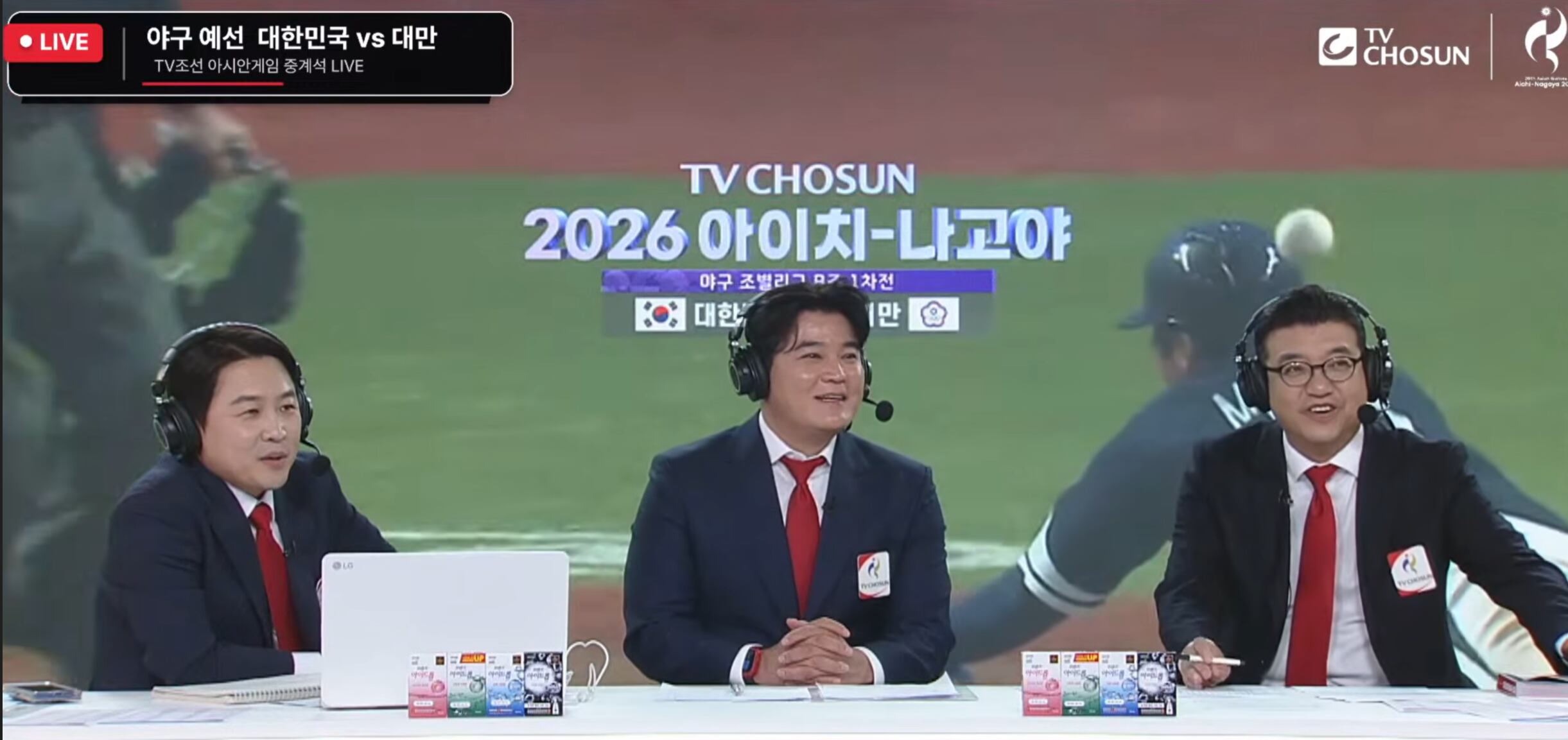
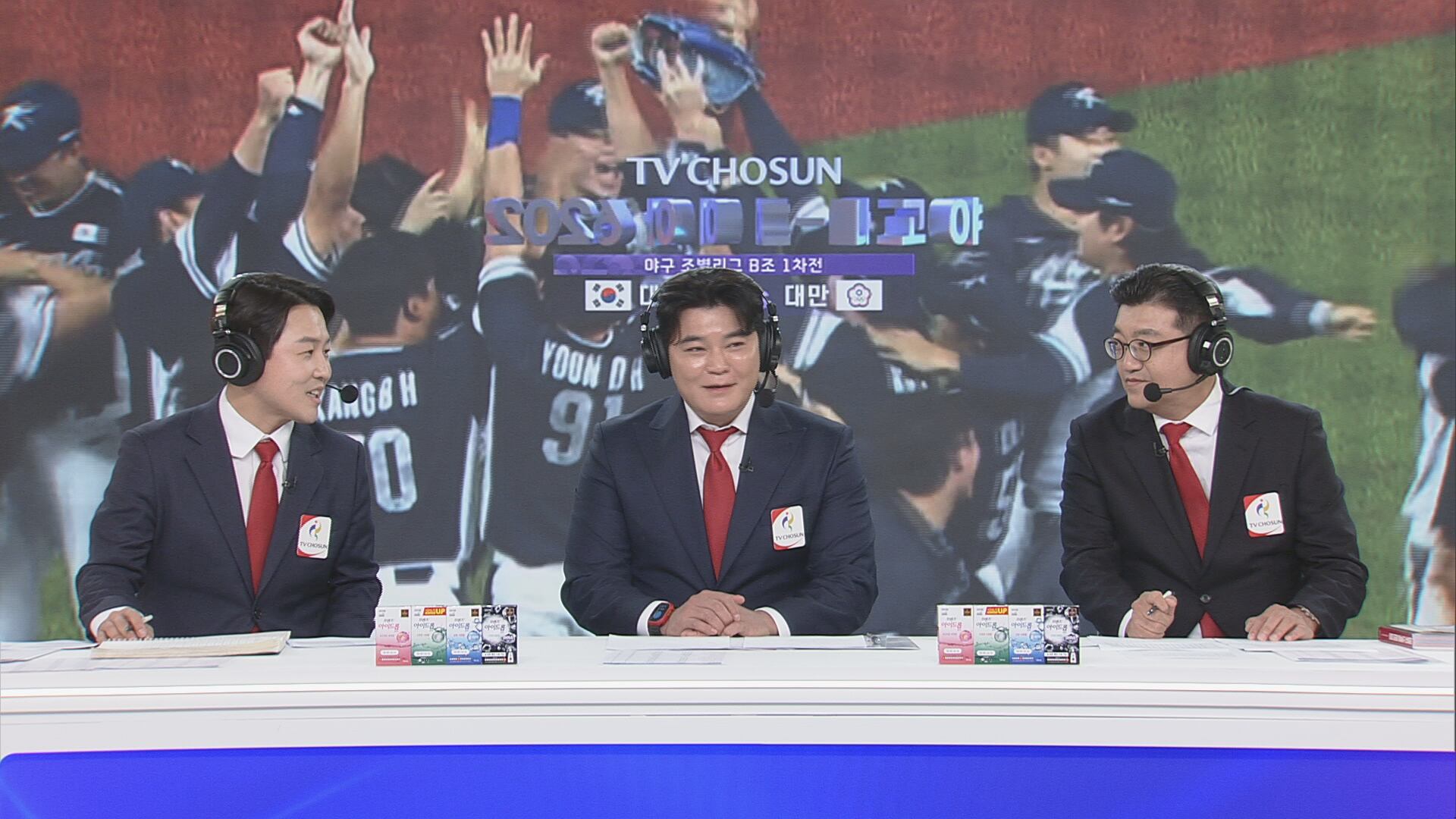
“The two beside me (caster Jung Yong-geom and commentator Song Jae-woo) are experts with lots of experience, so I’m actually comfortable. I try to talk about aspects general viewers might not consider, things seen from a player’s perspective.”
—You’re evaluated as having achieved everything as a player.
“I wanted to rest for a year after retiring. As a fan, my dream was to visit all 30 MLB stadiums. Each has famous foods: hot dogs somewhere, hamburgers elsewhere, Philly cheesesteaks in Philadelphia… Maybe I can do it someday.”