-
CLICK HERE: Subscribe to ‘s daily U.S. politics newsletter
-
PODCAST: Get the latest news and rumors direct from White House insiders – Tune into Welcome to MAGAland here.
nationwide injunctions handed down by federal district judges that affect all Americans might soon become relics of the past following a bill advanced by Republicans to support the Trump administration.
The House approved the ‘No Rogue Rulings Act’ on Tuesday with a vote of 219 to 213. The legislation will now move to the Republican-controlled Senate, where it is anticipated to be enacted.
This legislation limits federal district courts from granting countrywide injunctions unless under specific circumstances, with the intent of preventing judicial obstacles against the Trump administration’s policies.
“These unconventional judicial decisions represent a fresh form of opposition to the Trump administration, and they mark the first instance where judges dressed in robes have deemed it essential to engage in politics at such a scale,” stated Representative Darrell Issa, R-Calif., who authored the bill, earlier this week.
‘The federal judiciary isn’t interpreting the law. It is impeding the presidency. It is, in fact, not co-equal, but holding itself to be superior.’
It was of utmost importance for Republicans to handle this issue first.
Congress
As they assert, ‘Rouge’ judges were unfairly restricting the president’s power.
‘We’re going to prevent activist judges from issuing these unconstitutional nationwide injunctions and legislating to the bench, which has become a real problem,’ Speaker
Mike Johnson
said Tuesday.
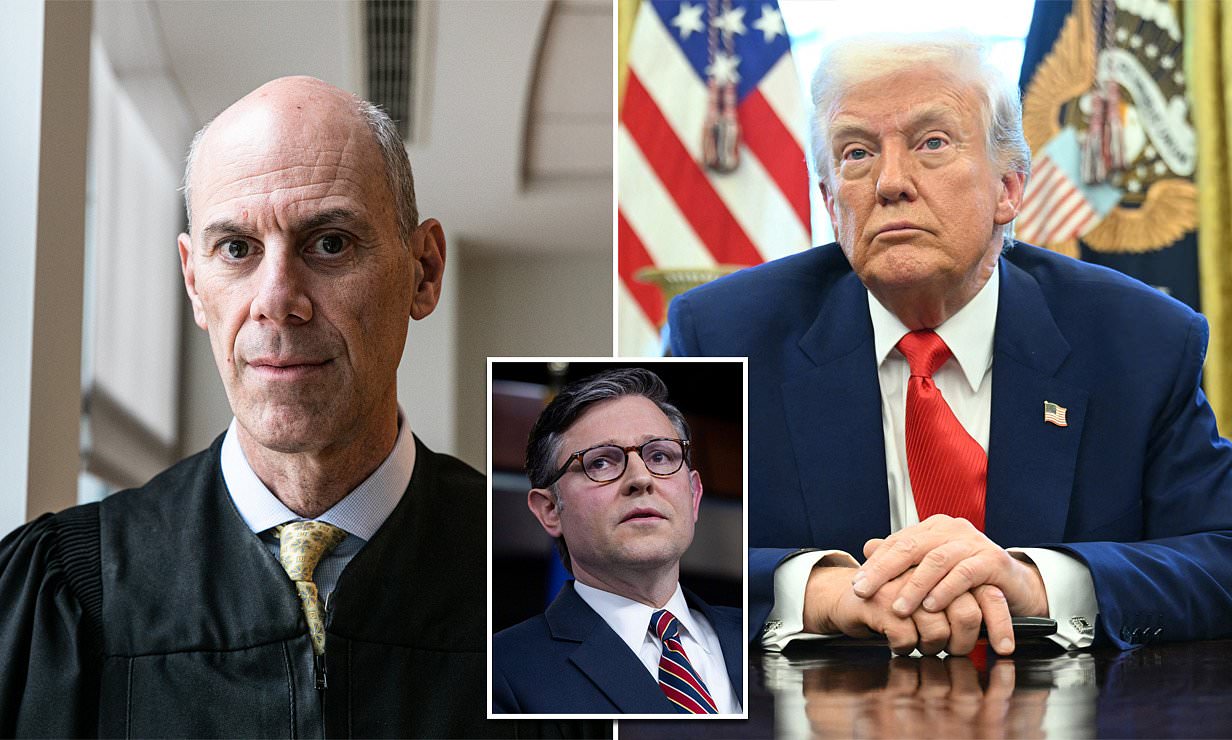
Trump has been irritated by judges nationwide, from Washington, D.C., to San Francisco, who have ruled against his policies on deportations and DOGE orders. In an unprecedented move, the president went as far as calling for the removal of one particular judge.


“This judge, much like numerous corrupt ones I’ve had to face, deserves impeachment!” Trump stated about Washington, D.C. Judge James Boasberg, who suspended the president’s immigrant expulsion initiatives.
The rulings from Boasberg, and numerous other judges across the country, prompted Trump’s deportation agenda to screech to a halt.
Once this bill is signed by Trump, as anticipated, these judges’ rulings will probably be confined to specific issues. This would enable the president to exercise his authority without worrying about his policies being stalled due to nationwide restraining orders.
“We hold jurisdiction over the federal courts,” Johnson stated while discussing the bill lately.
“We have the option of doing away with an entire district court,” he pointed out.
We do hold authority over the funding of the courts and various other aspects. However, extreme situations require drastic actions,
Congress
is going to act.’
His comment seemed like a subtle hint, if not an implied warning, suggesting that Congress holds the authority to reorganize and cut funding for courts nationwide.
Though the
Supreme Court
Is the apex judicial entity in the nation, the district courts—which have been handing down national verdicts that thwart White House executive actions—are under congressional oversight.

The president has requested that D.C. district court Judge James Boasberg be impeached for granting an injunction against the administration’s deportation of Venezuelans under the Alien Enemies Act.
The president has similarly criticized district Judge John James McConnell Jr., who supported 22 states along with the District of Columbia in restoring the distribution of federal grants and loans that the White House had halted as DOGE reviewed expenditures.
Republican legislators have already filed Articles of Impeachment against McConnell and another judge from Maryland.
Theodore Chuang, who recently decreed that disbanding USAID is against the constitution.
Nevertheless, impeachment seems improbable as it would necessitate backing from Democrats.
According to Article III of the Constitution, it falls upon Congress to ‘ordain and establish’ inferior courts below the Supreme Court level. This implies that legislators are responsible for providing funding and setting up the framework for these lower court systems.
Read more


