The Rise of Data-Driven Innovation in Southeast Asia
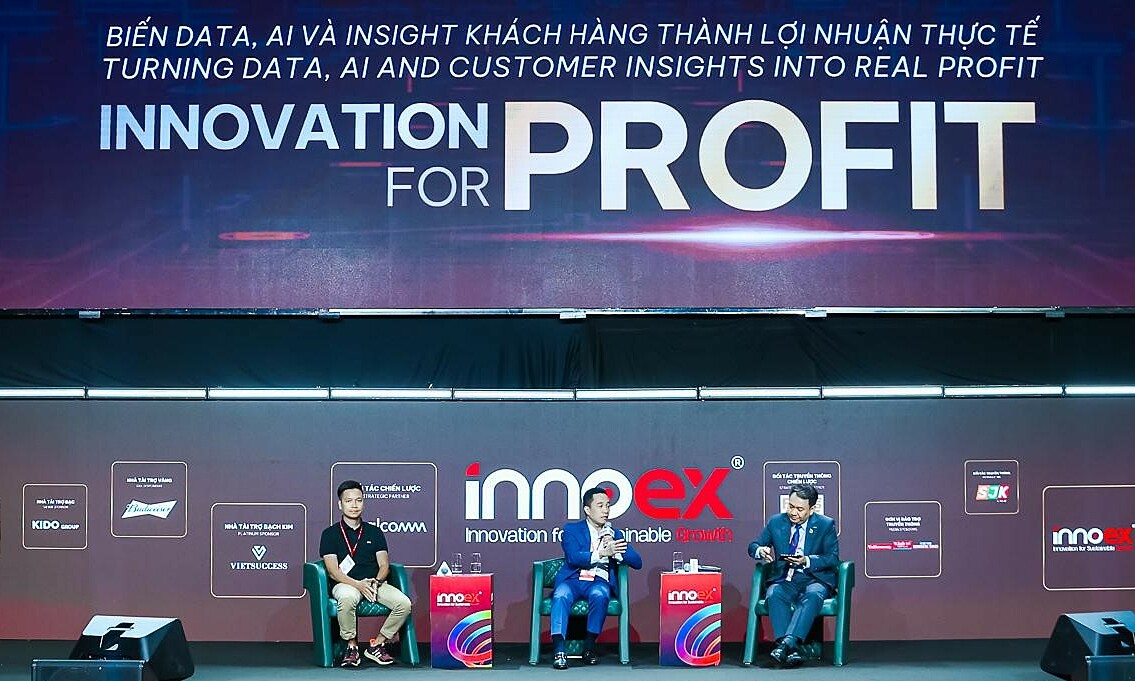
InnoEx 2025, Southeast Asia’s premier forum and exhibition on innovation, business transformation, and sustainable growth, brought together over 4,000 business leaders, investors, and experts from more than 60 countries. The event focused on how data, artificial intelligence (AI), and customer insights can be transformed into tangible profits. For the first time, global giants like Qualcomm shared roundtable discussions with Vietnamese startups, legacy corporations, and young innovators, all united by a common goal: to turn raw data into valuable assets and innovation into revenue.
Data exploitation is no longer exclusive to tech firms; it has become a survival imperative for every business. Companies that fail to adapt risk falling behind in an increasingly competitive landscape. The event, held on August 21–22 at ThiskyHall Sala in Ho Chi Minh City, showcased the growing importance of data in driving business success.
Businesses Recognize Data Value in Times of Crisis
At the InnoEx Forum, business leaders discussed how companies perceive data in vastly different ways. While the banking sector has long treated data as a strategic asset, many small and medium-sized enterprises (SMEs) only recognize its true value during times of crisis. The COVID-19 pandemic served as a turning point, forcing companies to confront existential questions about suppliers, production capacity, and inventory—only to discover they lacked the necessary data infrastructure.
Even industry leaders have missed opportunities by underestimating the power of data. Le Tri Thong, CEO of PNJ, highlighted that short-term gains often prevent long-term returns. Many established players failed to change their models or treat data as a strategic asset, resulting in lost chances to disrupt the market. In the AI era, robust data systems are no longer luxuries but prerequisites for survival.
Data-Driven Companies Generate Higher Profits
Il-Dong Kwon, Managing Director of BCG Vietnam, emphasized that data is the key to growth. Firms that leverage data effectively not only boost revenue by 1.7 times but also deliver shareholder returns 4.2 times higher. This advantage comes from the ability to harness data at scale through modeling, advanced analytics, and commercialization.
In e-commerce, where data and technology are lifelines, Giao Hang Nhanh (GHN) demonstrated how it identified underserved market segments. Founder Luong Duy Hoai explained that every order passes through 15 touchpoints, each generating 15 data points. By adopting a mobile-first approach, GHN digitized every process, enabling automated data collection.
GHN’s team developed GHN Deep Insight, trained on over one billion orders, each containing more than 100 raw data fields. Previously, extracting insights required teams of analysts and months of effort. Today, leaders can pose a strategic question and receive a full actionable report in just 30 minutes.
AI as a Catalyst for Traditional Industries
Innovation is no longer confined to tech companies. FMCG, logistics, and energy firms are reshaping their operations with AI and data. Tran Phuong Nga, CEO of Thien Long, highlighted that the company’s growth strategy lies in combining continuous product innovation, ESG commitment, and AI-driven insights to strengthen both domestic leadership and international expansion.
KIDO CEO Tran Le Nguyen shared that Kido has embraced digital transformation for several years, using AI for special effects in media production, which significantly reduces costs and accelerates project timelines by approximately 75%. Nutifood, meanwhile, prioritizes ethics and health, viewing AI and digitalization as enablers that facilitate business operations rather than being the ultimate goal.
In logistics, Transimex CEO Le Duy Hiep emphasized that innovation and green logistics are essential for the future. The company aggressively applies AI and digital transformation while balancing ROI with environmental and social impact. However, Hiep stressed that a company’s core business and culture must remain unchanged. For Transimex, this means an unwavering commitment to safe, seamless, and best-in-class logistics services.
Start Small, Scale Fast
As Vietnam’s first unicorn, VNG faces its own innovation pressures. Founder and Chairman Le Hong Minh admitted that innovation often requires investments that may not yield immediate profits but can create long-term competitive advantages. He acknowledged past mistakes made by investing with a “fear of missing out” (FOMO) mindset. The key lesson learned is to invest in areas that are truly understood, start small, but execute quickly.
VNG’s partnership with NVIDIA exemplifies this approach. Instead of pursuing a massive upfront investment, the company focused on experimenting with low cost, executing at high speed, and building capabilities step by step. This strategy ensures readiness for bigger moves once the market becomes more clearly defined.
A Unified Innovation Alliance
Across industries and borders, InnoEx 2025 delivered a powerful message: in the age of data and AI, only companies that master their data, innovate continuously, and act swiftly will stay competitive and potentially lead the market.
Truong Ly Hoang Phi, Chair of InnoEx 2025, emphasized that innovation cannot be a solitary effort. An ecosystem where traditional corporations and tech startups can find synergy is essential. InnoEx 2025 was designed to be that catalyst, ensuring that every step forward for a business also becomes a step forward for the economy.
In today’s fast-changing landscape, external shifts outpace internal ones. Innovation and foresight are the ultimate competitive advantages. Vietnamese businesses are entering a new growth cycle, charting the roadmap for a united innovation alliance in Vietnam.


