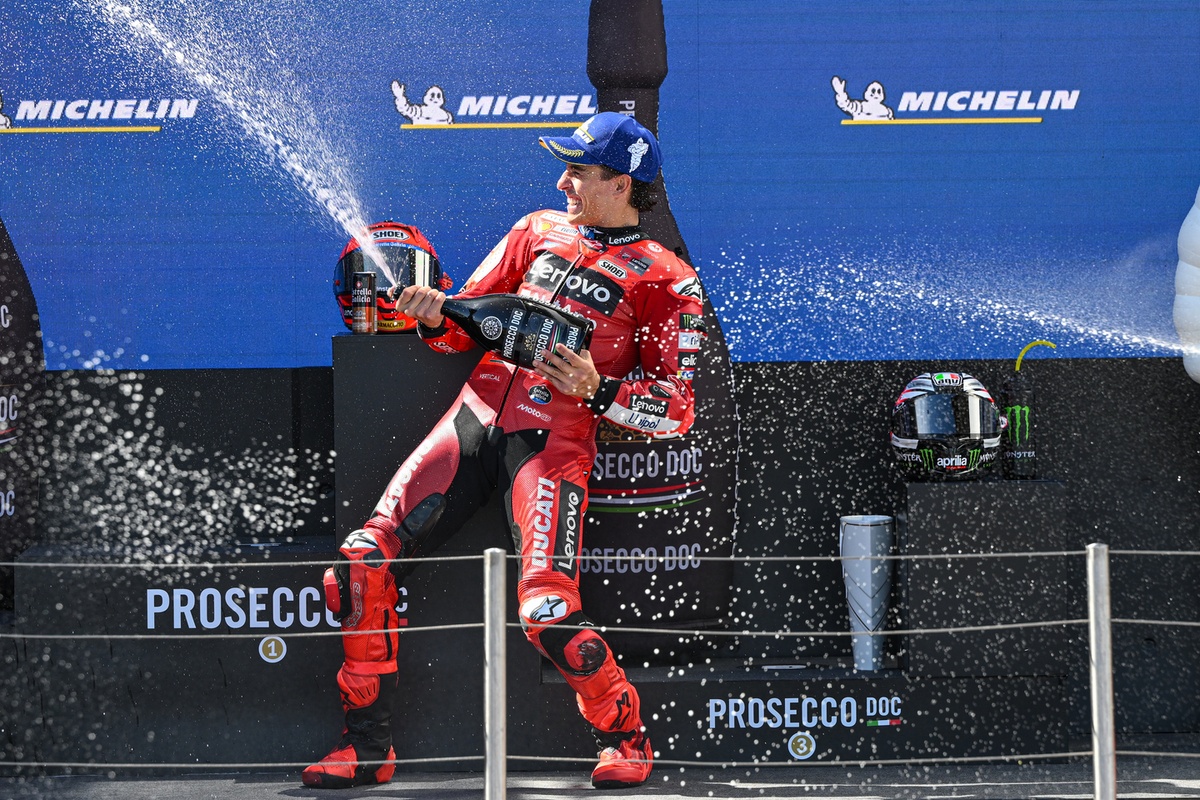
Marc Marquez’s Dominance at the Hungarian Grand Prix
The MotoGP Hungarian Grand Prix might have seemed like another routine victory for championship leader Marc Marquez, but a closer look reveals that each of his triumphs is unique. This weekend was no different, as he secured both the sprint and grand prix races, earning 37 points. Despite the new circuit at Balaton Park, it was the same familiar story: Marquez’s dominance continued.
Marquez has always had a knack for adapting quickly to new circuits, especially those with numerous left-handers. His ability to get up to speed in unfamiliar conditions is one of his key strengths. Before Balaton Park, he had won three times at new MotoGP venues—Austin in 2013, Termas de Rio Hondo in 2014, and Buriram in 2018. Although he didn’t win on the first visits to Mandalika in 2022 or India in 2023, his fitness and Honda’s competitiveness played a role in those events. Additionally, he missed Portimao’s first race in 2020 due to injury.
Balaton Park, much like Buriram and Austin, is an anti-clockwise circuit with more left-handers than right turns. This layout suits Marquez perfectly, as he prefers going left after the 2020 accident at Jerez. The Ducati riders also had a slight advantage since they had tested on the circuit ahead of the event, albeit on Panigale machinery and in different conditions.
Pedro Acosta’s Qualifying Crash
One potential contender for Marquez’s victory was Pedro Acosta, who had been performing well with new aerodynamic parts from the Austrian team. However, a crash during qualifying destroyed his bike and the forks, leaving him unable to challenge Marquez effectively. Acosta qualified seventh and was not a threat in the races.
Pole Position and Strategic Start
With Acosta out of the way, Marquez easily claimed pole position, finishing three tenths of a second ahead of Marco Bezzecchi. On a track where overtaking was expected to be difficult, this advantage was crucial. Marquez emphasized the importance of pole position, acknowledging that it would be vital for success at Balaton Park.
During the start of the grand prix, Marquez demonstrated his experience and strategic thinking. He started well from pole but faced a strong challenge from Bezzecchi. Rather than risk a collision, Marquez chose to release the brakes and turn late, allowing Bezzecchi to take the lead. This decision showcased his ability to manage risks effectively, even on a track where passing was expected to be challenging.
A Stroke of Luck at Turn 2
Even Marquez, known for his skill and experience, sometimes needs a bit of luck. During the first lap, he appeared to attempt a move on Bezzecchi at Turn 2. However, this was simply a case of avoiding contact rather than a genuine attempt to overtake. The incident highlighted the importance of tire choice in the race.
Tyre Strategy and Race Outcome
Tyre wear wasn’t a major issue in Hungary, thanks to the relatively cool temperatures. Several riders opted for the soft rear tire, but Marquez chose the medium rear. This decision proved beneficial, as it allowed him to maintain pace and eventually pull away from the competition. He set the fastest lap of the race on lap 12 and secured a comfortable victory by over four seconds.
Fellow podium finishers Acosta and Bezzecchi set their fastest laps earlier in the race, showcasing their strong pace. Meanwhile, Jorge Martin and Luca Marini, who used the medium rear tire, showed their best speed later in the race. This further emphasized the impact of tire strategy on the outcome of the event.
In conclusion, Marquez’s victory at the Hungarian Grand Prix was a combination of skill, experience, and a bit of luck. His ability to adapt to new circuits, make strategic decisions, and manage risks under pressure continues to set him apart as one of the greatest riders in MotoGP history.


