The United Nations at a Crossroads
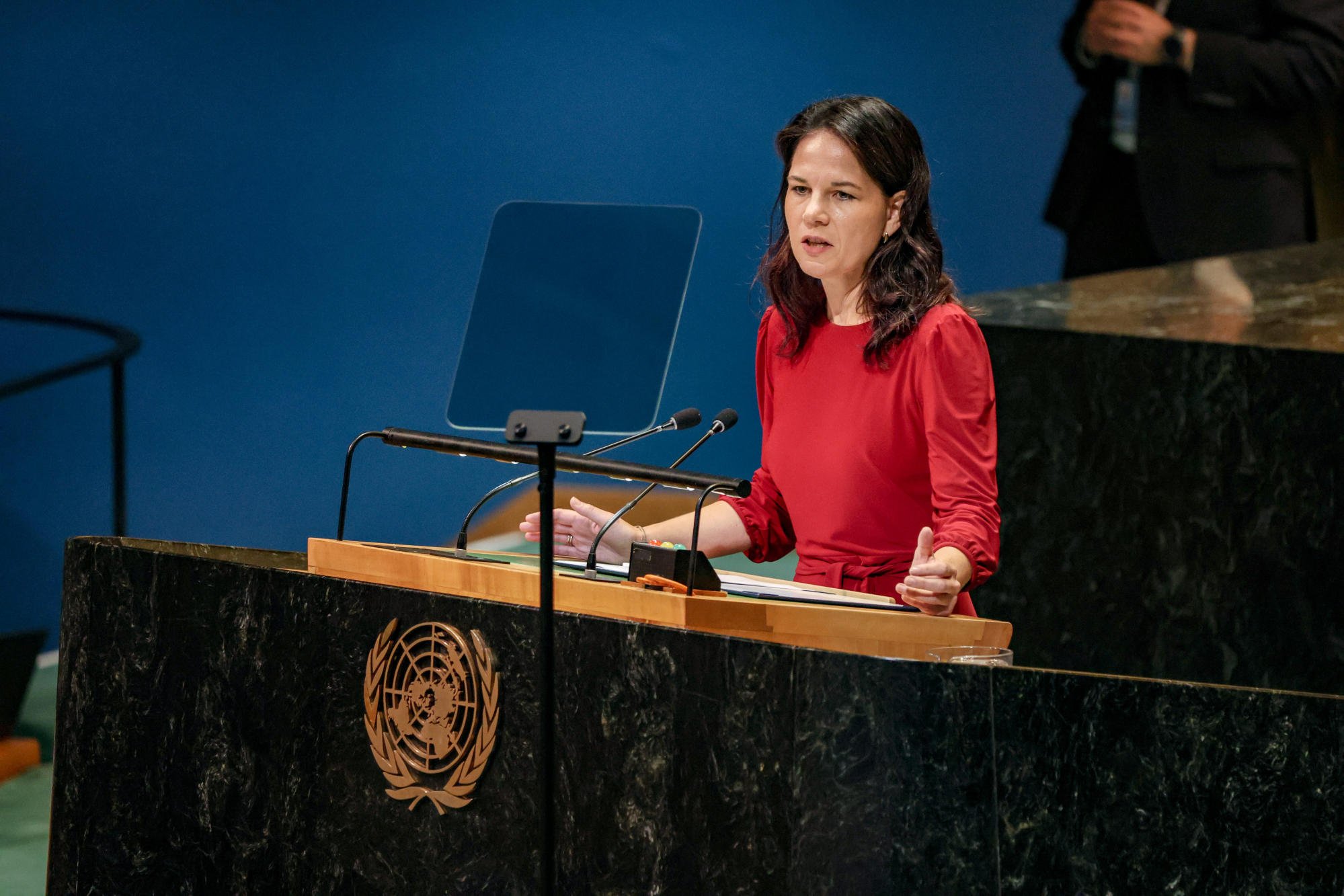
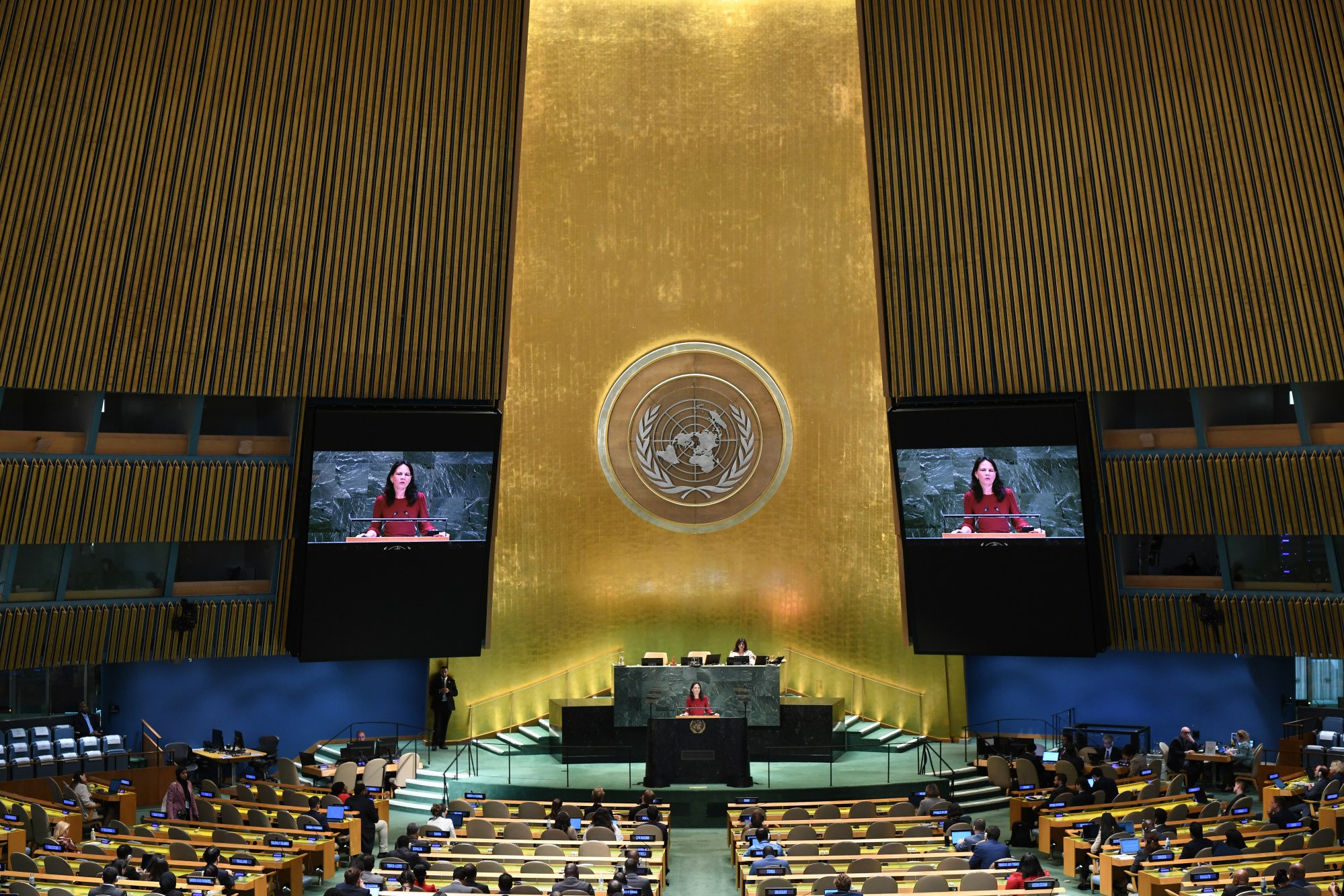
After a week-long gathering of leaders at the UN General Assembly in New York, its president struck a positive tone on Monday. Annalena Baerbock, the former German foreign minister, said there was a collective will to “choose the right path at the crossroads.” She added, “If high-level week is any indication, this house is fulfilling that purpose – the United Nations is still relevant.”
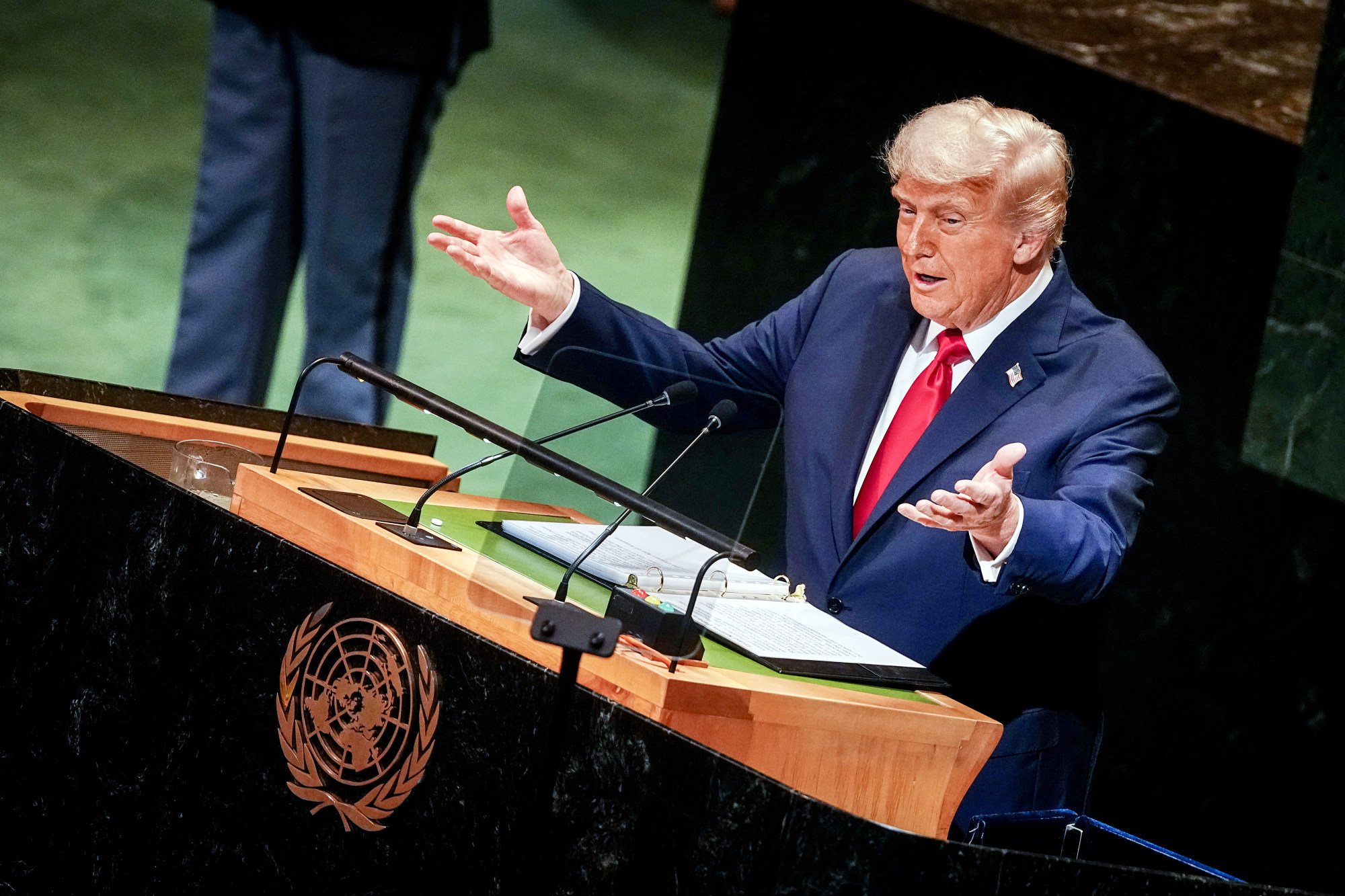
However, 23 years after Kofi Annan spoke of the UN’s “fork in the road,” when he was secretary general, the organization remains adrift. Concerns over its future were amplified last week after US President Donald Trump claimed the UN was ineffective and questioned its existence.
As the UN’s main architect, biggest single financial contributor, and host nation, the United States has increasingly turned its back on the multilateral system it helped build. Observers say a “leaderless” era could emerge during the second Trump administration as it comes under the toughest pressure it has faced since it was founded eight decades ago.
“It is sad and disappointing that the US is turning inward and emphasizing ‘America first’ at a time when global leadership is needed to address serious challenges,” said Zhiqun Zhu, a professor of international relations at Bucknell University in Pennsylvania. Zhu said although the US had come under fire for its hegemonic behavior, its global presence had been a “stabilizing force” after World War II.
“If the US continues to withdraw from multilateral institutions and international engagements, the world will become a more unstable place, with more regional conflicts … and many global issues being unattended to,” he added.
Jennifer Parlamis, a professor of organization development and leadership at the University of San Francisco, also said “America first” seemed anachronistic in a globalized world that faced threats like pandemics and climate change.
“I believe [Trump-era isolationism] does add to the instability of the UN,” she said.
Trump’s tirade against the UN last week continued for nearly an hour—well beyond the 15-minute limit. He accused the organization of “funding an assault on Western countries and their borders” with its support to migrants, claimed it offered little help when he was ending “seven endless wars,” and called climate change—the UN has prioritized it—the “greatest con job ever perpetrated on the world.”
“What is the purpose of the United Nations?” he asked in front of envoys from some 193 UN member states, claiming that all it did was write “strongly worded letters” and speak in “empty words.”
Since he returned to the White House in January, Trump has again withdrawn the US from the UN’s heritage body, Unesco, the UN Human Rights Council, the World Health Organization, and the Paris climate pact, while Washington has stopped paying its bills to the UN and is in arrears for 2024.
The US president’s budget request for the 2026 financial year, submitted to Congress in May, would freeze virtually all the country’s payments to the UN.
Multilateral frameworks like the UN are being “increasingly marginalized, instrumentalized and hollowed out” in global affairs, the Beijing-based China Institutes of Contemporary International Relations (CICIR) said in a report released on September 26. “The UN is going through the toughest period since its founding,” it added.
CICIR— an influential research institution under the Ministry of State Security—identified four major challenges facing the UN, three of them directly attributed to the US. It argued that Washington’s “unilateralist” moves had undermined the authority of the UN, that America’s unpaid dues had weakened the organization’s ability to act, and that the use of veto by the US and Russia as a tool for confrontation had worsened the Security Council’s legitimacy deficit.
According to Zhang Guihong, director of Fudan University’s Centre for UN Studies, the US under Trump 2.0 was likely to reduce its engagement with international organizations as its strategic priorities shifted.
“In many areas of international cooperation and global agendas, the US is likely to be absent. This is an unprecedented new issue for the UN,” Zhang wrote in a paper in the Journal of International Studies that was published online last week.
Zhu from Bucknell University said Trump’s isolationist approach had tarnished America’s image. “Even if future US presidents wish to return to multilateralism and global leadership, it will take a long time to restore trust and credibility,” he said.
As the United States retreats from its traditional leadership role at the UN, countries including China— the world’s No 2 economy and the biggest provider of peacekeepers among the UN Security Council’s permanent members—appear to be racing to fill the void.
In New York last week, Premier Li Qiang pitched China as “a staunch defender of world peace and security” and touted its new Global Governance Initiative to reshape the international order.
China also announced that it would not seek special benefits as a developing nation in current and future WTO negotiations, a move seen as Beijing trading off economic privileges for greater global political standing.
Unesco launched its International Institute for STEM Education in Shanghai last week in another example of China’s growing influence in the UN. China will also partner with the UN to establish a global centre for sustainable development in the city.
However, Beijing has repeatedly said it does not intend to unseat the US as the dominant global power.
“Early indicators are that even as the UN enters a ‘leaderless’ era, China is reticent to accept the volume of funding, policy process management and relentless criticism that comes as part of the burden of filling the US leadership shoes,” said Courtney Fung, an associate professor at Macquarie University in Australia.
“It’s still unclear whether and how China’s new suite of global governance efforts—[the Global Development Initiative, the Global Security Initiative, the Global Civilisation Initiative] and the latest GGI—offer substance over more than symbolic criticism of a US-led international order,” she added.
Still, Beijing’s growing footprint has put Washington on alert.
Mike Waltz, the US top envoy to the UN, told Senate lawmakers at his confirmation hearing in July that he would prioritize “countering China” in the organization, which he characterized as “critical.”
The strategic competition between the two powers now extends into global governance and international organizations, in particular the UN, according to Zhang from Fudan University.
He wrote that the US-China rivalry “over interests, institutions and values poses a formidable challenge to the UN.”
It comes at a time when geopolitical risks “exceed levels seen during the Cold War,” according to the Global Peace Index 2025 released by Sydney-based think tank the Institute for Economics and Peace in June.
That is being driven by heightened military spending, stalled efforts at nuclear disarmament, the diminished role of multilateral institutions like the UN and WTO as well as increasing competition among major and middle powers and regional blocs, the report said.
It also noted that from 2011 to 2024, the UN Security Council saw an increase in the use of vetoes and a decline in successful resolutions—reversing the trend in the first two decades after the end of the Cold War.
But neither the US or China, both permanent Security Council members, mentioned reform of the body during their speeches at the UN General Assembly high-level week.
Many other countries did—including India, Japan, Finland and Singapore—shedding light on another aspect of the UN’s crossroads moment. As Washington steps back from its leadership role, other capitals, particularly in the Global South, are growing frustrated over their lack of permanent seats in the UN’s most powerful body.
The exclusive veto power of the five Security Council permanent members, also known as the P5, has frequently left the body paralyzed—especially over Russia’s invasion of Ukraine and conflicts in the Middle East, where it has achieved little. Russia is one of the P5.
“The Security Council has a composition that doesn’t correspond to the world of today,” UN Secretary General Antonio Guterres said last month. “It corresponds to the world of 1945.”
Guterres also expressed support for a proposal from France and Britain—both Security Council permanent members—to limit the right of veto, especially in the case of “massive violation of human rights or dramatic cases of this kind.”
On Wednesday, the UN General Assembly convened a debate on the US vetoing a draft resolution calling for a ceasefire in the Gaza Strip on September 18.
“A veto can extinguish hope for those trapped in conflict,” Baerbock said during the meeting.
Fu Cong, China’s permanent representative to the UN, condemned the US move.
“If it were not for the United States’ repeated abuse of the veto, the Security Council’s response to the Gaza crisis would not have been so inadequate,” he said. “If it were not for the United States’ shielding of Israel, council resolutions and international law would not have been so flagrantly violated.”
Zhu from Bucknell University said reform of the UN was “inevitable and desirable” and the veto power held by the P5 states should be “abolished.”
“Expanding the Security Council is complicated regarding who and how many new members should be included,” he said.
According to Parlamis from the University of San Francisco, Washington’s isolationist policies might create a “tremendous opportunity” for countries in Africa, Asia and South America to step into a leadership role in the UN, which “could also help catalyse long-due reforms.”
“Ultimately, reform of the UN … is most critical to help restore UN legitimacy and efficacy,” she said. “If the US continues to isolate, the world will have no choice but to move on without it.”