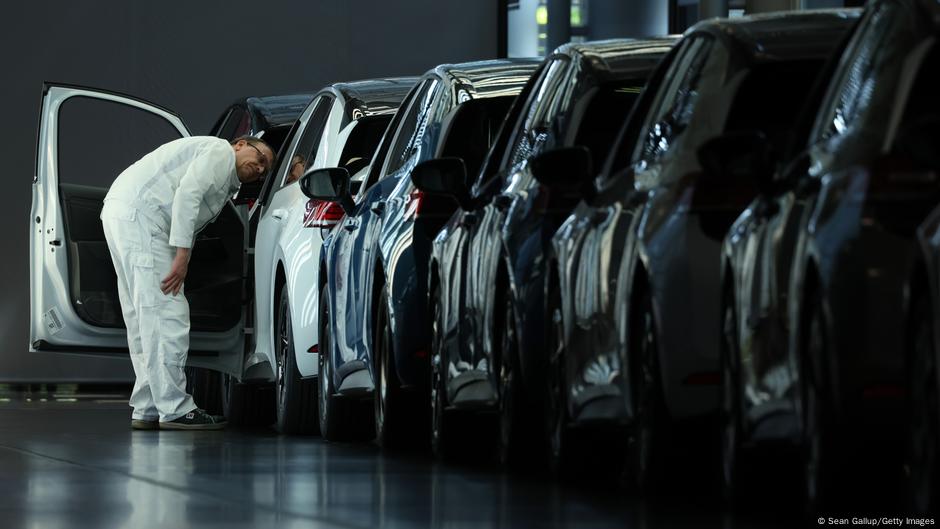
German Automakers Seek New Incentives to Revive Electric Vehicle Demand
German automakers are pushing for new incentives to stimulate demand for electric vehicles (EVs) as they face a critical juncture in their industry. With sales declining and competition from Chinese manufacturers intensifying, the sector is under immense pressure to adapt and remain competitive.
State support has never been more crucial for the survival of Germany’s auto industry. The upcoming Autogipfel, or “auto summit,” in Berlin brings together political leaders, automotive executives, and unions to address the deepening crisis. The event occurs at a time when the sector is grappling with stagnation, mass layoffs, and challenges in transitioning to electric vehicles.
Once known for engineering excellence and brand prestige, companies like Volkswagen, BMW, and Mercedes-Benz now find themselves trailing behind Chinese rivals in software innovation and EV adoption. Companies such as BYD and Nio are aggressively expanding into the European market, offering affordable and technologically advanced EVs that are gaining traction.
The impact of US President Donald Trump’s protectionist policies has further strained Germany’s export-driven auto industry.
Merz Supports Delaying Diesel/Petrol Ban
There are indications that the German government is preparing a robust response to these challenges during the summit. Chancellor Friedrich Merz has called for the cancellation of the EU’s planned ban on the sale of new internal combustion engine vehicles starting in 2035. This measure, introduced in 2022, would impose heavy fines on automakers failing to reduce carbon emissions. Germany’s conservatives have criticized it as a “straitjacket” on competitiveness.
Merz has stated that the EU’s plan is “wrong” and emphasized the need to “enable technologies” rather than banning them. However, some experts argue that delaying the ban could undermine consumer confidence in the EV transition.
Consumer Confidence and Market Uncertainty
Craig Mailey, chief strategy officer at Cox Automotive, warned that Merz’s call for a delay risks undermining confidence in the EV transition. He stressed that consumers need clarity and certainty in uncertain market conditions. While some believe the 2035 deadline stifles innovation, Mailey pointed out that consumers require assurance that electric transport is the future.
Sander Tordoir, chief economist at the Centre for European Reform (CER), described Merz’s stance on petrol and diesel cars as a “sideshow” to the larger issue: China’s growing influence in the global auto market. He noted that the decline in Germany’s car exports over the past four years cannot be attributed solely to the 2035 deadline.
Tordoir suggested that Germany may not be able to roll back EU legislation easily. Reports indicate that a compromise might allow hybrid vehicles to be sold beyond 2035.
EV Subsidies Could Boost Industry Fortunes
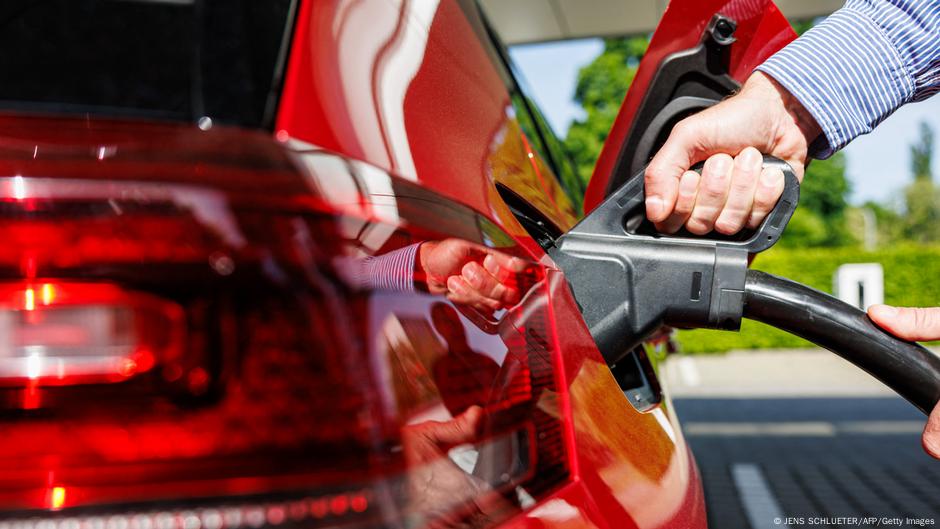
Ahead of the summit, German Finance Minister Lars Klingbeil announced the extension of an EV tax break to reignite consumer and fleet demand. The exemption, originally set to expire in 2026, will now be extended until 2030. Early buyers will receive the largest benefits.
Tordoir suggested that reinstating subsidies across the EU could help boost demand for EVs. He highlighted the potential for discounts of up to €7,500 on new EV purchases, emphasizing the need to address overcapacity and weak demand in the European car market.
German media reported that Berlin is considering linking auto industry support with aid for the domestic steel sector. Carmakers could see eased CO2 targets if they use European green steel, which is more climate-friendly than Chinese alternatives.
Auto Sector Faces Most Disruptive Year in Decades
The challenges facing Germany’s auto industry have been termed a “polycrisis,” marked by slowing EV sales, fierce Chinese competition, rising US tariffs, high energy and labor costs, and structural shifts toward electromobility.
In the first half of 2025, Mercedes-Benz saw profits drop 56% to €2.7 billion, while Volkswagen’s operating profit fell by a third to €6.7 billion. BMW’s pre-tax profit dropped 29% to €4.02 billion.
European car exports to China, largely driven by Germany, plummeted 42% in the first half of 2025, according to Eurostat. Exports to the US also declined by 13.6% in the same period.
The sector lost around 6.7% of its workforce in Germany, nearly 52,000 jobs, between June 2024 and June 2025, according to EY. The struggles have spread to auto parts suppliers, with nearly half describing their situation as “poor” or “very poor.”
Boosting EU Demand and Tackling Chinese Competition
Tordoir urged Berlin and Brussels to focus on boosting Europe’s auto sector as a whole, noting that France, Italy, and Spain are also losing market share to China. He suggested that growing the European market could create more demand than currently exists.
France, for example, revised its incentive scheme to exclude non-EU EVs, including those from China. Chinese EVs face import tariffs of up to 45.3%, though many manufacturers negotiated lower rates.
Some industry experts believe the EU should adopt a global strategy to counter the influx of Chinese EVs, leveraging strong relations with other top automakers like Japan, South Korea, the US, and the UK.
Mailey warned against viewing Chinese automakers as merely a “low cost option.” Their range spans from city cars to luxury SUVs, appealing to younger drivers who may not prioritize brand heritage.
German Auto Sector Down but Not Out
Despite the challenges, car production in Germany is far from over. With the right mix of policies and strategic investment, many experts believe the industry can adapt and remain competitive in a rapidly evolving global market.
Tordoir noted that while the European car industry needs to catch up, it still has the potential to build the cars of the future. He concluded that providing support is essential to stay in the race and get the transition right.
Edited by: Uwe Hessler
Author: Nik Martin


