Government Introduces Strict Excavator Import Controls to Combat Illegal Mining
The government of Ghana has taken a decisive step in addressing the rampant issue of illegal mining, commonly referred to as galamsey, by implementing stringent regulations on the importation of excavators. This move is part of a broader strategy aimed at curbing the activities of illegal miners who have long exploited loopholes in the system.
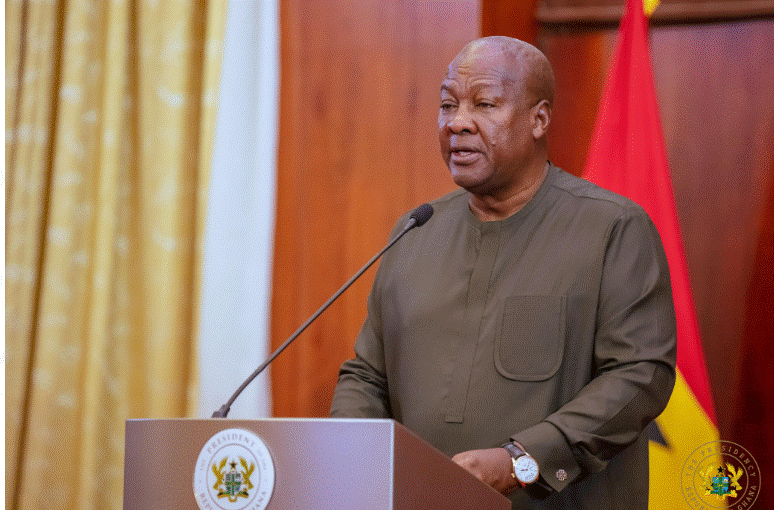
President John Dramani Mahama highlighted that the administration has introduced new measures requiring all importers to obtain permits before shipping excavators into the country. This marks a significant shift from previous practices, where machines could be cleared after arrival at the ports. Under the new regime, any excavator imported without proper documentation will be impounded, and shipping lines found carrying unapproved consignments may face sanctions.
A Strategic Move to Address Environmental and Economic Challenges
Transport Minister Joseph Bukari Nikpe recently directed international shipping lines to halt the import of additional excavators, emphasizing that Ghana already has an ample supply to meet its development needs. The minister was responding to the recent influx of heavy machinery at the country’s ports, which had led to congestion and raised concerns about their potential misuse.
The Ghana Ports and Harbours Authority (GPHA) announced that the equipment had been relocated to military camps nationwide to ease port congestion and enhance security. The authority clarified that the machines would remain in custody until they were properly cleared by their owners.
President Mahama addressed Civil Society Organisations (CSOs) on the issue of illegal mining, stressing the importance of this new approach in closing the loopholes that have allowed illegal miners to operate with impunity. “We cannot effectively fight illegal mining when heavy machinery continues to enter the country without proper oversight,” he said.
Balancing Development and Regulation
While the government recognizes the legitimate need for excavators in sectors such as construction, agriculture, and mining, it has opted for stricter regulation rather than a total ban. President Mahama noted that nearly all excavators imported over the past eight years were not registered with the Driver and Vehicle Licensing Authority (DVLA), making them difficult to trace.
Going forward, every excavator imported will be registered and equipped with geo-fencing technology, allowing authorities to track their location in real time. “If an excavator leaves its designated area, the system will alert regulators immediately,” the president explained.
Technological Integration and Institutional Coordination
The new import control policy is expected to play a central role in the government’s broader anti-galamsey strategy, which combines law enforcement with technological monitoring and stricter institutional coordination. Industry observers view this measure as a significant shift in Ghana’s approach to resource governance, balancing development needs with environmental protection and regulatory discipline.
During a meeting with CSOs, President Mahama described the enforcement of excavator import laws as one of the key achievements in addressing the menace of illegal mining. The dialogue provided a platform for frank discussions on tackling the environmental, social, and economic challenges posed by galamsey.
Addressing Inherited Challenges
President Mahama also recalled that under the previous administration, excavators were imported in large quantities without proper regulatory oversight. “At one point, the previous administration asked that permits be obtained after the excavators had already arrived,” he noted. However, he clarified that the law requires importers to secure permits before bringing excavators into the country.
The government has inherited a large number of excavators already at the ports. To ease congestion, the Minister for Lands and Natural Resources, Emmanuel Armah-Kofi Buah, oversaw the relocation of the heavy machinery to secure military spaces at Shai Hills and other designated sites.
Ensuring Compliance and Accountability
Transport Minister Joseph Bukari Nikpe emphasized that the transfer of excavators to military camps was not a release of the equipment to importers but a safeguard while documentation was reviewed. A task force has been set up to verify whether importers have legitimate contracts, mining concessions, or construction projects requiring the machines.
“DVLA will register it and the Minerals Commission will put a tracker on it for us to know where it is and the kind of job it is engaged in,” he stated. The minister warned that excavators without a clear legal use would be confiscated and that the government would publish the names of importers whose machines were seized to promote accountability.
The “No Permit, No Import” Policy
Mr Nikpe referred to the “no permit, no import” policy introduced in June 2025, which requires prior authorisation from the Transport Ministry before earth-moving equipment can be shipped into Ghana. He noted that some of the excavators currently held at Tema had been ordered before the directive took effect, creating a backlog that contributed to congestion at the port.
While assuring importers of fairness, Mr Nikpe insisted the measures were necessary to safeguard the environment and ensure smooth port operations. “Our port is to do business, and people do not want to have any difficulty going about their business,” he added.


