Understanding the Failures of 7 October
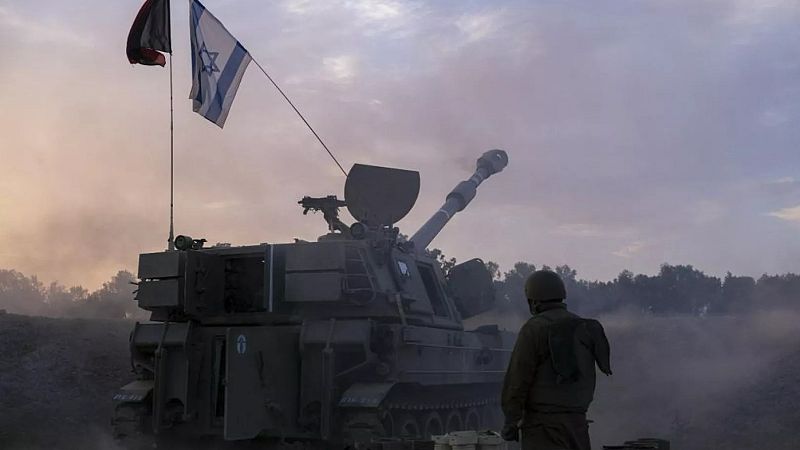
Two years after the deadly Hamas-led attack on 7 October, security experts in Israel and around the world are still analyzing what went wrong. The attack resulted in the loss of over 1,200 lives and left 250 people taken hostage by Hamas. The Israeli military has now released its first official account of the mistakes that led to its failures during this incident, which triggered the ongoing Israel-Hamas war in Gaza.
The report concluded that the Israel Defence Forces (IDF) “failed in its mission to protect Israeli civilians.” It stated that the military misjudged Hamas’ intentions and underestimated its capabilities. Will Todman, a Senior Fellow at the Middle East Program of the Centre for Strategic and International Studies, emphasized the importance of understanding the context of the time when the attack occurred.
During this period, Israel was engaged in talks about expanding the Abraham Accords and normalizing relations with Saudi Arabia. Previously, it had also normalized relations with other key regional actors like the UAE and Bahrain. This sense of confidence among the Israeli government may have contributed to their underestimation of the threat posed by Hamas.
The Role of Military Intelligence
In the months leading up to the attack, the Israeli Military Intelligence Directorate, Aman, developed a new assessment suggesting that Hamas’ plan was not just a vision but a concrete framework for operational planning. However, this assessment was largely dismissed, and there was a sense of complacency.
Todman suggested that this complacency could be attributed to a sense of hubris from the Israeli military and political elite. For years, Israeli authorities had not faced a serious threat from Hamas in Gaza or from Palestinian groups in the West Bank. Meanwhile, Hamas tried to keep their preparations as much as possible under Israeli radars to ensure the October 7 attack was not easily detected.
They conducted periodic training exercises, knowing that Israel would monitor them. Notably, even the Hamas delegation outside of the Gaza Strip in Doha did not seem to be aware of the plans in advance, keeping them within a very small circle.
The Broader Implications
Despite these failures, Todman insists that the events of 7 October were the result of leadership failures rather than shortcomings in Israel’s capabilities. He points out that since then, Israel has demonstrated remarkable military strength, proving itself as a regional military hegemon. They have launched precise attacks against Hezbollah in Lebanon, Iran, key figures in Iran, Syria, Yemen, and Doha.
This effectiveness shows that when the Israeli military establishment decides to pursue a military objective, they do so with remarkable precision and intelligence penetration.

The Israel-Hamas War Since 7 October
In response to the Hamas-led attack on southern Israel, the Israeli military launched a massive campaign in Gaza on an unprecedented scale. The offensive has resulted in the deaths of over 67,000 Palestinians, according to the Hamas-run Gaza Health Ministry, which does not differentiate between civilians and combatants in its death toll — a number Israel contests.
Israel has also expanded its military operations beyond Gaza, targeting Hamas’ allies in Iran and Syria, as well as Tehran-backed Hezbollah in Lebanon and Yemen’s Houthis. These actions have triggered seismic shifts in the region’s geopolitical landscape.
Prime Minister Benjamin Netanyahu has consistently taken bold risks in the aftermath of 7 October, with nearly all of those risks paying off until the attacks on Doha. This marked the first direct conflict between Israel and Iran, involving Israeli strikes on facilities, nuclear facilities, scientists, and military officials.
Diplomatic Consequences
While these actions have achieved military victories, they have come at a significant diplomatic cost, according to Todman. Even key Israeli allies such as the UK, France, Canada, and Australia now recognize Palestinian statehood, indicating real cracks in Israel’s international support.

What Lies Ahead for Israel and Gaza?
With the US-led peace plan for Gaza now being negotiated in Egypt, the question remains how the sides will coexist, even if the deal is finalized. Todman suggests that for Israel, there will continue to be real security concerns in Gaza. The Israeli government likely does not believe that Hamas will truly disarm completely, and there are different levels of membership within Hamas.
The plan envisions the deployment of international forces to gradually build up a Palestinian police force. However, there will be differences of interpretation between the Israeli government and Palestinians regarding whether these security forces could ever represent a threat to Israel again.
Another challenge for Palestinian leaders will be to depict a better future for their people, emphasizing reconciliation over revenge. Trust between Israelis and Palestinians is minimal, and building it will be a monumental task.

The Future of the US-Led Plan
Hamas has agreed to release all remaining Israeli hostages but wants further discussions on several key points outlined in the US peace plan. Specifically, they have not agreed on the disarmament of Hamas and the future governance of Gaza as outlined in the plan.
At this stage, Todman suggests that Hamas has little more to lose, explaining why they agreed to the hostage release. They initially thought that having hostages would serve as leverage to deter certain Israeli military actions. However, when even the threat of accidental killing of hostages did not change the Israeli government’s strategy, Hamas recalculated their approach.
Instead, the armed group is gaining some international goodwill and hopes to pressure Israel to abide by the agreement’s terms, which are more challenging for the Israelis to accept.


