The Gen Z Revolution in Nepal: A Moment of Hope and Challenges
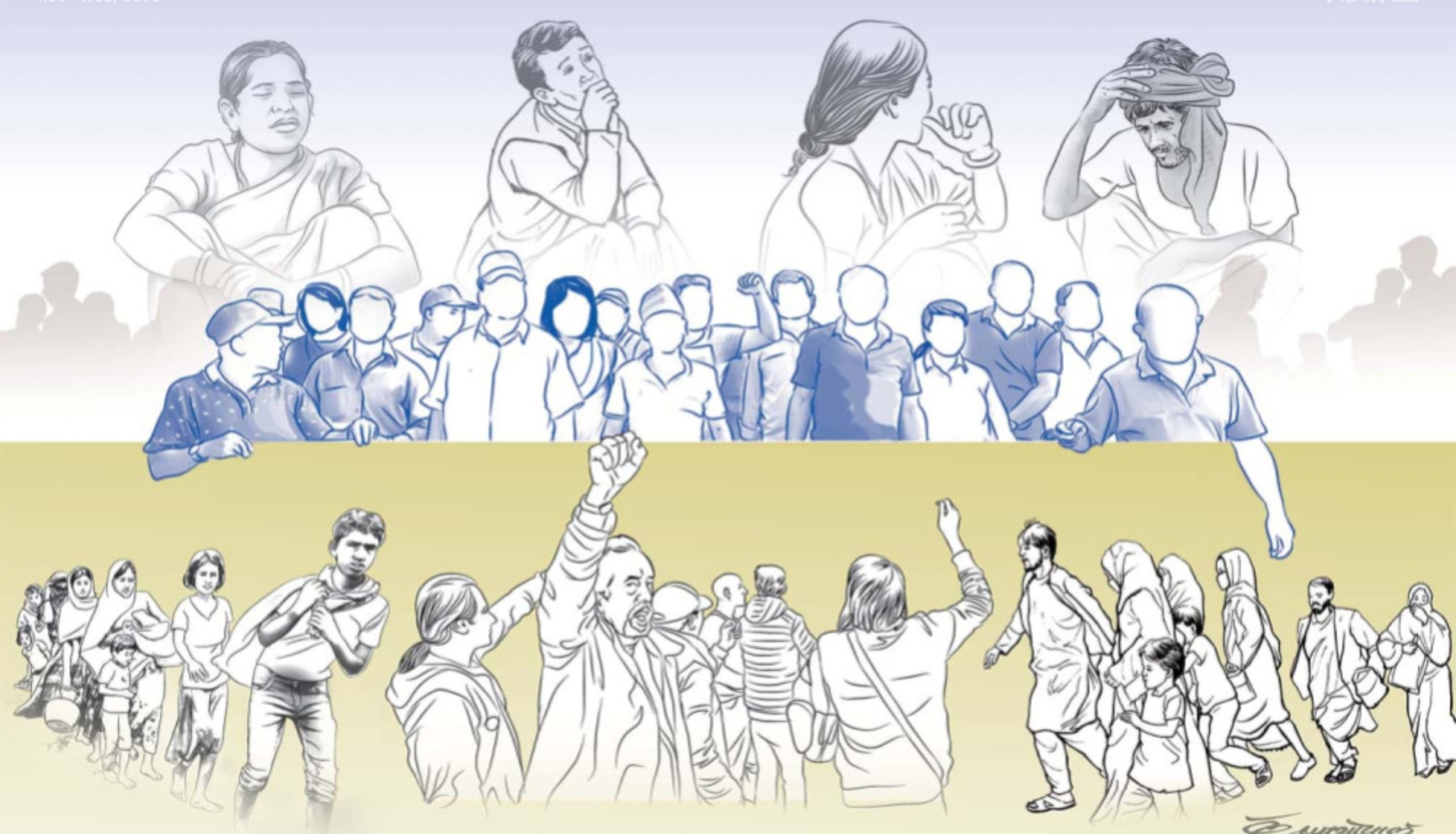
The events of September 8 and 9 in Nepal, led by the Gen Z generation, marked a significant turning point in the country’s political landscape. This revolution was driven by a deep frustration with the government’s inability to address corruption and was further amplified by a social media ban that restricted information flow. As a result, protestors gathered across the nation, demanding change. The state responded with force, leading to at least 75 deaths and over 2,300 injuries. The protests eventually forced Prime Minister KP Sharma Oli to resign and led to the dissolution of parliament. An agreement between the army, former chief justice Sushila Karki, and representatives of the Gen Z protestors resulted in an interim government, which is tasked with organizing new elections by March 2026.
This uprising, although brief, has sparked critical questions about the potential for such movements to truly transform a nation. What deeper obstacles are holding back Nepal’s development? This article argues that lasting change requires more than just protests or elections. It demands a long-term, multi-dimensional transformation of society, culture, and the economy.
Understanding Nepali Society
While it is easy to blame Nepal’s underdevelopment on corrupt politicians and bureaucratic elites, there are deeper sociological challenges that shape the character of Nepali society. Anthropologist Dor Bahadur Bista, in his work “Fatalism and Development” (1991), highlighted a pervasive fatalism in Nepali society that discourages initiative and accountability. Many Nepalis accept suffering, inequality, and poor governance as fate beyond their control. This mindset weakens calls for reform, as people assume that nothing can change, allowing corruption and misrule to persist.
Patriarchal and patron-client norms also complicate Nepal’s path to reform. Nepali society remains patriarchal in both gender roles and broader social hierarchies. There is a strong tendency to prioritize family, kin, or local community interests over national ones. Leaders and citizens alike often remain loyal to their patrons or kin, reinforcing networks of patronage throughout politics and business. This leads to nepotism, cronyism, and favoritism, devaluing merit and normalizing corruption.
Culturally, Nepali society also exhibits obedience to hierarchy and resistance to open discourse. Children are encouraged to respect authority and discouraged from questioning those in power. In workplaces, classrooms, or politics, a culture of silence often dominates over debate. This conservatism means new ideas and critiques are often dismissed. After the recent protests, many party cadres steeped in these hierarchical norms tried to delegitimize the Gen Z movement, spreading conspiracy theories about foreign involvement. Such attitudes reflect a deeper clash between a globally exposed youth and a traditionalist older generation.
Gen Z activists, despite their access to information and progressive outlook, remain part of a society where fatalism, patronage, and hierarchy are deeply ingrained. Without addressing these sociocultural foundations, any political revolution risks being short-lived with limited impact.
Economic Constraints and Innovation
The societal constraints mentioned above have direct consequences for Nepal’s economic development and environment for innovation. The country’s economy has experienced only modest growth over the past two decades, with real GDP growth averaging around 4 percent annually, which is considered sluggish compared to countries like Bangladesh and India. This lack of innovation in domestic industries has made Nepal dependent on imports.
Nepal was ranked 107th out of 139 countries in the Global Innovation Index 2025, placing 9th among 10 countries in South Asia. This poor ranking highlights Nepal’s limited progress in leveraging creativity, technology, and productivity to drive its economy. Traditional enterprises dominate the private sector, with negligible research and development spending by both the private sector and the government.
Remittances from migrant labor have been a lifeline for Nepal’s finances. With limited opportunities at home, millions of working-age Nepalis have sought employment abroad, sending billions of dollars each year. These remittances support household incomes and the national balance of payments. However, this reliance on external income leaves the economy vulnerable to external shocks and conflicts.
Beyond remittances, Nepal’s other potential growth drivers remain underdeveloped or uncertain. Hydropower and tourism, for example, have often been victims of political instability. Large-scale manufacturing and high-tech industries are almost non-existent or lack competitiveness in regional markets.
The Path Forward
For Gen Z activists seeking a new Nepal, these structural economic realities must be addressed. Any new leadership will face the same fundamental questions: How to create jobs at home for the vast unemployed population? How to move beyond import dependency and low-skill labor exports towards a more productive, services-based economy?
The Gen Z uprising was a necessary shock to the system, but it is not, by itself, sufficient to transform the system. To avoid becoming merely a footnote in history, this youth movement must evolve into a sustained force that steadily advocates for more comprehensive reforms. It should realize that no single charismatic leader or quick fix will magically solve Nepal’s problems. The interim government and upcoming elections present a window of opportunity for Gen Z to influence the agenda. However, achieving real results will require patience, pragmatism, and national effort from all parties.


