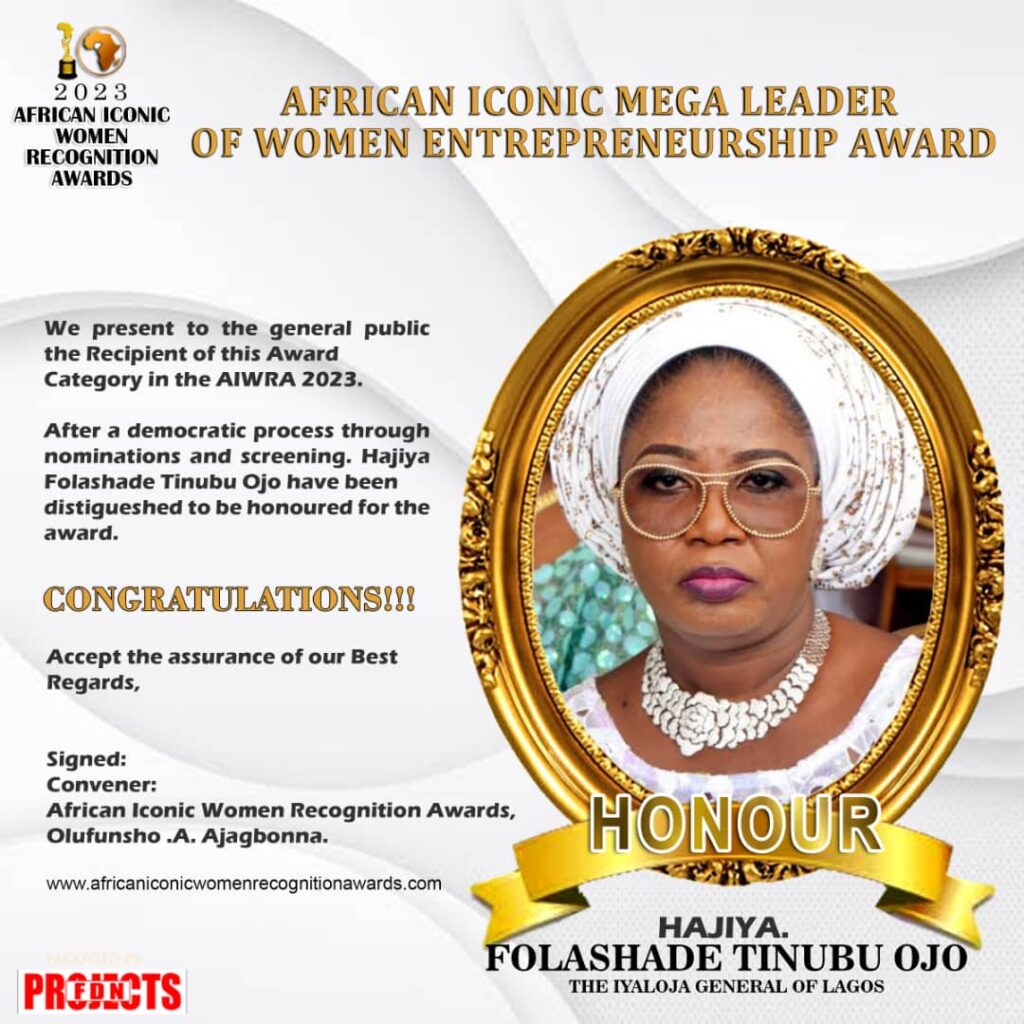
The Problem with the Iyaloloja-General Title
The title of “Iyaloloja-General” has become a point of contention, especially when compared to other traditional titles in Nigerian society. One such title is that of the “Eze of Lagos,” which is often seen as a ceremonial figure without any real political power. Unlike the Eze of Lagos, who holds no salary or official recognition, the Iyaloloja-General is backed by significant political influence. This difference highlights a critical issue: while one title is essentially symbolic, the other can be used to exert real power.
This distinction is important because it shows how some titles are merely self-designated and have no serious political meaning, while others are supported by the force of federal power. For example, in many Nigerian communities in the United States, people may refer to someone as the “Eze Ndigbo” of a particular city. However, these titles are not taken seriously by local authorities, as they are seen as mere social designations.
In contrast, the Iyaloloja-General has the potential to influence decisions and gain access to positions that others cannot. This is due to the political clout that comes with being the daughter of the President. She can write official letters, visit palaces, and even impose her candidates on traditional rulers, despite their cultural objections.
The Evolution of the Iyaloloja Title
Originally, the term “iyaloja” was reserved for women who had made significant contributions to their communities through trade and business. These women were respected for their acumen and resourcefulness. However, this meaning has been diluted over time, especially with the rise of figures like Folasade Tinubu-Ojo. Her appointment as the “Iyaloloja-General” represents a shift from an organic, community-based title to one that is more about political influence than merit.
Tinubu-Ojo’s claim to the title was not based on her own achievements but rather on her relationship with her father, the President. This has led to a situation where the title has lost its original significance. Instead of being a symbol of achievement, it has become a tool for political advancement. This trend is concerning because it undermines the values that the title was originally meant to represent.
Cultural Implications and Resistance
The imposition of the “iyaloja” title on other cultures, such as in Edo State, has raised questions about cultural appropriation and the erosion of traditional practices. In Edo culture, there is a similar role known as the “iyeki,” which is specific to each market and does not have a centralized authority. The introduction of a “iyaloja-general” disrupts this system, creating confusion and resistance among local communities.
Traditional leaders have expressed concerns about the legitimacy of the “iyaloja-general” title. For instance, during a visit to the palace, the Osaro Idah emphasized that the title was unknown in Edo culture. He pointed out that each market selects its own leader, and there is no equivalent of a “iyaloja-general.” This highlights the tension between traditional practices and the imposition of new, politically driven roles.
The Role of Power and Influence
The current state of the “iyaloja” title reflects a broader issue of power dynamics in Nigerian society. While the title was intended to promote meritocracy, it has now become a tool for those with political connections. This shift has led to the appointment of individuals who lack the necessary experience or qualifications for the role.
For example, Josephine Ibhaguezejele, introduced as the head of market women in Edo State, is described more as a pastor than a market woman. This suggests that the title is being used to elevate individuals who may not have a genuine connection to the market, further distancing it from its original purpose.
Conclusion
The “iyaloja-general” title has become a symbol of political manipulation rather than a genuine recognition of achievement. It reflects a larger trend of centralizing power and undermining traditional systems. As this title continues to evolve, it risks losing its cultural significance and becoming a tool for political gain. The challenge lies in restoring its original purpose and ensuring that it remains a true representation of merit and community contribution.


