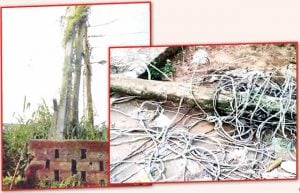
Electricity Crisis in Kaduna, Katsina, and Kano States
Despite an increase in power generation, customers in Kaduna, Katsina, and Kano states are facing significant challenges in accessing sufficient electricity to meet their needs. The situation has led to widespread frustration among residents and business owners alike.
Rainy Season and Hydro Power
During the rainy season, Nigerians typically enjoy more reliable electricity due to the increased capacity of hydro power plants. However, this year, the situation in some parts of the country is different. While there are reports of teething problems related to distribution, such as vandalism and non-payment of bills, distribution companies (DisCos) are making efforts to bridge the gap.
Sources in the electricity sector have mentioned that they try to balance the distribution of available electricity between industrial areas, metred locations, and residential areas. They also highlighted the issue of Band A, Band B, Band C, and other classifications, stating that it is misleading to generalize that there is no supply of electricity.
Impact on Businesses in Katsina State
In Katsina State, erratic power supply has had a severe impact on businesses, leading to job losses and financial hardship for many. Residential buildings are also suffering as homes go without power for days. Businesses that require consistent power, such as bakeries, welding and fabrication factories, and shop owners, are particularly affected.
Even when power is available, low voltage is a common problem, making it difficult to operate electrical appliances. Business owners are forced to find alternative solutions to survive. Government and private institutions are also turning to solar power to reduce reliance on the unreliable conventional power source.
Struggles of Business Owners
Dr. Isma’il Balarabe, a business owner in Katsina, shared his struggles with power shortages. He noted that his business has crashed, resulting in significant losses. Similarly, Dr. Muktar Alkasim mentioned that the erratic power supply has crippled businesses across all sectors. Mrs. Ngozi Anosike, a soft drink shop owner, said her business has collapsed, forcing her to take up menial jobs in her neighborhood.
Hajiya Hannatu lamented that she can no longer preserve food items in the fridge due to the poor power supply. She explained that even when power is available, the low voltage makes it impossible to run the fridge effectively.
Uneven Distribution in Kano
In Kano, there is growing disparity in electricity supply. Commercial zones that pay higher tariffs reportedly receive longer hours of power, while many residential areas remain in darkness for most of the day. Ahmad Aminu, a resident of Naibawa quarters, described the situation as frustrating. He noted that during the rainy season, he used to get more hours of electricity due to the rise in water levels at hydro stations, but this year, the situation is different.
Yusuf Idris, another resident, expressed similar concerns about the steep increase in monthly payments and the worsening supply. He mentioned that the hike in tariffs has led to mass disconnections, with many households turning to solar energy as an alternative.
However, industries and businesses that pay millions in electricity bills appear to be benefiting from the new arrangement. Sama’ila Sulaiman, who runs a small ice block business, said his firm now enjoys up to 22 hours of steady power supply.
KEDCO’s Response
When contacted, the spokesperson for the Kano Electricity Distribution Company (KEDCO), Sani Bala Sani, stated that there is stable power supply in its franchise areas of Kano, Katsina, and Jigawa. However, he mentioned that due to the rainy season, there is disruption of electricity in some areas due to the fall of electricity poles caused by strong winds.
He added that the company is making massive investments to improve its operations and customers’ experience by upgrading its infrastructure and investing in solar energy for reliable electricity in the states. KEDCO is also working on increasing its solar generation capacity to ensure a minimum of 150 megawatts by the end of next year.
Challenges in Kaduna
Residents of Tudun Wada in Kaduna South Local government have lamented the low supply of electricity since September. Hadiza Adam, whose sachet water business has been greatly affected, mentioned that the few hours of electricity available in the night make it difficult to sell refrigerated products. Muhammed Ahmed, another resident, said the lack of adequate power supply has deprived him of entertaining himself, as he no longer subscribes to his satellite network.
Most residents in these areas complain that they hardly get electricity, and when they do, it only lasts for one to three hours in a day. Some people even spend several days without power at all. This has affected small businesses like welders and cold drink sellers who depend on electricity to survive.
Electricity Allocation Disparities
A check on the website of the Nigerian Independent System Operator (NISO) showed that 4,025.00 megawatt of electricity was generated on the grid, with 1,491 allocated to the four DisCos that distribute electricity to the region. Sources at the Transmission Company of Nigeria (TCN) mentioned that despite agreements on electricity allocation, DisCos sometimes reject load allocation due to lack of investment in the distribution network.
The President of Nigeria Consumer Protection Network, Kunle Olubiyo, highlighted that the issue of lower allocation of electricity to the North stems from the inability to have a large number of industries, energy theft, and lack of investments in distribution networks.
Conclusion
The electricity crisis in Kaduna, Katsina, and Kano states continues to affect residents and businesses, highlighting the need for urgent government intervention. With ongoing efforts to improve infrastructure and invest in renewable energy, there is hope for a more reliable power supply in the future. However, addressing the root causes of the crisis, including energy theft, lack of investment, and uneven distribution, remains critical for long-term solutions.


