The Unpredictable Presence of a US President at the Asean Summit
The upcoming Association of Southeast Asian Nations (Asean) summit in Kuala Lumpur from October 26-28 has become a focal point for global attention, particularly due to the anticipated presence of US President Donald Trump. This marks his first appearance at an Asean summit since 2017, and the event is now seen as a test of diplomatic finesse for Malaysia’s Prime Minister Anwar Ibrahim.
Just weeks ago, securing Trump’s attendance was considered a major diplomatic achievement. However, the initial excitement has faded, with concerns growing about the potential risks associated with his unpredictable nature. Anwar, who extended the invitation, now finds himself navigating a delicate balancing act between maintaining regional unity and managing the potential fallout from Trump’s rhetoric.
The summit will bring together key global leaders, including Chinese Premier Li Qiang, Indian Prime Minister Narendra Modi, Brazilian President Luiz Inacio Lula da Silva, and South African President Cyril Ramaphosa. Despite this impressive lineup, the spotlight remains firmly on Trump, whose reputation for unpredictability has raised alarms among Asean members.
John Low, Southeast Asia managing partner at Roland Berger, warned that the worst-case scenario could involve sharp rhetoric or unexpected political theatrics, which might strain relationships among key partners or force Asean members to take sides. This could destabilize markets and undermine the region’s efforts to project unity.
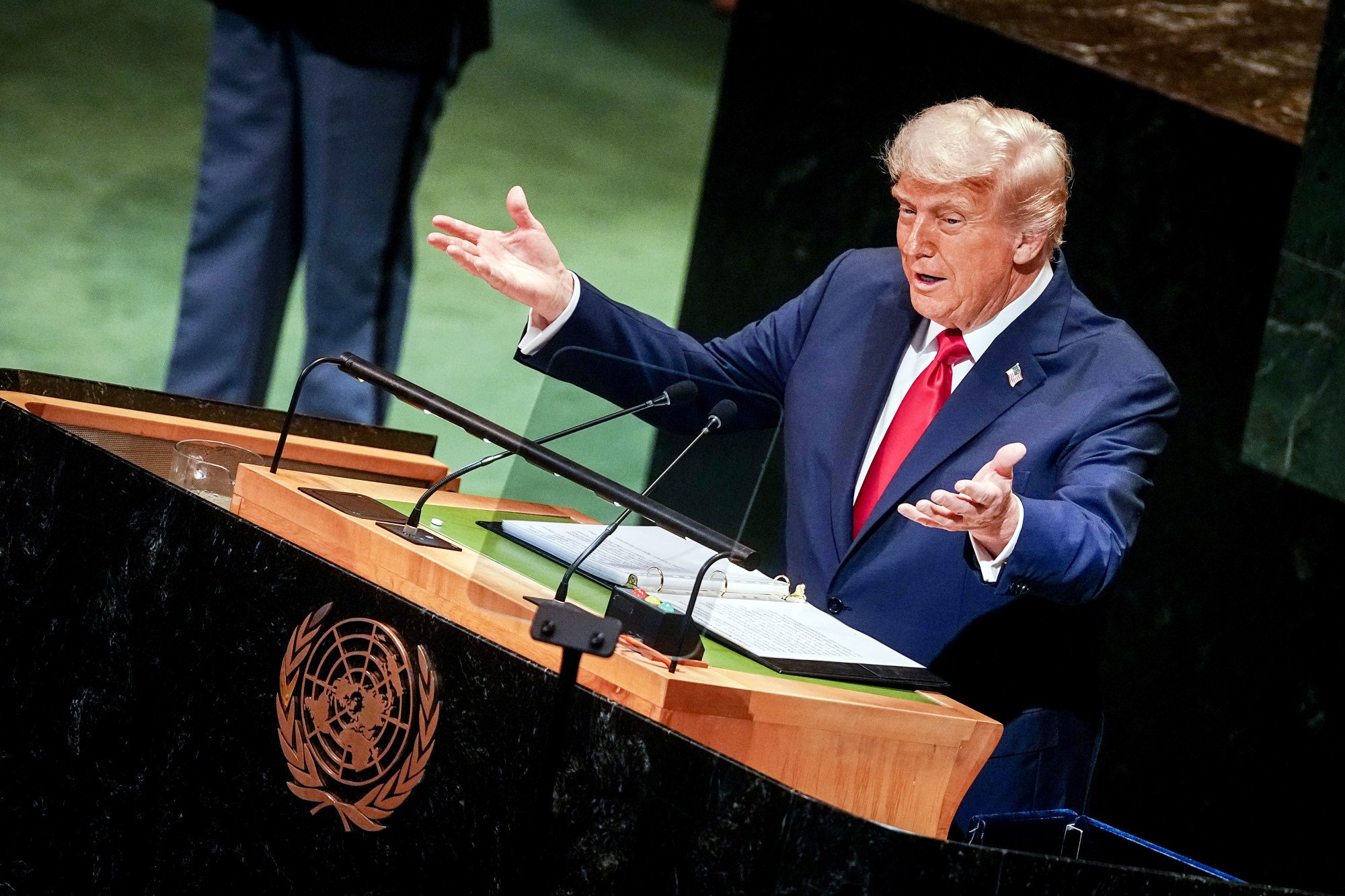
Trump’s recent performance at the United Nations General Assembly provided a glimpse into what the region might expect. During his address, he criticized the UN’s inability to end conflicts and accused European allies of allowing open migration that diluted their heritage. Such remarks have already raised concerns about how he might engage with Asean leaders.
During his first term, Trump attended only one Asean summit in Vietnam in 2017, which fueled perceptions of US disinterest and encouraged the bloc to shift closer to China, its largest trading partner. Now, with US tariffs ranging from 10 to 40 percent imposed on Southeast Asia’s export-driven economies since August, growth forecasts have been revised downward. Asean member states are united in their objective: persuading Trump of the mutual benefits of predictable, open trade.
Trade on the Table
Analysts suggest that Anwar and his Asean peers hope Trump arrives in a conciliatory mood. John Low emphasized that the discussions in Kuala Lumpur could set the tone for how Asean economies engage with the United States in the coming months. If Asean can present a clear, coordinated economic vision focused on open markets, resilience, and mutual benefit, it could mitigate potential trade frictions and attract renewed investment confidence.
However, unity has proven elusive within Asean. The bloc’s largest economies have already cut separate trade deals with Washington, promising vast purchases of American goods in exchange for tariff relief. Trump has further complicated matters by requesting to preside over the signing of a peace deal between Cambodia and Thailand in Kuala Lumpur, part of his quest for a Nobel Peace Prize.

On Thursday, Trump strengthened his claim to the award by announcing a long-sought Israel-Hamas ceasefire and hostage deal in Gaza, which the Israeli government ratified a day later. However, his push ultimately failed when this year’s Nobel Peace Prize was awarded to Venezuelan opposition leader Maria Corina Machado.
A brief but bloody border conflict erupted between Cambodia and Thailand in late July. A ceasefire, brokered by Malaysia on August 7, has mostly held, with Trump claiming credit for the truce, citing the reduced tariff rates he extended to both sides. China, an ally to both Southeast Asian nations, also played an integral role in securing the peace.
Washington has reportedly urged Malaysia to bar Chinese officials from the ceremonial ceasefire signing, according to White House sources cited by US news site Politico. Diplomatic and government sources told This Week in Asia that a symbolic peace ceremony was being planned at Trump’s request, but they declined to confirm whether Chinese representatives would be excluded.

“We are aware of what Washington is asking for, but neither Malaysia nor Asean have taken a position on it yet,” said one diplomatic source, speaking on condition of anonymity.
Tensions along the Cambodian-Thai border remain high, with both sides trading blame for apparent ceasefire violations. Analysts caution that Thailand’s new Prime Minister Anutin Charnvirakul, who has vowed to hold an election early next year, can ill afford to be seen capitulating to American pressure.
Pressed on Trump’s desire to oversee a ceasefire ceremony, Anutin was blunt: “I only care about Thailand’s interests, the safety of Thai people and the nation’s sovereignty. Anyone winning prizes has nothing to do with what Thailand has to do.”
Meanwhile, other crises loom. Myanmar’s military rulers, barred from Asean meetings since 2022 for failing to implement a peace plan following the previous year’s coup, continue to wage war on their own people. “It’s messy right now,” a Malaysian government source close to Asean negotiations told This Week in Asia, asking not to be named due to the sensitivity of the matter.
“Thailand has a new PM and will hold elections next year. We haven’t even settled Myanmar,” the source said, adding that reaching a consensus at the summit “will be tough.”
Stubbornness may yet prove to be an asset for Asean. Anwar has been unwavering in his insistence that the bloc will maintain its neutrality and resist the temptation to fall further into China’s economic embrace amid punitive US tariffs. As summit host, Anwar is expected to acknowledge Trump’s role in brokering the Cambodia-Thailand ceasefire by staging a ceremonial peace event—but not at the expense of alienating China, according to Singapore-based analyst Harrison Cheng of the global strategic consultancy Control Risks.
If that ultimately dissuaded Trump from attending the summit, Anwar would at least be able to say he tried his best, Cheng told This Week in Asia. “As such, Anwar could still claim geopolitical neutrality, which he could not have done if he had refused to invite Trump in the first place, as well as preserving relations with China,” he added.


