Overview of the Controversial Report
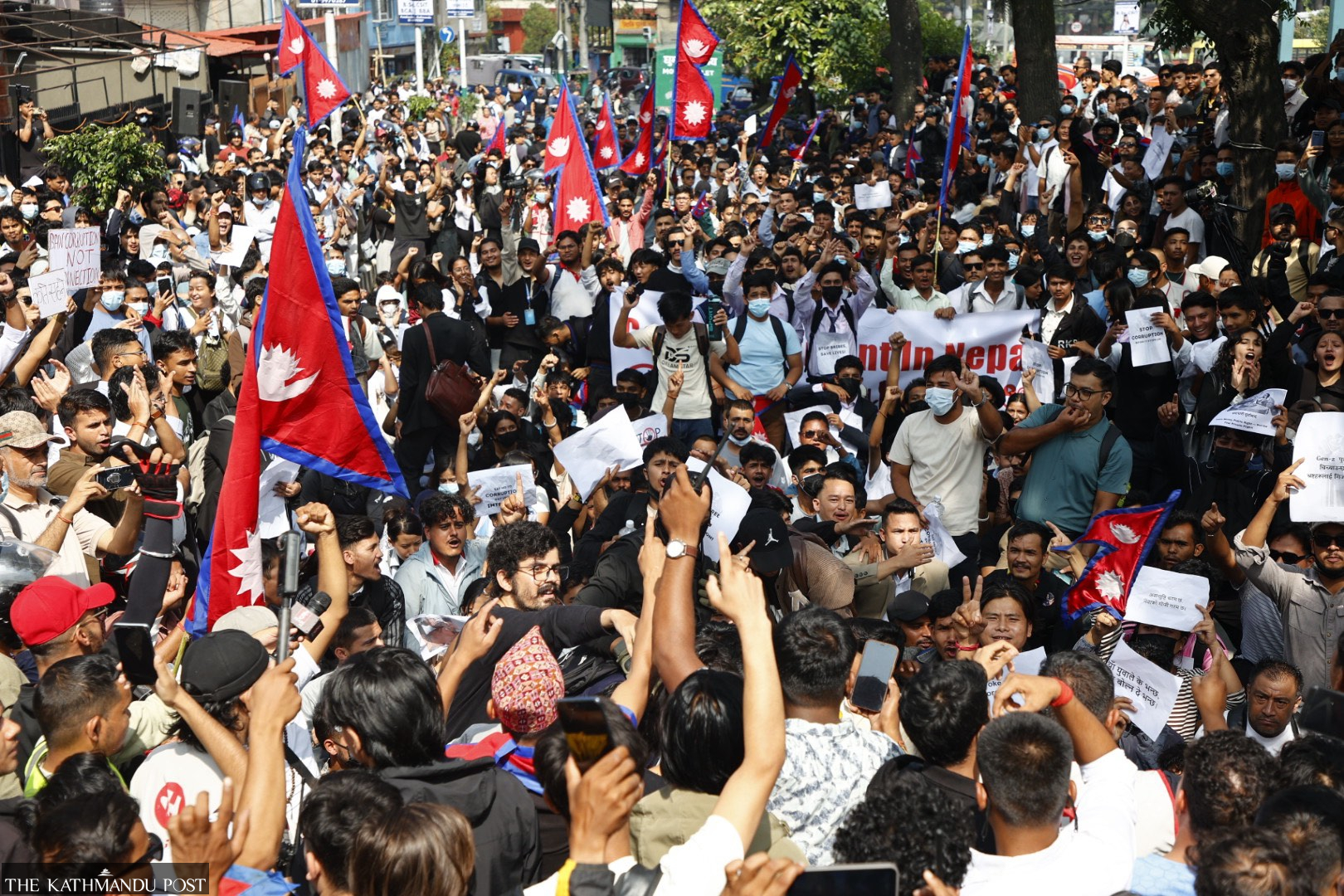
A recent report on Nepal’s Gen Z-led protests, prepared by Cyabra—a private artificial intelligence firm based in Israel that tracks misinformation—has sparked significant debate. The report, titled “Nepal Protests 2025: Narratives and Fake Profile Influence,” examined online conversations across X, Facebook, and TikTok between September 6 and 9, which coincides with the period of the Gen Z uprising on September 8 and 9.
According to the report, AI-driven analysis revealed that inauthentic accounts made up 34 percent of the sampled 3,685 profiles on X. These accounts were found to be involved in coordinated use of hashtags, deliberate interaction with real users, and played a role in generating 11.5 percent of total engagements and 14 percent of potential reach. This suggests that fake accounts can significantly influence narratives and amplify protest messages beyond their organic audience.
However, the report has faced criticism for its methodology and interpretation. Some users have claimed that the protests were entirely orchestrated by fake profiles or external actors, but digital experts have refuted these claims, stating that the report should not be considered definitive evidence due to its limitations.
Key Findings of the Report
Cyabra analyzed a sample of 3,935 profiles that generated over 7,200 posts and comments. The firm identified 1,288 ‘inauthentic’ accounts operating on X, which accounted for around 34 percent of the sampled 3,685 users on that platform. These accounts spread content in tandem with authentic users, reinforcing claims against the government and police while actively promoting the protests and calling on others to join.
Inauthentic profiles also used the same hashtags as real users, including #NepalProtest, #GenZProtest, #SocialMediaBan, and #EnoughIsEnough, to push protest narratives. While authentic users drove most of the protest activity, the report claims that fake profiles played a disproportionately powerful role in amplifying key messages. They accounted for about 11.5 percent of total engagements, more than 164,000 interactions out of 1.4 million, and reached an estimated 326 million potential views, or roughly 14 percent of the total potential reach.
Despite being a minority in number, the report states that these accounts strategically inserted themselves into real conversations, helping protest narratives appear more widespread and organic than they actually were.
Expert Analysis and Criticisms
Ujjwal Acharya, director of the CMR Nepal Journalism Academy and project coordinator of NepalFactCheck.org, criticized the report for lacking methodological transparency. While the report mentions the use of artificial intelligence, it does not specify what kind of AI model was employed, nor does it clearly outline its methodology or analytical tools, along with sampling method and dataset.
Acharya emphasized that while the report may offer some insights, it should not be treated as absolute facts. He noted that the report lacks the depth and clarity expected from academic research. Similarly, Rajib Subba, a cybersecurity expert and former deputy inspector general of Nepal Police, described the report as more of a product of a private cybersecurity company seeking visibility rather than a rigorous academic study.
Subba pointed out that the report makes several claims without defining what constitutes a ‘fake’ or ‘inauthentic’ profile. It remains unclear whether these accounts were bots, parody pages, troll accounts, pseudo-activist profiles, or simply anonymous users. The report’s lack of transparency is further highlighted by the absence of a dataset or spreadsheet of those profiles for independent review.
The report’s narrow time frame between September 6 and September 9 has also been questioned. Acharya raised concerns about whether content from those specific days can truly capture the entire narrative of the Gen Z movement.
Limitations and Concerns
Experts acknowledge that the report highlights the importance of digital activism in the Gen Z protest movement. However, they emphasize that social media can be a double-edged sword, as it is vulnerable to manipulation by malicious actors.
Another major weakness of the report is its failure to distinguish between spontaneous digital activity and coordinated inauthentic behavior. Subba explained that coordinated inauthentic behavior (CIB) involves fake accounts, real accounts used deceptively, or a mix of both, typically aimed at manipulating public opinion or running influence operations. The Cyabra report, however, focuses on single anonymous or spontaneous profiles without clarifying whether it identified coordinated networks.
Additionally, the report fails to differentiate between automated bots and human-run anonymous accounts. Bots pose higher risks due to automatic amplification, while one person managing multiple accounts does not constitute CIB. Without this distinction, claims like 34 percent of profiles being “inauthentic” could be an overstatement.
Acharya also questioned the report’s claims that fake profiles drove 11.5 percent of engagements and reached 326 million potential views. He argued that engagement does not necessarily indicate real-world impact, as activity may not translate into offline influence. Without evidence linking activity to tangible offline effects, engagement metrics can only tell part of the story.
Scrutiny of Cyabra and Local Context
Cyabra itself has come under scrutiny. The company is not a long-established or widely recognized research institution, and even the report’s authorship remains unclear. Its previous publications have seen limited international citation or recognition. Cyabra was reportedly founded in 2017 by Dan Brahmy, Yossef Daar, and Ido Shraga, all former members of Israel’s elite intelligence units.
Acharya stressed that the fact that an Israeli private firm released a report on Nepal’s protests so quickly, and without involving any local experts or researchers, warrants critical examination. Moreover, the report appears to overlook crucial local factors, such as Nepali hashtags, language nuances, metaphors, and cultural context, that shape discourse.
Subba noted that Nepal’s protest narratives are deeply rooted in local emotions and expressions, which cannot be directly compared with movements elsewhere. He called the analysis ‘superficial’ as a result. “The spread of rumours and disinformation during protests is not new in Nepal. What has changed is the medium,” he said. “The key question is not whether fake information was circulated in the protest, but whether it was coordinated, collaborative disinformation or simply spontaneous digital activity. This is what needs to be researched.”


