The Rise of Telecommunications in Ghana
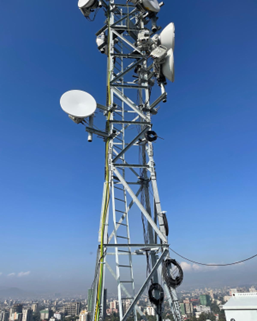
In the early 2000s, Ghana experienced a significant telecom boom. Network service providers rapidly expanded their coverage across the country, constructing towers and masts to support their growing operations. This infrastructure development was crucial for Ghana’s industrialization, as it marked a substantial increase in telecommunication services.
During this period, telecom companies built and owned their own infrastructure, including towers, power systems, and backhaul equipment. While this approach allowed for quick expansion, it also led to inefficiencies and high costs. The concept of infrastructure sharing was not fully explored, despite its potential to reduce costs and improve efficiency.

Understanding Infrastructure Sharing
Infrastructure sharing in telecommunications involves multiple service providers collaborating to use both passive and active network components. Passive infrastructure includes towers, power systems, and fiber cores, while active components involve backhaul transmission bandwidth and DWDM systems. This strategy allows companies to enhance their offerings, enter new markets quickly, and reduce operational costs.
The effectiveness of infrastructure sharing can be seen in various cases. For instance, during my time with Safaricom Telecommunications Ethiopia PLC in 2021, the company successfully leveraged infrastructure sharing to deploy a large-scale network within a short timeframe. This demonstrated the benefits of collaboration in the telecom sector.
A Missed Opportunity in Ghana
One notable example of missed opportunities in Ghana is the entry of Glo into the telecommunications market. Instead of leveraging existing infrastructure from established players like MTN and Vodafone (now Telecel), Glo opted to build over 1,500 base station transceivers. This decision led to increased costs, duplicated efforts, and delays in network launch. Additionally, Glo faced a fine from the National Communications Authority due to missed deadlines and performance issues.
According to the ITU, infrastructure sharing can significantly reduce costs for telecom providers. Sharing passive infrastructure can save up to 30%, while active infrastructure sharing can achieve cost reductions of 50% to 60%. These savings could have translated into lower prices for consumers.
Collaboration: Building Together
Collaboration is essential for successful infrastructure sharing. Operators typically enter into Infrastructure Sharing Agreements (ISAs) that outline usage terms and include Service Level Agreements (SLAs) to ensure optimal performance. If a party fails to meet SLA conditions, penalties known as service credits are applied to maintain accountability.
In Ghana, companies like American Tower Corporation (ATC) and Helios Towers have made significant strides in tower and power sharing. By 2022, these companies managed a total of 5,310 towers, contributing to growth and market expansion for network providers. This collaboration aligns with Sustainable Development Goals 8 and 9, promoting economic growth and improved access to communication technology.
However, challenges remain, particularly in the rollout of fiber networks. Major providers are laying down overlapping fiber networks in urban areas, leading to competition rather than collaboration. This approach is costly and unsustainable. To ensure efficient expansion, providers must work together rather than compete in the same spaces.
Regulation and the Call for Change
To address these challenges, Ghana can adopt a model similar to tower sharing. Key steps include:
- Mandating that new deployments avoid duplicating existing fiber networks where there’s available capacity, reducing overlaps, especially in urban areas.
- Encouraging regulators like the NCA to invest more in national fiber assets and lease them under fair, open-access terms.
- Enforcing SLAs between telcos and infrastructure owners to guarantee performance and accountability, addressing issues like fiber cuts.
- Empowering third-party wholesale providers to own and manage fiber infrastructure, ensuring equitable access.
By embracing greater infrastructure sharing, Ghana can reduce capital expenditure, lead to more affordable broadband and mobile services, and quicker expansion into underserved areas. This approach will strengthen the digital economy and empower smaller operators by providing access to existing infrastructure.
Regulators have a crucial role to play in facilitating this shift, just as they did with the introduction of tower sharing. Through fair Infrastructure Sharing Agreements (ISAs), we can ensure equitable access to infrastructure and level the playing field.
The author is a Network Engineer experienced in building/managing telecommunications networks across Africa, passionate about bridging the digital divide through scalable, inclusive solutions for underserved areas.


