The Significance of Seoul National University’s 50th Anniversary of Consolidation
Seoul National University (SNU) is celebrating its 79th anniversary, marking a significant milestone in the institution’s history. This year also commemorates the 50th anniversary of the university’s consolidation into the current Gwahak Campus. The consolidation process, which began in 1968 and culminated in 1975, was a strategic move to bring together scattered colleges across Seoul, Suwon, and other areas under one unified campus.
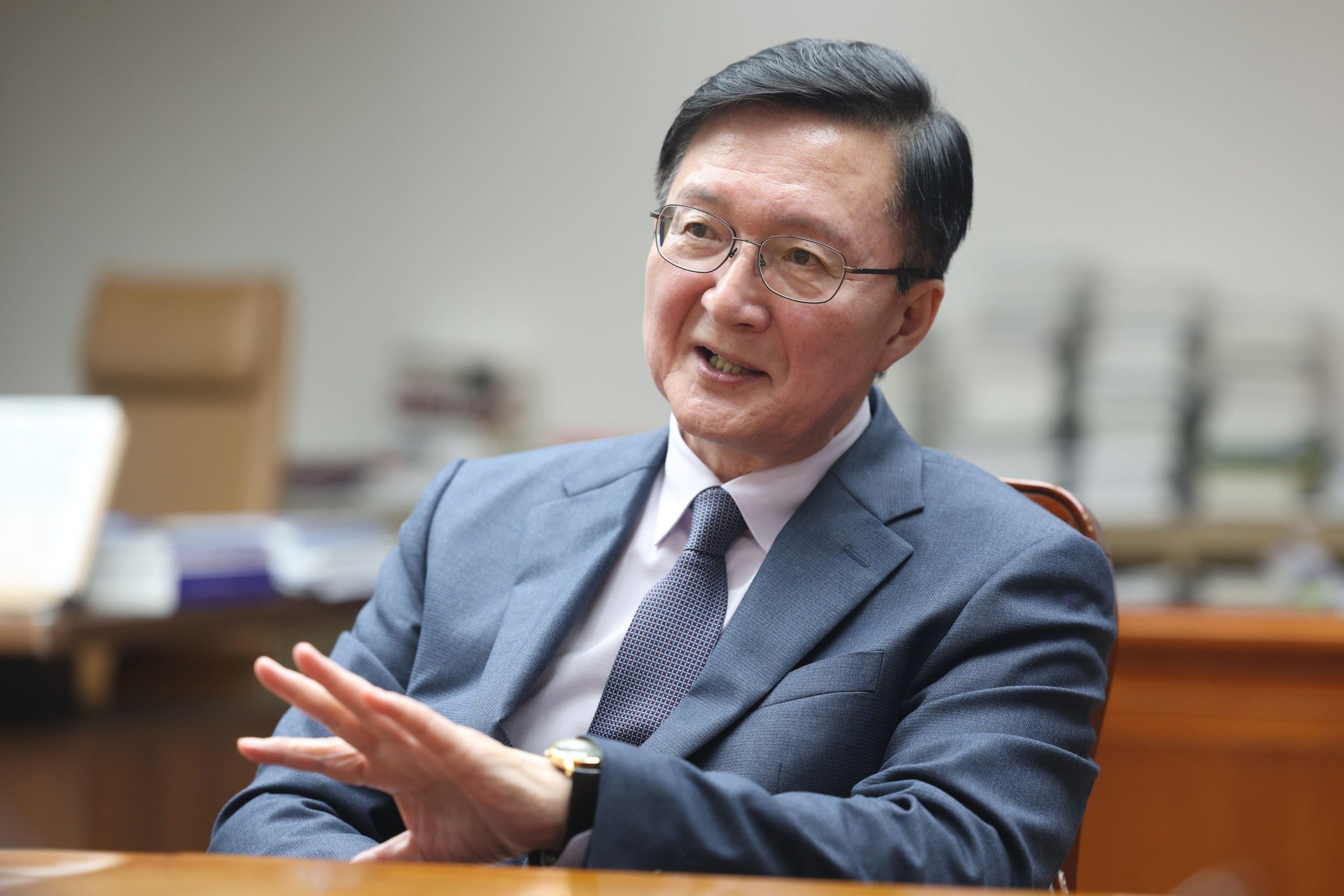
In an interview with this publication, SNU President Yu Hong-rim highlighted the importance of this consolidation. He stated, “Through the consolidation of Seoul National University in 1975, it was possible to lead South Korea’s economic development.” At that time, the government was transitioning national key industries towards heavy and chemical industries, and SNU played a crucial role in fostering talent for cutting-edge sectors such as semiconductors and nuclear energy. The consolidation enabled organic connections between different academic disciplines, enhancing the university’s ability to contribute to national growth.
President Yu emphasized that universities are not just educational institutions but engines that create future growth drivers for the nation. He pointed out that both the U.S. and China have entrusted the nation’s future to their universities. Looking ahead, he mentioned that SNU plans to launch a 10-year, 300 billion Korean won self-funded R&D program to support innovative research starting next year.
Strengths of the Consolidated Seoul National University
One of the key strengths of the consolidated SNU lies in its ability to integrate diverse majors and expand domains. President Yu provided an example from the AI field, stating that while South Korea lags behind China and the U.S. in core AI technology research, it excels in AI application fields. As a consolidated university, SNU can develop core AI technologies and apply them across various fields, from bio to arts, building a model that connects education, development, and commercialization.
Challenges and Limitations
Despite its strengths, SNU faces several challenges. President Yu pointed out that government interference and regulations remain a concern. He argued that the core value of a university is autonomy and that the conversion of SNU into a national university corporation in 2011 was aimed at pursuing qualitative improvement in higher education. In this regard, the government should minimize interference and focus on supporting innovation.
Global Comparisons and National Support
When asked about leading universities abroad, President Yu noted that the U.S. and China have entrusted the nation’s future to their universities. Even Japan, known for its conservative university culture, has embarked on university innovation. He stressed that the government should maximize investment in universities while minimizing bureaucratic interference.
Regarding national support for universities, President Yu stated that South Korea’s higher education investment as a percentage of GDP is only 60-70% of the OECD average. He called for increased funding, suggesting that the government should spend at least one-third more on higher education. With the current level of investment, even SNU struggles to secure global competitiveness.
Future Plans and Initiatives
Looking ahead, SNU has ambitious plans. President Yu mentioned that just 15 years ago, the qualitative level of Peking University and Tsinghua University in China was such that SNU did not feel the need to collaborate. However, since 2009, when China launched the Thousand Talents Program, things have changed. He highlighted the need for SNU to establish a 300 billion Korean won R&D support program over 10 years.
The R&D program will be operated through Grand Quests—major themes that will be publicly recruited for related researchers. This initiative aims to pursue pioneering and challenging research.
Addressing Faculty Retention and Elitism
There have been recent concerns about professors leaving SNU for overseas universities. President Yu acknowledged that some overseas institutions promised full research support. To address this, SNU is improving its compensation system, including a performance-based salary system and new regulations to attract outstanding talent. He also suggested revising the Higher Education Act to allow full-time professors to hold concurrent positions at overseas universities or research institutes.
Regarding criticisms of elitism, President Yu emphasized that SNU must pursue both excellence and social integration. Instead of discussions about abolishing or renaming the university, he advocated for collaboration to expand the capabilities of other universities and social institutions using SNU’s strengths. He mentioned the “University Alliance Regional Talent Development Project” as part of this effort.
Building an Innovation Ecosystem
President Yu outlined the potential achievements of a network platform, emphasizing the creation of an innovation ecosystem. He compared it to the Boston Bio Cluster in the U.S., highlighting the need for an ecosystem that organically connects universities, research institutes, and companies. SNU, with its medical school, engineering college, College of Natural Sciences, and College of Agriculture and Life Sciences, is well-positioned to conduct convergence research.
New Vision for the AI Era
As the university enters the AI era, President Yu shared SNU’s vision of building an “AI-native campus” that applies AI across all university operations. He emphasized that AI and Human Intelligence will co-evolve, and applying AI to education, research, and learning can enhance the creativity of professors and students.
Strengthening Student Capabilities
Finally, President Yu discussed plans to strengthen student capabilities. He cited surveys indicating that about 70% of graduates from popular majors at SNU are dissatisfied with the major curriculum. He believes the key to educational innovation lies in revitalizing students’ proactivity and preparing relevant programs to help them acquire the skills needed for the future.


