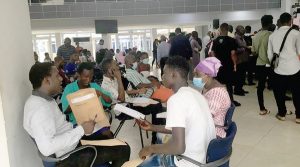
Uncertainty and Concerns Over the 2025 Senior High School Placement in Ghana
Uncertainty, suspicion, and concerns about corruption have cast a shadow over the 2025 Senior High School (SHS) placement process across Ghana. For several weeks, parents and caregivers have been gathering at the premises of the Ghana Education Service (GES) and the Computerised School Selection and Placement System (CSSPS) to demand transparency and fairness in the placement of their children.
The situation has led to large numbers of parents visiting placement centers to question why some students were placed far from their home regions. In many cases, these placements have resulted in students being enrolled as day students in schools located several kilometers away from where they live. This has created a significant burden for poor families who may be forced to rent private accommodation for their young children, who are not yet mature enough to live independently.
The Importance of School Placement
Parents generally aspire for their children to be placed in their first or second choice schools, which are typically categorized as A and B schools. These institutions are known for their high academic standards and are often seen as gateways to tertiary education. However, this year’s placement process has raised serious concerns.
According to data from the GES, out of the 590,000 candidates who qualified for placement, more than 107,000 missed out on automatic school placement under the CSSPS. These students must now complete self-placement to secure admission to remaining secondary schools. In previous years, the number of unplaced students was around 20,000, indicating that many children were able to secure their preferred schools regardless of their aggregate scores. This was part of a policy under the previous government aimed at admitting students from disadvantaged backgrounds into category A schools.
The sudden increase in unplaced students has sparked fears of favoritism, nepotism, and corruption. Many parents suspect that the large number of unplaced students has created an opportunity for school placement contractors—often politicians and some staff members of the GES and Ministry of Education—to sell vacancies in top schools to the highest bidders.
Allegations of Corruption
Social media has been flooded with allegations that school placement contractors are charging between 10,000 to 15,000 cedis for admission to some of the country’s top schools, including Presec, Wesley Girls, Holy Child, Opoku Ware, Prempeh College, Achimota College, St. Mary, Aggrey Memorial, Mfantsepim, and Adisadel. One parent is said to have paid 25,000 cedis to secure a spot for his daughter at Achimota School.
There are also reports of students with low aggregate scores being admitted to prestigious schools due to financial influence, while others with higher scores were denied entry. Such practices represent the worst form of corruption, as they deny marginalized and poor communities equal access to essential services like education.
GES Dismisses Accusations
Despite these allegations, the GES has dismissed claims that cut-off points were used in the current placement process. In a statement, the GES explained that placements are based on raw scores, school competitiveness, course demand, candidate aggregates, residential preferences, and catchment area considerations.
However, the response from the Greater Accra Minister, Linda Akweley Ocloo, advising parents to hire teachers for extra classes, has further fueled public frustration. Many believe that some school vacancies are being reserved for wealthy families, deepening the divide between rich and poor.
Free SHS Policy and Its Impact
Before the introduction of the free SHS policy in 2017, there was a cut-off point of aggregate 20 and below for admission to secondary schools. This system excluded millions of children from accessing secondary and tertiary education. The free SHS policy changed this by making secondary education mandatory for all children aged 15 to 18, provided they obtain at least a credit in English and Mathematics.
Between 2017 and 2024, an additional 1.7 million children who had previously been denied access to secondary education benefited from the policy. These children, many of whom were selling on the streets, now have the opportunity to pursue higher education.
Inclusive Education and Social Development
The free SHS policy ensured inclusive education, bringing together students from diverse backgrounds. It was intended to create equal opportunities for all children, regardless of their socio-economic status or geographic location. The goal was to foster networks and competition among students from different environments, ultimately shaping future leaders with equitable access to education.
Election Promises and the Need for Reform
During the 2024 election campaign, President John Mahama promised to sustain and improve the free SHS policy. However, the failure to place over 100,000 students in his first year in office raises concerns about whether he has fulfilled his commitments to the electorate.
Ghana must ensure fair and equitable distribution of educational opportunities, especially for children from both urban and rural areas. Equal access to secondary education is crucial for upholding the principle of non-discrimination in social interventions.
Sustainable Development Goals and International Recognition
As Ghana strives to meet the Sustainable Development Goals (SDGs), particularly SDG 4, which focuses on inclusive and equitable quality education, it is essential that access to education is not determined by a family’s ability to pay. The country has made significant progress in education, with institutions like the University of Ghana, Kwame Nkrumah University of Science and Technology, and the University of Development Studies ranked among the top universities in Africa.
In 2024, Ghana was ranked fifth in Africa for education, according to the Best Countries for Education rankings. The country’s strong education system and investments in technical and vocational training have positioned it as a destination for African youth seeking quality education.
Conclusion
Ghana’s education system has shown remarkable growth, but challenges remain. The current issues surrounding school placement highlight the need for transparency, accountability, and continued investment in inclusive education. As the country continues to build on its achievements, it must ensure that no child is left behind, regardless of their background or financial situation.


