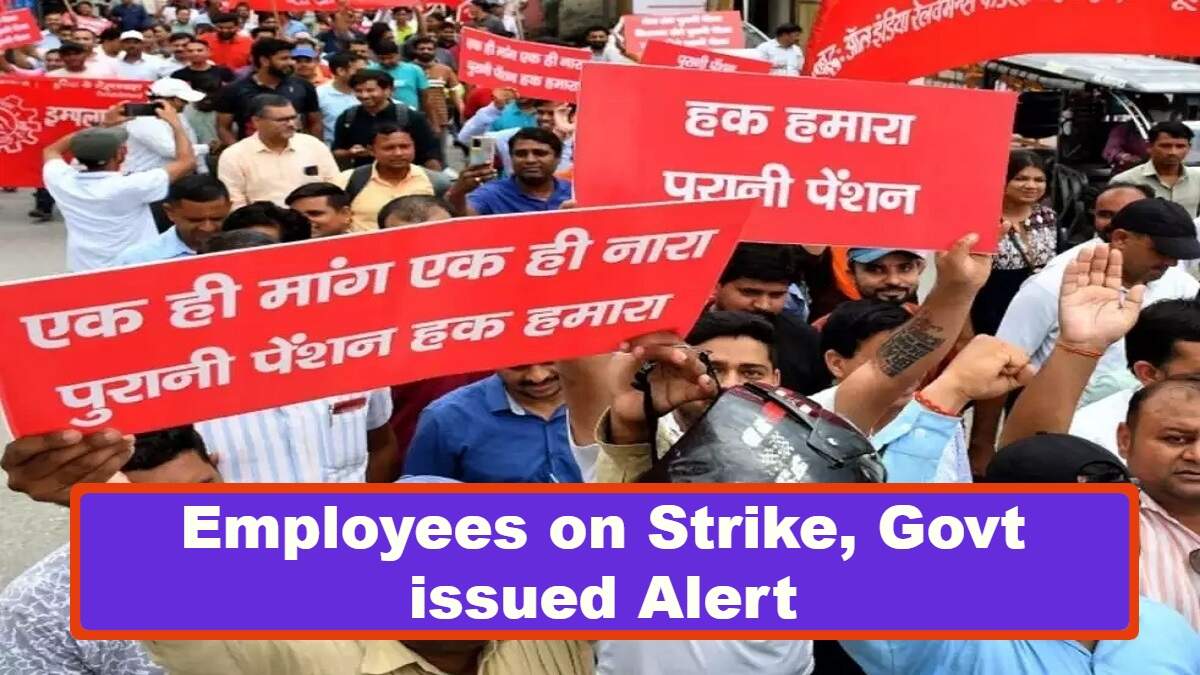
Government’s “No Work, No Pay” Policy Sparks Tensions with ASUU
The federal government has reiterated its commitment to enforcing the “no work, no pay” policy as a nationwide strike by the Academic Staff Union of Universities (ASUU) commenced. This directive was issued through a circular dated October 13, 2025, signed by the Minister of Education, Dr. Tunji Alausa, and distributed to key stakeholders in the education sector.
The circular emphasized that the government is dissatisfied with ASUU’s decision to initiate the strike, despite ongoing discussions. It warned that disruptions to the academic calendar would not be tolerated. According to the document, any employee failing to perform their duties during the strike would not receive payment for that period. Vice-chancellors were instructed to conduct roll calls and compile reports on staff attendance, with salaries withheld from those who did not report for work.
However, the minister clarified that members of CONUA and NAMDA, who were not participating in the strike, would continue to receive their full entitlements. ASUU had declared a two-week warning strike starting October 13 to address several demands, including the conclusion of the renegotiated 2009 FGN-ASUU agreement, release of withheld salaries, revitalization funding for public universities, payment of promotion arrears, and settlement of outstanding salary differentials. The government, however, maintains that most of these demands have been addressed, asserting that the strike is unjustified.
Impact of the Strike on Universities
Academic activities at the University of Abuja (UniAbuja) have slowed significantly following the strike. While some members of CONUA continued with scheduled lectures, many classrooms remained locked, and there was little evidence of teaching activities. Prof. Abdul Buba, Chairman of CONUA, UniAbuja chapter, urged members to continue performing their duties diligently, emphasizing the importance of maintaining standards in higher education.
The University of Jos also joined the strike, causing disruptions for post-graduate students. Undergraduate students were on break at the time. Similarly, the University of Ilorin and Kwara State University (KWASU) participated in the nationwide strike. Dr. Alex Akanmu, Chairman of ASUU at the University of Ilorin, confirmed the union’s commitment to the strike, while Dr. Abdulganiyu Salau, Chairman of ASUU at KWASU, echoed this sentiment.
At the Federal University of Agriculture, Abeokuta (FUNAAB), Tai Solarin University of Education (TASUED), and Olabisi Onabanjo University (OOU), academic activities were paralyzed. Sources at FUNAAB and OOU confirmed that they had no choice but to join the strike due to directives from the national leadership of the union. At Ebonyi State University (EBSU) and Alex Ekwueme Federal University Ndufu Alike Ikwo (AE-FUNAI), lecturers also joined the strike, with Dr. Joseph Igwe, Chairperson of EBSU ASUU, confirming the shutdown of all academic activities.
Widespread Participation in the Strike
The strike extended to other institutions, including the University of Calabar (UNICAL) and the University of Cross River (UNICROSS). Professor Peter Ubi, Chairman of UNICAL ASUU, confirmed the participation of his chapter, while Dr. Patrick Ushie, Chairman of UNICROSS ASUU, stated that members would participate in the strike due to the shared salary structure with other federal institutions.
At the University of Ibadan, all academic and related activities were suspended. Dr. Adefemi Afolabi, Chairman of ASUU, University of Ibadan chapter, confirmed full compliance with the strike directive. In Obafemi Awolowo University (OAU), the branch chairman, Professor Anthony Odiwe, noted that the strike had been domesticated, emphasizing the collective nature of the decision.
Meanwhile, in Bayero University Kano (BUK), the strike was partial, with some students allowed to sit for examinations before the strike fully commenced. Student sources indicated that the strike had begun, but not all activities were affected.
NLC Condemns “No Work, No Pay” Threat
In response to the government’s threat to invoke the “no work, no pay” policy, the Nigeria Labour Congress (NLC) condemned the move, stating that it would not resolve the crisis in public tertiary institutions. NLC President Joe Ajaero criticized the government for failing to implement voluntarily signed agreements, which he said undermines confidence in the system.
The NLC emphasized that the strike is a legitimate response to years of neglect and unfulfilled promises. Rather than engaging in good faith, the government has resorted to threats, which the NLC described as misleading. The union called for constructive dialogue to address the issues raised by ASUU.

Related posts:
Fiction park: He was the best in class. He still wasn’t good enough
Gagan Thapa takes oath as Congress president, vows to regain public trust

Inside knowledge that has locals gripped by fear after gran’s body found decomposing in cattle dip

New property purchase disclosure rule in Japan sparks fears it may curb foreign investment
Dino-mite treasures: inside Singapore’s Fort Knox storing playthings of ultra-rich